


 0
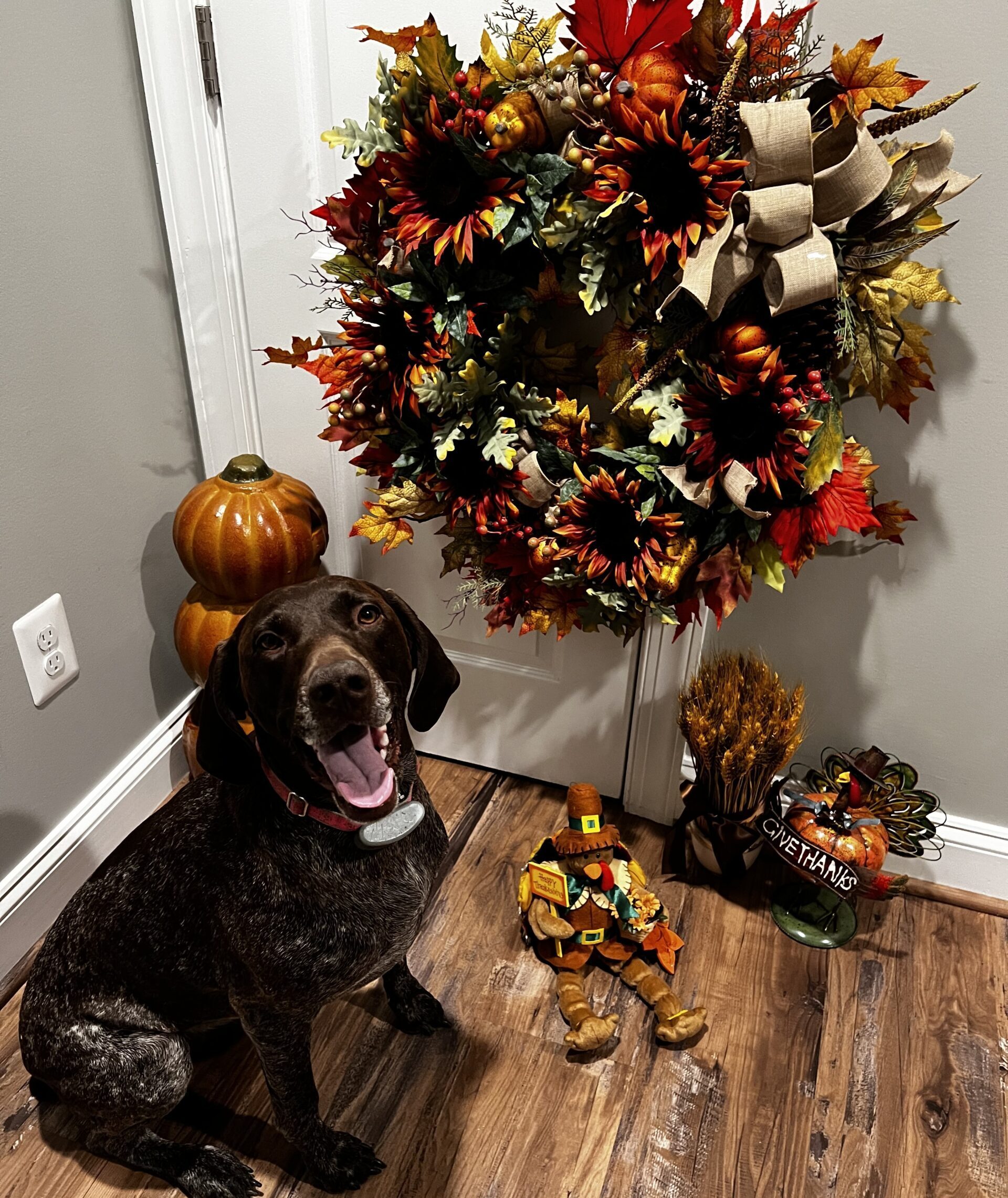 Thanksgiving offers us a chance to step back from the daily grind of court decisions, agency announcements and policy debates to consider what is going right in the world of IP for a change. In 2026, perhaps most notably, artificial intelligence (AI) has kept questions about authorship, inventorship, fair use and licensing at the center of the conversation. Courts are still just beginning to weigh those issues, while creators, technology companies, IP attorneys, and rights holders explore the boundaries of these rapidly emerging technologies. The answers remain unsettled, but the debates underscore how much innovation and creative work depend on a functioning IP system.
Nearly every year, the recurring theme when it comes to what readers are grateful for has to do with community; as in all aspects of life, the people around us are what matter most—the inventors, creators, researchers, lawyers, policymakers, colleagues and advocates whose work sustains the system, and the ideas and technologies they help bring into the world.
As we get ready to celebrate this Thanksgiving, we once again asked members of the IP community to share what they are thankful for in IP this year.
HAPPY THANKSGIVING!!
New Tools
Mark Baghdassarian , McDermott Will & Schulte
“This year, we’re thankful for the U.S. Court of Appeals for the Federal Circuit decisions that have sharpened doctrines to add tools to the accused infringer’s defense arsenal.
For example, on indefiniteness, the Court in Cocona v. VF Outdoor held that a claim reciting a numerical range for a measured property lacks reasonable certainty when the patent identifies multiple testing methods that yield different results without saying which governs. Permissive language, like a property “may be measured” a certain way, does not cure the problem. This counsels for examining claims with numerical limits early in litigation.
Next, for inventorship, the Court held for the first time in Fortress Iron v. Digger Specialties that “a patent which incorrectly lists its inventor(s) and cannot be corrected according to law is invalid.” Because this situation arises often, particularly in joint development scenarios, accused infringers are well-served to focus on inventorship discovery which may pay substantial dividends for invalidating a patent.
And in AML IP v. Bath & Body Works, the Court held that a district court that finds venue improper may still decide a concurrently briefed § 101 motion. According to the Court, deciding both together allows a single appeal and avoids piecemeal litigation. This now allows defendants to challenge venue concurrently with a Rule 12(b)(6) defense like § 101, potentially ending the case rather than restarting things in a new venue.
Thanks to the Federal Circuit, the defense bar has more tools to fend off infringement allegations.”
The ITC
Paul Bartkowski , Bartkowski PLLC
“We are thankful that the International Trade Commission (ITC) continues to provide patentees with a strong mechanism to shut down infringing, imported products. Looking forward to what 2027 brings!”
Squires’ PTAB Policy Pivot
Jonathan Bowser , Haynes Boone
“I am thankful that U.S. Patent and Trademark Office (USPTO) Director John Squires has returned the merits-based part of institution decisions in inter partes reviews (IPRs) and post grant reviews (PGRs) back to Patent Trial and Appeal Board (PTAB) judges. Having written decisions with substantive analysis of the parties’ arguments by technically trained judges better serves the patent system. While an institution decision is not final, the parties can evaluate the strength of their positions based on the institution decision and proceed based on that guidance. Many IPR or PGR proceedings involve patents that are the subject of co-pending litigation. Substantive institution decisions may inform the parties’ settlement positions, for example, based on the judges’ preliminary evaluation of the merits. Having PTAB judges decide the merits in institution decisions also promotes transparency to the parties and other members of the public interested in the challenged patent.”
The IP Bar
Stephanie Curcio , Clerq
“What I am most grateful for this year is not the technology changing our profession (at record speed!), but the people building it, using it, and talking honestly about it. I have spent more time on the road this year than in any other, and what stands out to me is how generous this profession is with what it knows. In a year when everyone is anxious about what AI means for their practice, people have been remarkably willing to share the successes and the failures out loud, conveying best practices, naming which experiments became foundational and which died on the vine, and pointing to exactly where the gaps still are. Plenty of professions treat hard-won knowledge as something to guard, and the IP bar has every commercial reason to do the same, but that is not how this community operates. We are, in the truest sense, a *community*. We’re all figuring this out at the same time, and it turns out that is much easier to do together.”
Willingness to Embrace New Solutions
Kirti Gupta , Cornerstone Research
“This Thanksgiving, I am grateful for the growing willingness across the AI and copyright ecosystem to move past entrenched positions toward practical, evidence-based solutions. Working at the intersection of litigation and policy has shown me how much value comes from pairing rigorous empirical analysis with open, cross-disciplinary dialogue. As courts, creators, and developers navigate questions around training data, authorship, and market impact, the sharpest insights emerge when economic evidence and policy debates inform one another rather than happening in silos. I am equally thankful for the colleagues, policymakers, economists, and legal practitioners who engage with these complex questions with intellectual depth and discipline. Debates over AI and copyright touch fundamental incentives for technological progress and creative expression, and doing this work alongside thoughtful collaborators who care deeply about getting the balance right makes challenging problems rewarding. Wishing the entire IPWatchdog community a restful and meaningful Thanksgiving.”
Another Vote for the ITC
Joshua Hartman , Merchant & Gould
“This year, I’m thankful for a healthy, fully staffed U.S. International Trade Commission (ITC). In July, the Senate confirmed five nominees to the Commission, giving it a full complement of commissioners for the first time since 2017. And early this month, the Commission announced the appointments of two new administrative law judges, bringing the total number of ALJs to seven. These new voices and new viewpoints at the Commission come at a critical time. The Federal Circuit’s Lashify decision upended decades of ITC practice, and it will be fascinating to see how the new Commissioners and ALJs impact the direction of Section 337 litigation, especially given the Commission’s importance in adjudicating some of the most complicated and important disputes in the IP community.”
Strong Leaders
Patrick Kilbride , Kilbride Public Affairs
“In an age of enduring political populism, I’m grateful to a bipartisan, bicameral group of leaders in the U.S. Congress who continue to promote American innovation and creativity through support for strong intellectual property rights. Thank you, Rep. Hank Johnson, Rep. Deborah Ross, Rep. Madeleine Dean, Rep. Nathaniel Moran, Sen. Bill Cassidy, Sen. Todd Young, Sen. Adam Schiff, Sen. Chris Coons, Sen. Mazie Hirono, and colleagues like you who continue to insist that Americans should be able to own their work, whether the labor producing those outputs is physical or mental. In today’s knowledge economy, and as we embark on the Age of AI, the rights of Americans to their ingenuity and creative work – not to mention their data – has never been more critical. Your leadership will be challenged in the 120th Congress and we’re counting on you to stand up for time-tested American principles of private property and the rule of law. Thank you and Happy Thanksgiving!”
Resilience, Hard Work, Innovators and Inventors
Eli Mazour , Foley & Lardner LLP; Clause 8
“I’m thankful for how deeply appreciation for IP is ingrained in America, which keeps the system resilient even when powerful interests push to weaken it for short-term gain.
I’m grateful to those who kept working to bring balance to the system against long odds. That includes Coke Morgan Stewart, who refocused the USPTO on examination and reined in the PTAB; Director John Squires, who is working to bring sanity to Section 101 examination; Judge Alan Albright, who decided patent cases quickly and fairly despite an unprecedented lobbying campaign against him; and Sen. Thom Tillis, who leaves the Senate in January after years of championing PERA and PREVAIL.
I’m also thankful for the innovators in the patent space coming up with new models to keep the virtuous cycle of innovation going. And, of course, for the inventors and creators who make it all possible.”
Evolution, Strong Patents, Conversations
Ngoc Ngo , Competition Dynamics
“This year, I’m thankful for the improvements, the challenges and the opportunities that 2026 has brought to IP law and practice.
I’m thankful to be part of the IP community at such an exciting moment. It is hard to think of a period since the arrival of the web and mobile connectivity when technology has evolved so quickly. AI is now transforming not only the technologies we work to protect, but also the way we work. It offers real opportunities to improve efficiency, while raising new and fascinating legal questions that the law is still catching up with.
I am also thankful for the efforts to strengthen the U.S. patent system, including encouraging developments at the USPTO under Director Squires. I believe a strong patent system benefits all parties: innovators, implementers and consumers. After all, without innovation, there will be nothing to implement. On the litigation side, I appreciate the continued emphasis on reliable, scientifically grounded expert analysis. When it comes to damages, this means rigorous economic analysis has a stronger role to play, and that benefits everyone who relies on these outcomes.
Finally, I’m thankful for the conversations. Innovators and implementers often see things differently, yet most of the people I’ve met on both sides genuinely value innovation and just want a system that works. I’m grateful for the conferences and events, IPWatchdog’s among them, where ideas can be shared candidly and improvements discussed.”
The Chance to Shape Law and Practice
Kristi Nicholes , Offit Kurman
“This year, there is much to be thankful for as IP law continues to evolve alongside innovation. Artificial intelligence, rapidly developing technologies, new business models, and new forms of creative expression are reshaping how we think about what it means to invent, own, protect, and enforce IP.
For those of us who practice IP law, there is something particularly remarkable about this moment, when technological change is prompting the law to revisit some of its most fundamental questions. AI invites us to think anew about creativity, inventorship, authorship, ownership, and the very reasons the law grants exclusive rights in intellectual expression. At its best, IP law does more than protect today’s innovations; it establishes the conditions that encourage what will be created next. Having a role in shaping how those principles carry forward into a new technological era is something for which the IP bar can genuinely be thankful.
I am also incredibly thankful for the inventors, creators, entrepreneurs, and businesses whose ingenuity continually gives the IP lawyers new problems to solve. They remind us that IP is not an abstract legal concept. Behind every patent, trademark, copyright, and trade secret is an idea, investment, business, or endeavor worth protecting.”
Stability and Course-Correction
Steven Rizzi , McKool Smith
“The year 2026 has brought welcome stability to patent practice in the United States. Thanks to the course correction spearheaded by Director Squires, the role of post-grant PTAB patent challenges under the America Invents Act has been realigned with Congressional intent. Litigants now have a clearer understanding of whether such challenges are appropriate, especially for patents involved in parallel litigation. Director Squires’ recent hand-off of merits-based IPR and PGR institution decisions back to three-judge PTAB panels will provide even greater clarity and transparency going forward. I am also thankful that the United States continues to be a global leader in innovation, which presents new challenges and opportunities for IP practitioners as we must continue to evolve and adapt to service our clients. AI is unique because we must not only grapple with the challenges that arise when our IP laws are applied to a new technology, but the reality that it is altering both how we practice law and the nature of innovation itself.”
SCOTUS Staying Out of It and IPWatchdog!
John Rogitz , Rogitz & Associates
“I’m thankful that, while the Supreme Court continues to deny cert in Section 101 cases that could fix the mess it created, at least it isn’t actively harming the patent system by issuing more unanimous yet poorly written decisions full of needless dicta ripe for abuse.
On a serious note though, I’m very grateful to IPWatchdog for continuing to be an outspoken voice for innovators in such challenging times. What gets written here really does make a difference.”
The People Who Make It All Possible
Coke Morgan Stewart , The Council for Innovation Promotion (C4IP)
“In the intellectual property community, we spend a great deal of time discussing what the USPTO does, but considerably less time talking about the people who make it all possible. This Thanksgiving, the Council for Innovation Promotion (C4IP) is particularly grateful for the agency’s dedicated career employees, whose contributions to American innovation too often go unrecognized.
Despite significant staffing challenges and organizational change, patent examiners, supervisory patent examiners, and patent management have made incredible progress in reducing the historic backlog of unexamined applications while balancing the competing demands of timeliness and examination quality.
We are equally grateful for the administrative patent judges and career management of the Patent Trial and Appeal Board, who have demonstrated a willingness to embrace new responsibilities and ways of working, and for the examiners and management of the Central Reexamination Unit, who are addressing an increasingly demanding workload.
Recognition also belongs to the dedicated professionals in Trademarks, the Trademark Trial and Appeal Board, Policy and International Affairs, Office of General Counsel, Public Engagement, Communications, Finance, Administration, IT, and the other business and support units essential to the agency’s success.
As C4IP’s President and CEO, having worked alongside these talented professionals for almost 12 years, I have a deep appreciation for their extraordinary expertise and commitment to public service, often at substantially lower compensation than they could command in the private sector.
Whatever our differences over policy, we can all agree that the commitment of these extraordinary public servants is something to be thankful for.”
Proactive Improvements to the Trademark System
William Stroever , Cole Shotz
“We are thankful for the proactive leadership at the USPTO, particularly on the trademark side. From updates to online forms and enhanced efforts to combat scams to improved back-end processing and a more accessible platform for individual applicants, it is refreshing to see so many meaningful improvements. The tremendous work going into strengthening and modernizing the trademark system has not gone unnoticed, and we sincerely appreciate these efforts.”
Clarity on AI Inventorship
Michele Van Patten Frank , Venable LLP
“I am grateful that the USPTO clarified this year that AI is a tool, and that using it does not by itself put an invention’s patentability at risk. Under the USPTO’s revised guidance, the question is whether a person conceived the invention, the same standard that applies to any other tool, from a lab instrument to software. The practical work now shifts to documenting the human inputs, and that matters well beyond R&D. Teams at start-ups and global companies alike use AI in product development every day, often without anyone asking how that work will look to those reviewing the portfolio. The companies that handle this well treat it as business strategy. Their invention records show who framed the problem and recognized the solution. Their filings track the products that differentiate them. They address AI use before it comes up in diligence. As a former USPTO examiner, I know a well-documented record is far easier to rely on than one reconstructed later. Scarce capital favors the companies that have treated their patent portfolios this way.”
Holding the Line on Efforts to Curb the PTAB
John White , Harness IP
“I am grateful that the Federal Circuit and Supreme Court. have held the PTAB containment ‘lines’ that the USPTO has drawn in the sand. There was a large effort from many players to unwind what the USPTO has done to rein in PTAB action. Fortunately, they failed, despite many erudite pronouncements that they would not! Now, legislation is needed to cement the balance of power with petitioner and patent owner at the PTAB. It has been far too one sided since 2012, the USPTO recent rebalancing of those proceedings needs permanency. Here’s to success on that front in the coming years.”








Join the Discussion
No comments yet. Add my comment.
Add Comment