


 0
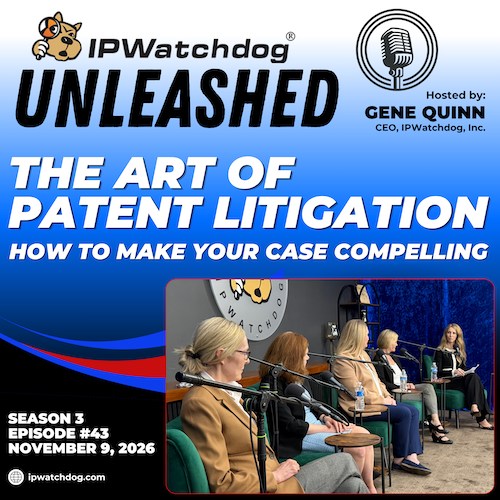
A strong patent litigation case requires more than sound legal arguments and a thorough understanding of the technology. Counsel must make the dispute understandable, the client’s position credible, and the requested outcome persuasive to the people deciding it. These and other topics relating to crafting a compelling patent litigation case is the focus this week on IPWatchdog Unleashed. This conversation, moderated by Katie O’Sullivan, Senior Counsel, U.S. Litigation Lead at Renesas Electronics, was originally a featured discussion during our recent Women’s IP Forum. The panel featured Sarah Burg, Janine Carlan, Bette Muirhead, and Jennifer Towle and explored the practical judgment that connects legal and technical preparation to effective trial advocacy—and why that work must start well before trial.
One central theme the panel tackled is that litigation strategy must account for the particular decision maker. An argument that succeeds before one judge may fall flat before another, while arbitration demands quite different choices from a jury trial. Understanding local rules is only the starting point. The panel discussed learning a judge’s practices, drawing on local counsel’s experience, and reviewing prior proceedings to anticipate how a case will actually be managed. For in-house counsel evaluating litigation teams and budgets, that preparation has practical value: it helps outside counsel make informed choices about how to present the case and where to concentrate resources.
Technical communication presents a related challenge. Patent litigators must master enough detail to develop and test their arguments without losing sight of what an unfamiliar audience needs to understand. The discussion emphasized using early technology tutorials to identify confusing concepts, challenge assumptions, and recognize where additional explanation will be necessary. That discipline is particularly relevant to disputes involving semiconductors, pharmaceuticals, and other complex technologies discussed by the panel. The commercial or scientific significance of an innovation does not automatically make its operation—or the patent dispute surrounding it—clear to a judge or jury.
Making that technology accessible requires deliberate choices about experts, imagery, and presentation. Subject matter expertise is essential, but the ability to teach can be equally consequential to whether testimony connects with its audience. Analogies and demonstratives can clarify difficult concepts, provided they withstand scrutiny rather than introduce vulnerabilities. The panel also addressed a familiar budget reality: many cases cannot support extensive mock trials or jury consultants. Testing explanations with colleagues unfamiliar with the technology offers a practical opportunity to uncover gaps before those gaps become problems in court.
Case themes bring these elements together. The speakers described developing themes early enough to guide the presentation of the dispute, while remaining willing to revise them as discovery changes the picture. A persuasive theme must connect the evidence and legal arguments to a clear explanation of why the client’s position deserves to prevail. Its usefulness extends beyond opening statements and closing arguments. Carefully developed themes can inform technology tutorials, claim construction presentations, and dispositive motion briefing, giving decision makers a coherent framework without displacing the facts and law governing the dispute.
O’Sullivan added an important business perspective: credible trial preparation also supports settlement leverage. From the in-house vantage point, a litigation team’s ability to articulate a persuasive case matters even when the preferred outcome is an early resolution. For patent owners, accused infringers, and the counsel advising them, this conversation highlights why audience awareness, technical clarity, and case development belong within the same strategy. The episode offers a substantive look at how experienced practitioners make those judgments—and how the choices made throughout a case shape both courtroom advocacy and the options available outside it.
More IPWatchdog Unleashed
You can listen to the entire podcast episode by downloading it wherever you normally access podcasts or by visiting IPWatchdog Unleashed on Buzzsprout. You can also listen to IPWatchdog Unleashed conversations on the IPWatchdog YouTube channel. For more IPWatchdog Unleashed, see below for our growing archive of previous episodes.













Join the Discussion
No comments yet. Add my comment.
Add Comment