
![[IPWatchdog Logo]](https://ipwatchdog.com/wp-content/themes/IPWatchdog%20-%202023/assets/images/temp/logo-small@2x.png)
Posts Tagged: "Guest Contributor"
The Real-World Implications of the Supreme Court’s Cox Decision
It’s easy to take for granted that books, news, films, shows, songs, video games, photographs, artwork, and more are ubiquitously available through apps, streams, downloads and other digital means. But the thriving legitimate digital marketplace we enjoy today didn’t emerge by accident. It was built, in significant part, on the historical bedrock of secondary liability—the well-established common-law legal principle that one who assists another in committing a wrong is just as liable as the direct wrongdoer. In the internet ecosystem, that means platforms, internet service providers (ISPs), and other online intermediaries bear some responsibility when they knowingly facilitate or profit from copyright infringement.
Why the USPTO Should Introduce an Automatic Allowance Option
For capital-hungry small businesses and startups, the difference between a pending patent application and an enforceable, issued patent is often the difference between thriving and stalling. Yet the current path to receiving a Notice of Allowance—the final signal of approval from the U.S. Patent & Trademark Office (USPTO)—remains slow and expensive. Both of these critical problems can be solved by the USPTO right now through a simple but powerful new tool: an Automatic Allowance Option.
Congress Must Not Rewrite Patent Rules Without Evidence
Tomorrow, June 17, the Senate HELP Committee will vote on a raft of bills aimed at making medical care more affordable. That’s a worthy goal. But in the case of the Medication Affordability and Patent Integrity Act, lawmakers are setting themselves—and patients and the rest of us—up for failure. The legislation seeks to prevent drug companies from gaming the patent system by holding these firms to new disclosure and certification requirements. How the bill is supposed to save patients money is far from obvious. What is more, there are already laws against the kind of abuse the legislation targets. And there is little to suggest those rules aren’t working.
When Does a Parody Become a Trademark Problem? Lessons from the Patagonia-Pattie Gonia Dispute
The ongoing trademark dispute between outdoor apparel company Patagonia and environmental activist and drag performer Pattie Gonia has generated considerable public attention. To many observers, the case appears to be a clash between a large corporation and an individual activist who shares many of the company’s environmental values. But viewed through the lens of trademark law, the dispute raises a far more nuanced question.
Global U.S. Patent Standing Falls Due to Judicially-Created Patent Law
The United States is the only country in the world where the judiciary forces patent term truncation over unrelated patent families. In Europe, China, and most other nations, the patent laws provide a “novelty only” standard for patent applications filed before the publication of a different earlier filed patent application, and a “novelty and inventive step” standard for patent applications filed after the publication of an earlier filed patent application. The law in virtually every country outside the United States works well using this framework.
Fact-Checking the Assertions of the Parties in Hyatt v. Squires
Gilbert Hyatt is a prolific independent inventor known for his large number of patent applications held up for decades at the U.S. Patent and Trademark Office (USPTO) and the courts. In its decisions in Hyatt v. Hirshfeld, 998 F. 3d 1347 (Fed. Cir. 2021) (Hyatt I) and Hyatt v. Stewart, 148 F. 4th 1376 (Fed. Cir. 2025) (Hyatt II), the Federal Circuit held that he forfeited his patent rights under the prosecution laches doctrine
Witnessing the Miracle of Innovation in Real Time
Many of us have spent our careers defending and promoting our patent system and related policies like the Bayh-Dole Act, which injected the authorities and incentives of patent ownership into the federal R&D system so that resulting discoveries would no longer waste away on the shelves, benefitting no one. While we usually focus on statistics, legal analysis and case studies, sometimes the impact of what we’re doing hits you square in the face. Last week, I was fortunate enough to have that happen and it’s an experience I’ll never forget.
The Register of Copyrights Is Wrong About Cox v. Sony
At a recent Senate Judiciary Subcommittee hearing, Register of Copyrights Shira Perlmutter noted that Congress may need to overturn this year’s unanimous decision in the Cox v. Sony Supreme Court case or create a new “site blocking” regime to force internet service providers (ISPs) to block access to certain internet sites. The only problem? To put it bluntly, she is wrong.
Automating the Patent Process at the USPTO to Save Inventors Money
Have you ever drafted a claim set with a second claim that began, “the system of claim 2, wherein…” when you meant to write “the system of claim 1”? It’s embarrassing because every first-year patent attorney knows that a dependent patent claim cannot depend on itself. However, making the error is inevitable when you draft a large number of patent applications. The good news is, if you upload such a claim to today’s Patent Center (where patent applications are filed), you will be provided with the following alert: “The claims appear to contain an improper dependency with at least one claim that depends on a missing or canceled claim. Please review and revise if necessary”. How beautiful is this? Now you can self-correct before your patent application is even filed. Ten years ago, you would have to go back and forth with a patent examiner to correct the error.
Readers React: What to Expect After the Supreme Court’s Hikma Ruling
Thursday’s Supreme Court ruling in Hikma v. Amarin has been discussed as a definitive win for the generics industry and may have implications beyond pharmaceutical and Hatch-Waxman cases. The Court criticized the U.S. Court of Appeals for the Federal Circuit (CAFC) for its trend of what the Court called focusing on “whether the relevant statements could be read by medical providers as instructions to infringe” when judging induced infringement in Hatch-Waxman cases. Below, stakeholders weigh in on the upshot of the ruling and what it means for pharmaceutical innovation going forward.
USPTO Updates Its SMED Guidance — and Signals That It’s Working
On April 30, 2026, U.S. Patent and Trademark Office (USPTO) Director John A. Squires issued an updated memorandum on Best Practices for Submission of Rule 132 Subject Matter Eligibility Declarations (SMEDs), “superseding” the December 4, 2025, memos that launched the current iteration of the SMED program. While the April 30 memo introduces no substantive changes to the underlying framework — the principles of the original SMED Examiner Memo, the relevant Manual of Patent Examining Procedure (MPEP) provisions, and the Alice/Mayo two-step analysis all remain — the update matters to practitioners for at least two reasons: it confirms that SMEDs are actually working, and it signals that the Office intends to refine the guidance over time as practitioners gain more experience with the tool.
Biopharmaceutical Innovation: The Patent Imperative
America’s $150 billion per year private sector investment in biopharmaceutical research and development (R&D) does more than offer comfort. Increasingly, American innovators are curing or effectively eliminating the medical threat from many diseases and conditions. Witness, cures for Hepatitis C, GLP-1s for weight loss, COVID-19 vaccines, and HIV prevention at virtually 100% effectiveness, alongside stem cell therapies, gene editing, and CAR-T therapies for previously untreatable cancers. For those suffering from rare or untreatable disease, as well as chronic conditions, this is an era of unprecedented hope.
What the GoDaddy Verdict Still Illustrates About Patent Risk
The $170 million jury verdict against GoDaddy in its dispute with Express Mobile continues to offer important lessons for companies managing patent exposure, even after the court set aside the jury’s willfulness finding. While the case may not become the landmark post-Halo willfulness decision some initially anticipated, it still underscores a critical reality of modern patent risk: once a company becomes aware of potentially relevant patents, how it responds can matter as much as the patent itself.
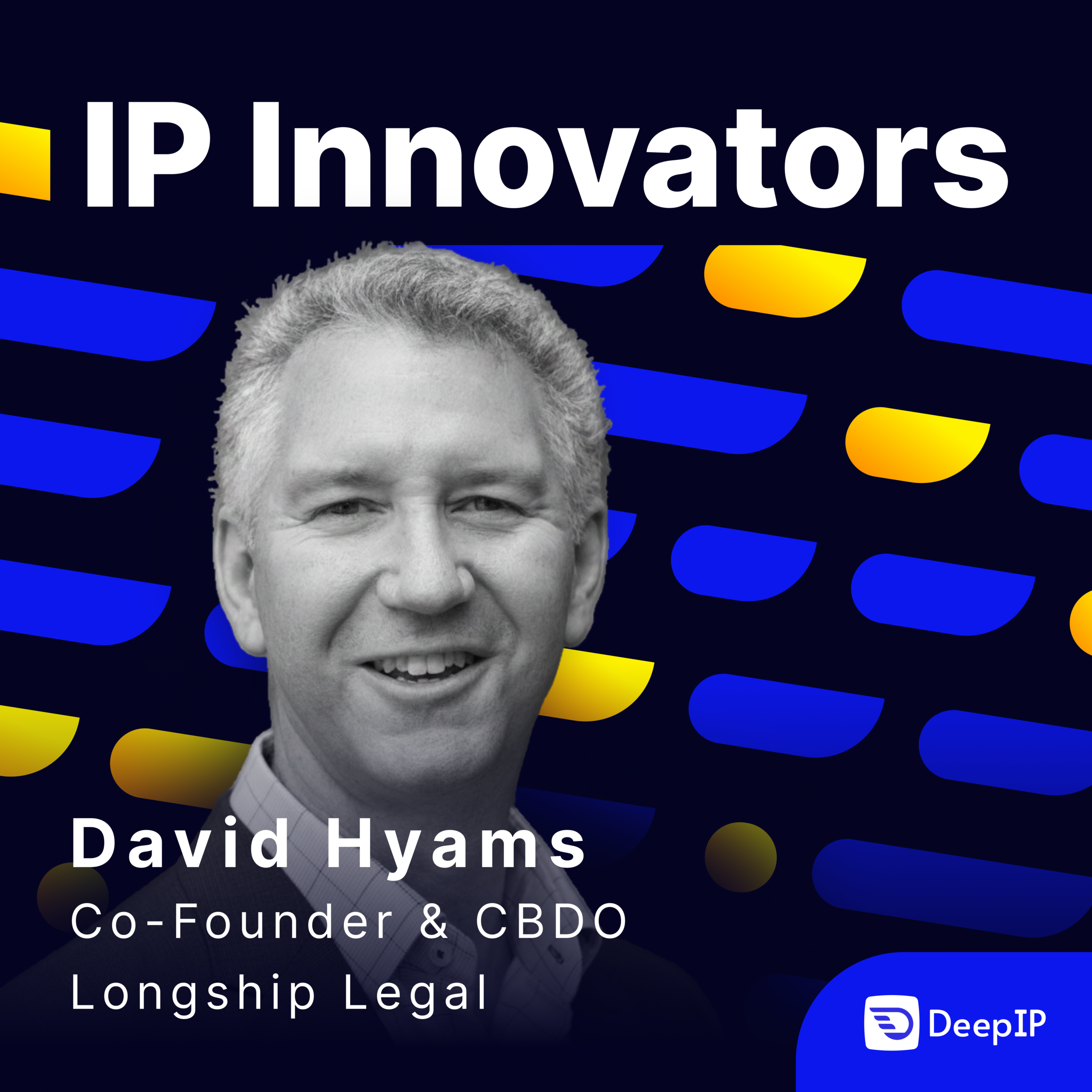
The Business-First IP Playbook: David Hyams on Mapping Business Value and the Limits of General LLMs
In the latest episode of IP Innovators, host Steve Brachmann sits down with David Hyams, Co-Founder and Chief Business Development Officer of Longship Legal, to explore what it looks like to build an IP practice around business value rather than patent volume. Drawing on a career that spans big law in Boston, in-house roles at Bose Corporation and AOL, and a cleantech startup, Hyams makes a case that the most important questions in IP strategy have nothing to do with patentability, and everything to do with understanding what a company is actually trying to win.
Olympic Games 2028 Preparation Part I: Never Too Soon to Get Your IP Strategy in Order
There’s a great deal of excitement and preparation for the Olympic Games, which will come to Los Angeles and Oklahoma City in 2028. Those of us in Oklahoma City are thrilled to host two events on behalf of LA28, softball and canoe slalom. If you are a business owner in one of these cities, you may be thinking, “How can I capitalize on the Olympic Games coming to my city?” This is the first of several helpful articles in which we will walk you through the myriad of legal issues and opportunities associated with hosting the Olympic Games.
Varsity Sponsors
![[Advertisement]](https://ipwatchdog.com/wp-content/uploads/2026/06/Patently-Jun-23-2026-sidebar-700x500-1.jpg)
![[Advertisement]](https://ipwatchdog.com/wp-content/uploads/2026/06/Patent-Bots-Jun-25-2026-sidebar-700x500-1.jpg)

Latest IPW Posts
Senate Judiciary Moves NO FAKES Act One Step Closer to Passage
June 18, 2026 @ 02:06 pmThe Real-World Implications of the Supreme Court’s Cox Decision
June 18, 2026 @ 12:36 pmAnti-Pharma Patent Bills Advance During Senate HELP Committee Hearing
June 17, 2026 @ 03:23 pm
Latest Podcasts

IPWatchdog Events
Webinar: The Invisible Checklist – What Makes IP Teams Say Yes to AI
June 23 @ 12:00 pm - 1:00 pm EDTWebinar: AI in Patent Drafting – When to Use Generative AI – and When Not To
June 25 @ 12:00 pm - 1:00 pm EDT
Industry Events
Free Taft IP Webinar – The New Shape of Things: Design Patent Prosecution, Litigation, and Damages in 2026
June 24 @ 12:00 pm - 1:00 pm EDTFrom IPWatchdog
![[Advertisement]](https://ipwatchdog.com/wp-content/uploads/2021/12/WEBINAR-336-x-280-px.png)
![[Advertisement]](https://ipwatchdog.com/wp-content/uploads/2021/12/Ad-4-The-Invent-Patent-System™.png)