
![[IPWatchdog Logo]](https://ipwatchdog.com/wp-content/themes/IPWatchdog%20-%202023/assets/images/temp/logo-small@2x.png)

 0
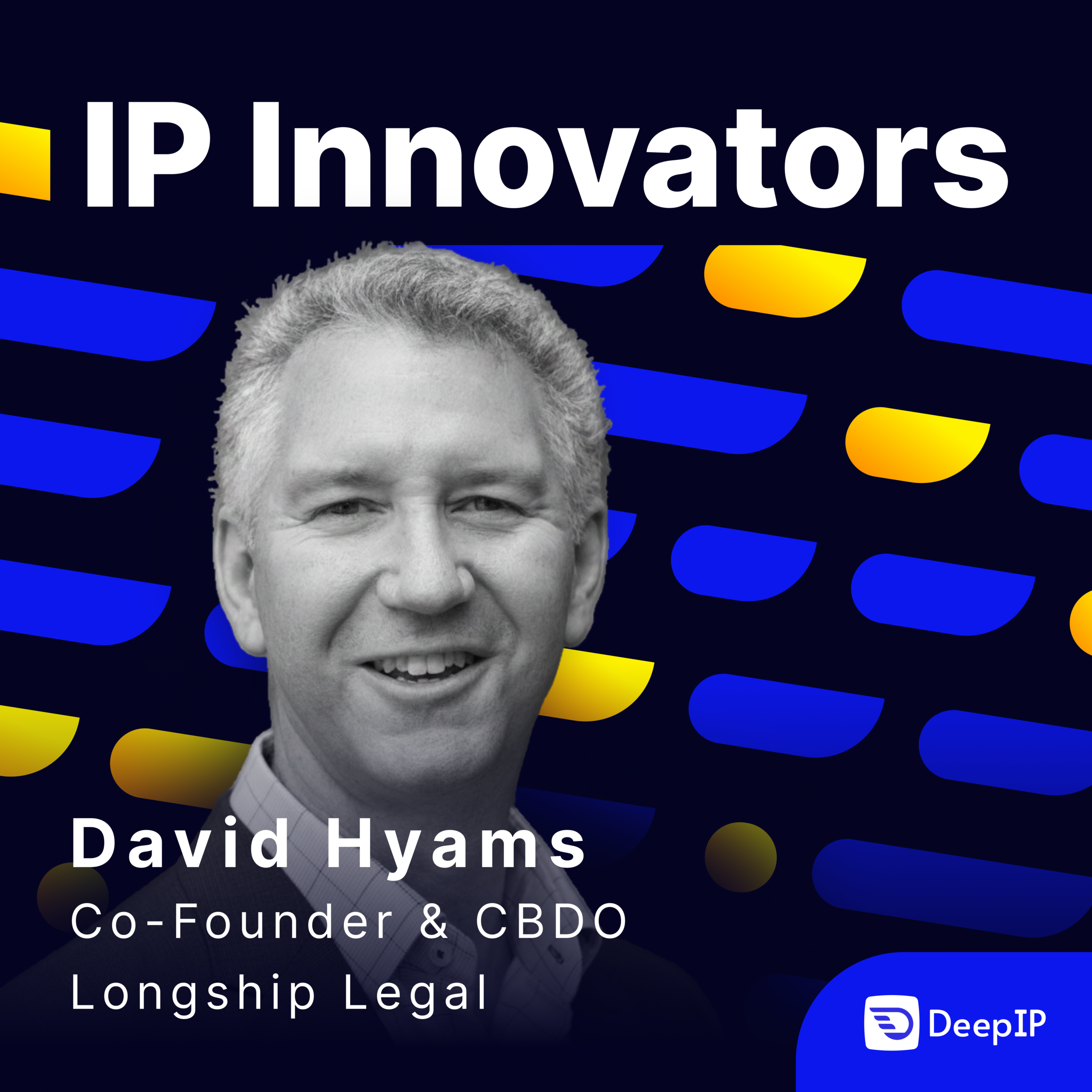
0 In the latest episode of IP Innovators, host Steve Brachmann sits down with David Hyams, Co-Founder and Chief Business Development Officer of Longship Legal, to explore what it looks like to build an IP practice around business value rather than patent volume. Drawing on a career that spans big law in Boston, in-house roles at Bose Corporation and AOL, and a cleantech startup, Hyams makes a case that the most important questions in IP strategy have nothing to do with patentability, and everything to do with understanding what a company is actually trying to win.
The Gap Between Patents Granted and Value Created
Longship Legal was born from a question Hyams and his co-founder Tim Johnson found themselves unable to answer while working together at a previous firm. They were doing the work—filing applications, getting patents granted—but something wasn’t adding up.
“We were getting patents for clients. But we couldn’t really connect the dots between the amount of effort that they were putting in…and the actual bottom line value to the companies that we were serving.”
That disconnect became the founding premise of Longship: that IP counsel should start with the business, not the invention. Before any conversation about claims or prosecution strategy, Hyams says the first questions have to be about the business model. “We have to start with: ‘Tell me about your business. What is your product or service? How do you deliver that to your customers? How does your business make money?'”
Separating Intangible Assets From IP Tools
A central theme of the conversation is the distinction Hyams draws between intangible assets and the legal tools used to protect them, something that he argues most patent practices collapse too quickly.
“Intellectual property is really a set of legal tools, and that’s kind of all they are, to capture the value of intangible assets that technology companies are creating all the time.”
In his framework, the first step is identifying which intangible assets are genuinely aligned with a company’s competitive advantage. Only then does the question of which legal tools to apply become meaningful. And those tools, he emphasizes, extend well beyond patents. A software process might be patentable, copyrightable, or worth more as a trade secret.
Contractual structures—the terms governing how employees build a product, how customers use it, how data is accessed—are themselves a form of IP protection. IP, he notes, “cuts across traditional silos within a business…you can have intellectual property implications in contracts, in employment agreements, certainly in licensing agreements, customer agreements.”
Why Patentability Isn’t the First Question
Hyams is candid about one habit in patent practice that he thinks costs clients real value: reaching for a Section 101 analysis too early and letting it end the conversation.
His view is that patentability belongs later in the process, after the intangible asset inventory, not before it. “Those [Section101] considerations wouldn’t affect the business or the technical analysis of identifying key intangible assets.” A potential eligibility issue is one input into a broader strategic recommendation. Leading with it, he argues, means walking away from protection that may exist through other mechanisms.
What AI Has (and Hasn’t) Changed in IP
Hyams has integrated AI tools into Longship’s practice since founding the firm in 2023 as a cloud-native operation. His assessment of what those tools deliver is measured.
“The real promise of AI to eliminate certain sorts of drudgery from our work has actually come true, at least in our practice. We’re able to generate documents much more quickly than we ever were before.”
But the limits are equally clear. “If the [underlying business deal] hasn’t been thought through and carefully negotiated by both sides…that’s nothing that AI can cure.”
AI can accelerate output, but it can’t identify a company’s key differentiators, understand its competitive vision, or supply the judgment that shapes whether an application will serve its purpose years down the line. “Judgment, analysis, client relationships—AI can’t do any of these things.”
He also draws a distinction worth noting for practitioners evaluating AI tools. After testing general-purpose LLMs against proprietary legal AI tools built on restricted datasets—case law, practice guides, jurisdiction-specific enforceability rules—the gap in output quality was significant.
A general LLM produced a contract that “sure looked like a contract. And if the parties had signed it…it would have been enforceable.” But enforceable isn’t the same as sound. The proprietary tool flagged jurisdiction-specific enforceability issues, cited the relevant case law, and explained what needed to change. His conclusion: “I use general AI tools with great caution.”
The Question Worth Asking
Patent attorneys worried about what AI will replace may be focused on the wrong question, Hyams suggests. “If your job was built entirely around typing,” he says, “then yes, you’re in trouble.”
The work that requires understanding a client’s business, identifying what’s actually worth protecting, and making the judgment calls that connect IP to real business value—that, he argues, is where the practice lives. And it’s not something any model is trained to supply.
IP Innovators is proudly sponsored by DeepIP—the patent intelligence platform for in-house teams and external counsel. Learn more at deepip.ai.
![[Advertisement]](https://ipwatchdog.com/wp-content/uploads/2026/06/Patently-Jun-23-2026-sidebar-700x500-1.jpg)
![[Advertisement]](https://ipwatchdog.com/wp-content/uploads/2026/06/Patent-Bots-Jun-25-2026-sidebar-700x500-1.jpg)
![[Advertisement]](https://ipwatchdog.com/wp-content/uploads/2026/06/IP-Copilot-Jun-30-2026-sidebar-700x500-1.jpg)



![[Advertisement]](https://ipwatchdog.com/wp-content/uploads/2021/12/WEBINAR-336-x-280-px.png)
![[Advertisement]](https://ipwatchdog.com/wp-content/uploads/2021/12/Ad-4-The-Invent-Patent-System™.png)




Join the Discussion
No comments yet. Add my comment.
Add Comment