

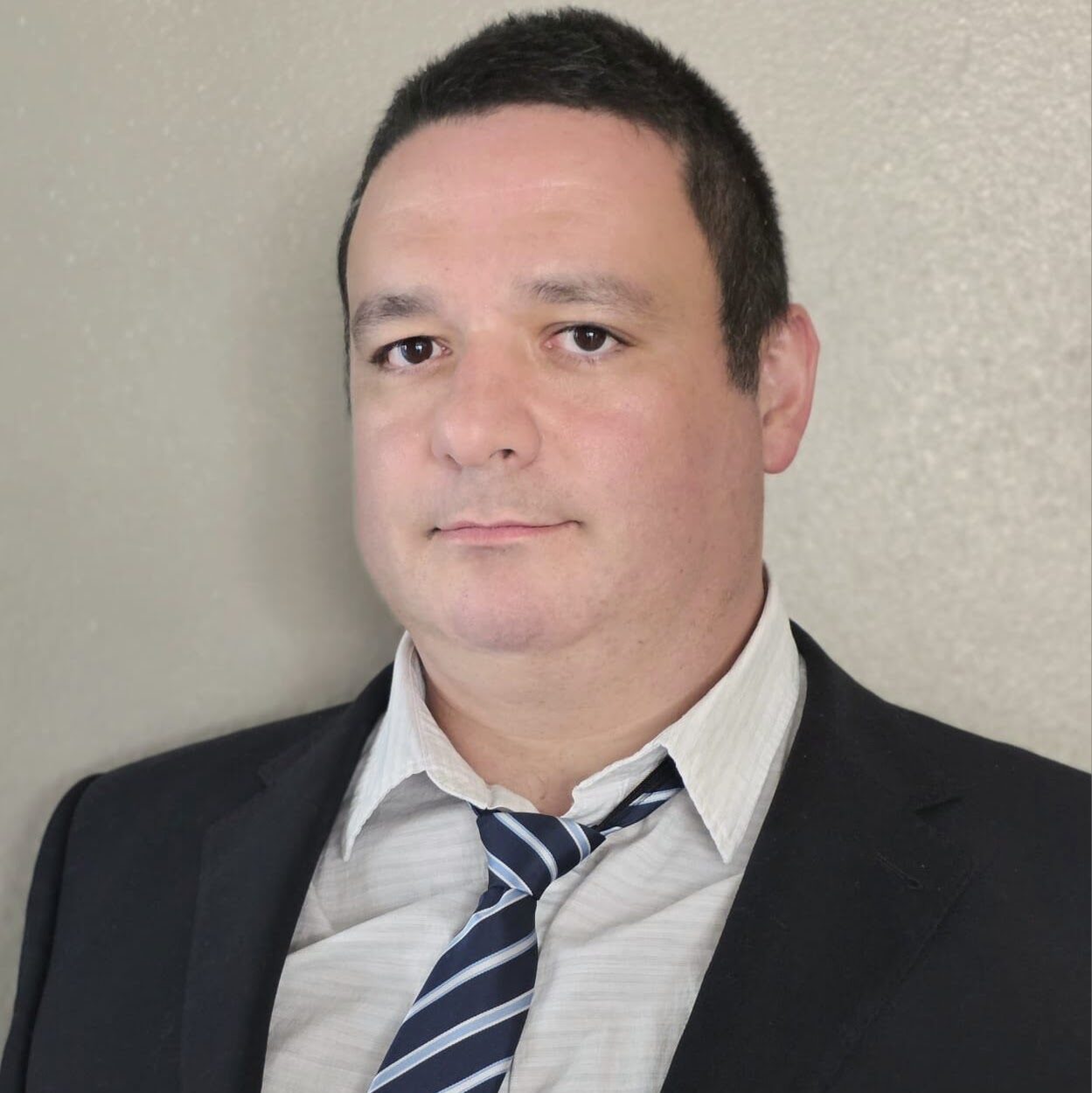
Alexandros Nikolaidis
Registered Patent Agent, Founder
Niki IP Services
Alexandros Nikolaidis is a pharmaceutical chemist and intellectual property strategist with over fifteen years of experience in patent development, prosecution, and portfolio strategy. He is a Registered Patent Agent and the founder of Niki IP Services, an independent consulting firm focused on life sciences, supplements, and pharmaceutical technologies. Alexandros has invented, drafted, and defended dozens of patents before the USPTO, with particular emphasis on improving the stability, bioavailability, and effectiveness of creatine and amino acid formulations. He is also recognized for being a pioneer on the use of inorganic nitrate in the context of athletic performance enhancement. Alexandros holds an MSc in Pharmaceutical Chemistry from the University of Florida and has passed the patent bar exam and is awaiting full registration as a patent agent. His research interests include the role of nitric oxide in human physiology and its potential correlation with COVID-19 susceptibility and outcomes.

Recent Articles by Alexandros Nikolaidis
Literally False or Merely Misleading: Why a False Advertising Verdict Is Not a Meta-Analysis
A Lanham Act false advertising verdict is not a scientific meta-analysis. It does not pool evidence, weight studies by quality, or resolve heterogeneity. It allocates burdens and asks whether the party carrying one carried it on the record that party chose to build. Read a false advertising judgment for more than that — for what the science shows, for whether the product works — and you will misread it.
USPTO Issues Its First AI-Predicated Discipline Order Involving Hallucinated Cites to Intrinsic Record
The U.S. Patent and Trademark Office’s (USPTO’s) Office of Enrollment and Discipline (OED) posted a final order to its website on August 27, publicly reprimanding a California patent attorney for submitting a claim construction chart containing citations that generative AI invented — not to case law, but to the intrinsic record of the patent in suit. In re Brian E. Mitchell, Proceeding No. D2026-16, resolves by settlement. Mitchell executed the agreement on July 20, 2026, and the OED Director on July 21. Tricia Choe, Associate General Counsel for General Law, approved it on July 27 on delegated authority from Under Secretary of Commerce for Intellectual Property and USPTO Director John A. Squires.
The Inventorship Squeeze: Invalidity, Unenforceability, and Why Prosecution Just Got More Expensive
In the space of a few months, the U.S. Court of Appeals for the Federal Circuit and the U.S. District Court for the District of Massachusetts delivered two decisions that, read together, change how patent applicants and their counsel should approach the deceptively simple question of who invented what. Fortress Iron, LP v. Digger Specialties, Inc., No. 2024-2313 (Fed. Cir. Apr. 2, 2026), holds that if an inventorship error cannot be corrected under 35 U.S.C. § 256, the patent is invalid — full stop, no intent required. Inline Plastics Corp. v. Lacerta Group, Inc., No. 1:18-cv-11631 (D. Mass. Nov. 13, 2025), holds that if an inventorship omission was intentional, the entire patent family is unenforceable for inequitable conduct — the Therasense penalty at full weight.
When Trade Secret Claims Become Non-Competes by Another Name
On June 15, 2026, a federal court in San Francisco dismissed xAI’s trade secret claims against OpenAI with prejudice. The dismissal came with prejudice for a reason that sits at the heart of this article: xAI had sought to keep the case alive long enough to obtain, in discovery, the evidence it lacked at filing. The court refused, holding that a plaintiff “was required to have completed its investigation of its claims before filing suit, not after.” Put differently: the court did not treat a job interview as a trade secret extraction ceremony.
When Trade Secret Injunctions Become Patent Noncompetes
A recent U.S. Court of Appeals for the Federal Circuit decision applying California trade secret law offers a timely reminder that published patent materials cannot easily be recast as trade secrets. In International Medical Devices, Inc. v. Cornell, the Federal Circuit reversed trade-secret liability and vacated related damages and injunctive relief after concluding that the plaintiffs had not shown protectable trade secrets under the California Uniform Trade Secrets Act.