
![[IPWatchdog Logo]](https://ipwatchdog.com/wp-content/themes/IPWatchdog%20-%202023/assets/images/temp/logo-small@2x.png)

 0
0 “When a plaintiff elects literal falsity for a contested claim, often to avoid survey costs, and loses because the claim is not unambiguously false, the structure worked as designed.”
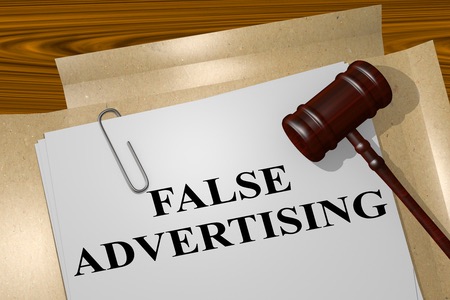 A Lanham Act false advertising verdict is not a scientific meta-analysis. It does not pool evidence, weight studies by quality, or resolve heterogeneity. It allocates burdens and asks whether the party carrying one carried it on the record that party chose to build. Read a false advertising judgment for more than that — for what the science shows, for whether the product works — and you will misread it.
That confusion animates a University of Georgia Law note published this spring, which argues that courts now treat a marketing promise as not literally false so long as the product works for someone, and proposes that any unqualified message failing in practice for ordinary consumers be deemed literally false, Truth That Lies: How Literal Falsity Lost the Consumer and How to Restore It, 33 J. Intell. Prop. L. (2026). The instinct is sound: advertisers do exploit the gap between what a sentence can be defended as meaning and what buyers hear. The diagnosis is not.
What follows is a practitioner’s map of the burdens. If you intend to plead studies, you need to know which of several rules you are about to be judged under.
1. Which track: the election is usually dispositive
A literally false claim carries a presumption of deception, and no consumer survey is required. Pizza Hut, Inc. v. Papa John’s Int’l, Inc., 227 F.3d 489 (5th Cir. 2000). A claim of literally true but misleading requires the plaintiff to prove what the advertisement conveyed, ordinarily through extrinsic evidence.
The presumption has a price. Because the plaintiff is excused from proving deception, courts confine that track to claims conveying an unambiguous single message. Groupe SEB USA, Inc. v. Euro-Pro Operating LLC, 774 F.3d 192 (3d Cir. 2014). Where meaning is contestable, the claim belongs on the misleadingness track, where the plaintiff pays for the proof the presumption would otherwise supply.
That is a trade, not a hierarchy, and it explains outcomes routinely mistaken for doctrinal collapse. When a plaintiff elects literal falsity for a contested claim, often to avoid survey costs, and loses because the claim is not unambiguously false, the structure worked as designed. Nobody invoked the consumer-meaning inquiry sitting right there.
If the facts allow it, plead both, in the alternative, always.
2. Which claim type: establishment or bare efficacy
An establishment claim represents that testing supports the assertion. A bare efficacy claim says only what the product does.
Where an advertiser claims tests prove a proposition, the challenger may establish falsity by showing the cited testing is not sufficiently reliable to support the claim made, without disproving the proposition. Castrol Inc. v. Quaker State Corp., 977 F.2d 57 (2d Cir. 1992). A bare efficacy claim offers no such shortcut.
Commentary conflates the two. The cherry-picking scenario — three studies, one cited — is an establishment-claim problem, and Castrol has handled it for three decades.
3. Which sovereign’s law: the shortcut does not travel
The establishment framework is a Lanham Act construct. California courts have refused to import it. Aloudi v. Intramedic Research Grp., LLC, No. 15-cv-00882-HSG, 2015 WL 4148381, at *4 (N.D. Cal. July 9, 2015), aff’d (9th Cir. 2017); Kwan v. SanMedica Int’l, 854 F.3d 1088 (9th Cir. 2017).
The related rule bites harder: a private plaintiff alleging only that the advertiser lacks support pleads non-actionable lack of substantiation, not falsity. Kwan, 854 F.3d 1088. The theory that states a claim under §43(a) can be dismissed at the pleadings under §17200.
4. Ingredient studies versus the product on the shelf
Courts routinely dismiss claims resting on single-ingredient literature where the product combines several actives. Otto v. Abbott Laboratories, Inc., No. CV 12-1411-SVW (DTB), 2013 U.S. Dist. LEXIS 53287, at *13, *24 (C.D. Cal. Mar. 15, 2013); Eckler v. Wal-Mart Stores, Inc., No. 12-CV-727-LAB-MDD, 2012 WL 5382218, at *6 (S.D. Cal. Nov. 1, 2012); Murray v. Elations Co., No. 13-cv-02357, 2014 WL 3849911, at *7–8 (S.D. Cal. Aug. 4, 2014); Padilla v. Costco Wholesale Corp., No. 11 C 7686, 2013 WL 195769 (N.D. Ill. Jan. 16, 2013).
Proprietary blends compound the problem. In Dabish v. MusclePharm Corp., No. 3:15-cv-02848-CAB-RBB (S.D. Cal. Sept. 26, 2016), plaintiffs alleged the labels advertised two named compounds’ benefits; the labels themselves claimed nothing for either substance in isolation, touting a branded matrix as a whole. A court need not accept allegations the labels contradict.
But note where the line falls. In Yeldo v. MusclePharm Corp., 290 F. Supp. 3d 702 (E.D. Mich. 2017), the defendant pressed this argument, and the court agreed the premise is correct as it pertains to the active ingredients within a product — then denied the motion, because the product had a single active ingredient and the plaintiff’s nine studies went to it. The question is not how many substances appear on the panel, but how many actives the representations depend on.
The mirror image binds advertisers. FTC v. National Urological Group, Inc., 645 F. Supp. 2d 1167, 1202 (N.D. Ga. 2008) (a different dose or combination of actives would not substantiate an efficacy claim); FTC v. Wellness Support Network, Inc., No. 3:10-cv-04879 (N.D. Cal.) (trials must use the exact dosage and formulation, because ingredients may interact in ways affecting their physiological actions). Industry has argued, with some force, that these rest on narrow grounds; whether full-product testing is required remains contested.
Otto names the consequence out loud: taken to its logical end, the plaintiff’s own critique meant none of the cited studies were relevant, because none tested the formulation sold — and the court dismissed on that footing anyway. The symmetry is the point. To the extent the rule holds, the published literature that actually exists for most products is available to both sides and sufficient for neither.
5. Matching the study to the statement
Even where ingredient count is not fatal, the study must contradict the specific representation. Courts describe the defect as a mismatch “between the representations at issue and the evidence that allegedly debunks them”. Amado v. Procter & Gamble Co., 2023 U.S. Dist., at *22 (N.D. Cal. June 8, 2023) (quoting Eckler). Six failure modes recur.
Wrong analyte. In Dabish, plaintiffs relied on studies of a different, more conventional chemical form of the same base compound — no more relevant, the court held, than studies of one fruit would be to claims about another. Chemical form, salt, and delivery matrix are not interchangeable.
Wrong proportion. In Amado, plaintiffs cited a 1984 trial to disprove a fiber claim, but the fiber-to-sugar ratio tested bore no resemblance to the product’s.
Wrong population. Amado‘s second study examined diabetic subjects; the label referenced no such population and plaintiffs did not allege membership in it. Accord Eckler, 2012 WL 5382218, at *7 (osteoarthritis studies did not reach far broader label representations).
Safety is not efficacy. Dabish‘s remaining study addressed safety and noted further research was needed on effectiveness. Inconclusive evidence is not contradictory evidence; pleading it is pleading lack of substantiation. Bronson v. Johnson & Johnson, Inc., No. C 12-4184 CRB, 2013, at *8 (N.D. Cal. Apr. 16, 2013).
Undefined endpoint. The central authority in Otto reported no “ergogenic” benefit in “healthy” subjects — but used that term to span anti-catabolic, anabolic, and lipolytic effects, and never defined healthy. The court refused to guess which variable was tested. An endpoint that does not map onto the advertised endpoint proves nothing, however adverse it sounds.
Uncompared comparatives. Dabish plaintiffs alleged the product was marketed as superior to a conventional alternative — but no label said so, several products contained both, and no cited study compared them. Murray, 2014 WL 3849911, at *7; Padilla, 2013 WL 195769, at *4.
6. Who carries the studies: Rule 702 and the litigation expert
The sharpest test of the thesis here is the ruling that appears to refute it. In the Roundup MDL, the court excluded the plaintiff’s sole general-causation expert, holding her 2019 meta-analysis junk science on several independent grounds — among them that she had omitted later studies undermining her results. Summary judgment followed. In re Roundup Products Liability Litigation, MDL No. 2741, No. 16-md-02741-VC (N.D. Cal. June 20, 2024) (Pretrial Order No. 293) (Bulone v. Monsanto Co., No. 20-cv-03719-VC), aff’d, No. 24-4241 (9th Cir. Sept. 25, 2025) (unpublished).
That looks like a court grading a meta-analysis, and in one sense it is: Rule 702 is the single place where judges examine scientific method directly, and the 2023 amendment made reliability an admissibility question the proponent must carry by a preponderance.
But note what the ruling produced. An expert was excluded; a paper was not retracted. Review was for abuse of discretion, not correctness, see General Electric Co. v. Joiner, 522 U.S. 136, 139 (1997) — the affirmance holds the trial judge acted within his authority, not that the question is settled. And the inquiry reached only the opinion offered, on the record built.
Two consequences. The reliability factors include whether the expert’s work was done independently of the litigation or generated expressly for testimony. Daubert v. Merrell Dow Pharmaceuticals, Inc., 43 F.3d 1311, 1317 (9th Cir. 1995) (on remand). And a plaintiff who elects literal falsity to avoid a survey concentrates the whole case in one witness — one a Rule 702 motion can remove before a factfinder hears anything.
7. Which forum: the same evidence, opposite answers
Where a dietary supplement makes a structure/function claim under 21 U.S.C. §343(r)(6), state-law challenges are expressly preempted if the manufacturer complied — and the courts have read the statute to require substantiation for the nutrient’s claimed effect, not proof that the finished product delivers it. Ferrari v. Vitamin Shoppe Indus. LLC, 70 F.4th 64 (1st Cir. 2023); Greenberg v. Target Corp., 985 F.3d 650 (9th Cir. 2021); Dachauer v. NBTY, Inc., 913 F.3d 844 (9th Cir. 2019). Amado states the consequence plainly: a manufacturer may make a broad statement about a dietary ingredient’s general effect even where the dose in the product may not actually produce that result, so long as the statement describes the nutrient rather than promises product performance.
Set that beside §4: nutrient-level substantiation is sufficient in one forum and insufficient in another, turning on which statute was invoked. Lanham Act claims sit outside the preemption line entirely. POM Wonderful LLC v. Coca-Cola Co., 573 U.S. 102 (2014). Nor is regulatory noncompliance a backdoor — Dabish dismissed with prejudice claims premised on a federal premarket-notice failure, because §337(a) bars private enforcement.
8. Claim scope does most of the work
Before any of this, courts construe what the advertisement asserted — a step that decides more cases than anything downstream. Sabatano v. Iovate Health Sciences U.S.A. Inc., No. 19 CV 8924 (VB) (S.D.N.Y. June 22, 2020) is the clean illustration. Consumers alleged a supplement not only failed to increase muscle protein synthesis but reduced it, citing published research. The court dismissed the New York and California claims by reading the label: statements that a product “promotes” synthesis and “primes” muscles do not represent that it builds muscle on its own.
Note what is absent: no favorable outlier population. The science was adverse across the board, and the advertiser still prevailed, because the proof did not reach the proposition the label conveyed. Note also the forum — a court applying both New York and California law. If the method some call a minority rule is applied in the majority’s own courts, it is not a minority rule.
9. Why the proposed cure would not work
Deeming a message literally false whenever it fails in practice expands liability, whatever the disclaimer: literal falsity presumes deception, so grafting a contested efficacy question onto it hands the plaintiff both the presumption and the fight. It supplies no threshold — majority, median responder, substantial segment — and undefined, it seats a judge where a survey belongs. And it is unusable by the plaintiffs it means to help: proving in-practice failure for a combination product takes a formulation-level trial, at multiples of the survey cost the proposal calls prohibitive.
10. What to take from this
If you advertise: know your claim’s category before you write it. Name the studied dose rather than gesturing at a “clinically studied” one. Match substantiation to the formulation you sell, and to the exact chemical form. Grade the verb — “studied at,” “shown to,” and “clinically proven” impose escalating burdens, and most litigated damage comes from free upgrades nobody needed. Audit net impression across the whole page.
If you challenge: the Dabish court, granting leave to amend, set out what a compliant pleading requires — quote the exact misrepresentation; identify the label carrying it; state when and where the plaintiff saw and relied on it; establish standing for products not purchased; and cite studies that directly contradict the statement. Plead both theories. Confirm the establishment shortcut is available in your forum. Vet your expert against Rule 702. And if the product is a formulation, plan for formulation-level evidence from the outset.
If you read judgments: read them for what they decide. A ruling that a plaintiff failed to prove falsity is a statement about that plaintiff’s proof. It is not a verdict on the product, and it is not a meta-analysis.
![[Advertisement]](https://ipwatchdog.com/wp-content/uploads/2026/06/Womens-IP-Forum-2026-sidebar-regular-price-700x500-rev1.jpg)
![[Advertisement]](https://ipwatchdog.com/wp-content/uploads/2026/09/WE-BUY-PATENTS-SIM-IP-Ad-1-700x500-1.jpeg)
![[Advertisement]](https://ipwatchdog.com/wp-content/uploads/2026/08/OneTransform_700x500_v1-REVISED.jpg)
![[Advertisement]](https://ipwatchdog.com/wp-content/uploads/2024/09/Patent-Prosecution-Training-sidebar-700x500-2025-03-27.jpg)





![[Advertisement]](https://ipwatchdog.com/wp-content/uploads/2021/12/WEBINAR-336-x-280-px.png)
![[Advertisement]](https://ipwatchdog.com/wp-content/uploads/2021/12/Ad-4-The-Invent-Patent-System™.png)

Join the Discussion
No comments yet. Add my comment.
Add Comment