
![[IPWatchdog Logo]](https://ipwatchdog.com/wp-content/themes/IPWatchdog%20-%202023/assets/images/temp/logo-small@2x.png)

 0
0 “If the alleged inventive concept is not required by the claim, then the claim cannot be ‘significantly more’ than the abstract idea itself and fails at step two.” – CAFC
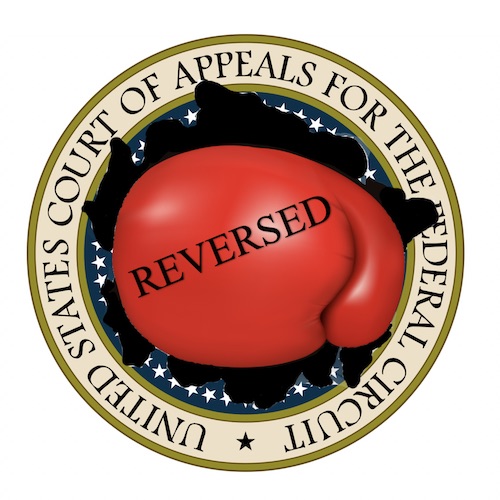 The U.S. Court of Appeals for the Federal Circuit (CAFC) issued a decision today in Berkeley*IEOR v. W.W. Grainger Inc., reversing a district court’s grant of summary judgment that a set of profitability-calculation patent claims were eligible under Section 101. The CAFC held that the representative claim is directed to an abstract idea and that the inventive concept identified by the district court, a form of parallel computer processing, is not required by the claim language.
Berkeley*IEOR, doing business as B*IEOR (Berkeley), owns U.S. Patent Nos. 7,596,521, 7,882,137, and 8,612,316, which claim methods for calculating object level profitability. In October 2017, Berkeley filed a lawsuit against Teradata Operations, Inc. and W.W. Grainger, Inc. in the U.S. District Court for the Northern District of Illinois for infringement of claims across the three patents. Berkeley’s operative complaint, filed in March 2018, alleged five counts. Count I alleged direct infringement against Grainger under Section 271(a). Counts II through IV alleged direct infringement under Section 271(a) and/or Section 271(g), against DHL Express (USA), Danzas Corp., and Air Express International USA, the latter two doing business as DHL Global Forwarding. Together with Grainger, these three defendants were referred to as the Customer Defendants. Additionally, Count V alleged indirect infringement against Teradata.
Before reaching summary judgment, the district court severed and stayed Counts I through IV under the customer-suit exception and dismissed Counts II through IV as to the Section 271(g) allegations. Berkeley separately appealed those rulings, but the CAFC did not reach them.
Berkeley then moved for summary judgment that the asserted claims were patent-eligible under Section 101, and Teradata cross-moved for summary judgment of ineligibility or a finding of no indirect infringement under Count V. On March 7, 2024, the district court granted Berkeley’s motion. The district court determined, and the parties agreed, that claim 1 of the ‘521 patent was representative of the asserted claims for purposes of patent eligibility. Claim 1 recites a computer-implemented process for determining object-level profitability using a relational database management system and established information-processing rules. The process independently calculates marginal profit values for each measured object, calculates a fully absorbed profit adjustment value, and combines those values to determine object-level profitability.
Under the two-step framework from Alice Corp. Pty. Ltd. v. CLS Bank International, the district court determined at step one that claim 1 was directed to the abstract idea of “calculating profitability.” At step two, the district court found an inventive concept in the claim’s independent calculation limitation, describing it as “a claimed unconventional combination [that] improves the functioning and operation of the computer itself by performing parallel computations in a faster amount of time.” The district court reached that determination while also finding that the claim’s “independently calculate” language did not require parallel processing and would permit sequential calculations, reasoning that “the Asserted Patents do not ‘require’ parallel processing” but provide for it. After finding the claims eligible, the district court denied Teradata’s competing motion and separately granted summary judgment of no indirect infringement under Count V. The Customer Defendants then obtained dismissal with prejudice of the remaining direct infringement counts.
Teradata cross-appealed the eligibility determination, arguing the judgment should be affirmed on the alternative ground that the asserted claims are ineligible, and the CAFC agreed.
Judge Reyna, writing for the Federal Circuit, agreed with the district court’s step one finding, concluding claim 1 is directed to the idea of performing mathematical calculations to determine profitability using a computer. The court cited Electric Power Group, LLC v. Alstom S.A. and SAP America, Inc. v. InvestPic, LLC for the proposition that performing calculations based on collecting and analyzing information is an abstract idea. The court also stated that performing the calculation faster on a computer does not save the claim from abstraction, citing GoTV Streaming, LLC v. Netflix, Inc.
At step two, the Federal Circuit disagreed with the district court’s determination. Teradata had argued that parallel processing could not supply an inventive concept as a matter of law since claim 1 does not require the relational database management system to process calculations in parallel. The Federal Circuit agreed, stating that “if a claim is so broad that it can be practiced without the alleged inventive concept, i.e., the alleged inventive concept is not required by the claim, then the claim cannot be “significantly more” than the abstract idea itself and fails at step two.” The court noted that the parties, including Berkeley’s own counsel at oral argument, agreed that parallel processing “[is] not a claim requirement” of claim 1. Based on that agreement, the court held that the district court erred in concluding that parallel processing supplied the inventive concept for claim 1.
Berkeley argued that the claim’s independent calculation limitation recites an additional inventive concept. Specifically, the relational database management system independently calculates marginal profit values within the system itself, unlike prior art that requires multiple computers to extract and sequentially process data. The Federal Circuit rejected that argument as directed to the same parallel processing concept, noting that Berkeley’s briefing and expert testimony tied the alleged inventiveness of independent calculation directly to the ability to perform those calculations in parallel.
The Federal Circuit found no genuine dispute of material fact that claim 1 recites no inventive concept. The court reversed the district court’s grant of summary judgment of patent eligibility and affirmed the judgment on Counts I through V in favor of Teradata and the Customer Defendants on the alternative ground that the asserted claims are patent ineligible under Section 101.
Image Source: Deposit Photos
Image ID: 10042948
Author: almoond
![[Advertisement]](https://ipwatchdog.com/wp-content/uploads/2026/09/Patently-Sep-22-2026-sidebar-700x500-1.jpg)
![[Advertisement]](https://ipwatchdog.com/wp-content/uploads/2026/06/Womens-IP-Forum-2026-sidebar-regular-price-700x500-rev1.jpg)
![[Advertisement]](https://ipwatchdog.com/wp-content/uploads/2026/09/WE-BUY-PATENTS-SIM-IP-Ad-1-700x500-1.jpeg)
![[Advertisement]](https://ipwatchdog.com/wp-content/uploads/2026/08/OneTransform_700x500_v1-REVISED.jpg)
![[Advertisement]](https://ipwatchdog.com/wp-content/uploads/2024/09/Patent-Prosecution-Training-sidebar-700x500-2025-03-27.jpg)







![[Advertisement]](https://ipwatchdog.com/wp-content/uploads/2021/12/WEBINAR-336-x-280-px.png)
![[Advertisement]](https://ipwatchdog.com/wp-content/uploads/2021/12/Ad-4-The-Invent-Patent-System™.png)







Join the Discussion
No comments yet. Add my comment.
Add Comment