

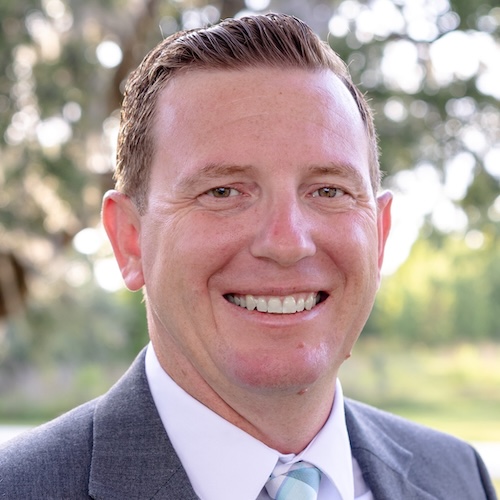
John Rogitz
Managing Attorney
Rogitz & Associates
John M. Rogitz is an IAM 300 World-Leading IP Strategist and second-
He is also a member of the IPWatchdog Advisory Committee and an adjunct professor at Trinity Law School.
As Managing Attorney at Rogitz & Associates, John manages the firm’s day-to-day operations and many of the firm’s clients. He is a registered patent attorney specializing in patent preparation and prosecution in a range of technologies including artificial intelligence, robotics, autonomous systems, extended reality, video games, IoT, blockchain, fintech, software platforms, computer hardware, and medical devices. His clients range from startups and independent inventors to Fortune 500 companies.
John writes for IPWatchdog and has also been published by IP Today, IP Magazine, and others. In addition, John regularly speaks in public forums organized by the California Lawyers Association, IPWatchdog, the National Association of Patent Practitioners, and Licensing Executives Society. Prior to practicing law, John worked in industry as a web developer.

Recent Articles by John Rogitz
USPTO Updates Its SMED Guidance — and Signals That It’s Working
On April 30, 2026, U.S. Patent and Trademark Office (USPTO) Director John A. Squires issued an updated memorandum on Best Practices for Submission of Rule 132 Subject Matter Eligibility Declarations (SMEDs), “superseding” the December 4, 2025, memos that launched the current iteration of the SMED program. While the April 30 memo introduces no substantive changes to the underlying framework — the principles of the original SMED Examiner Memo, the relevant Manual of Patent Examining Procedure (MPEP) provisions, and the Alice/Mayo two-step analysis all remain — the update matters to practitioners for at least two reasons: it confirms that SMEDs are actually working, and it signals that the Office intends to refine the guidance over time as practitioners gain more experience with the tool.
Operationalizing AI: From Passenger Experience to Orbital Logistics
Welcome back to Cool AI Patents of the Month, where we highlight innovations that blur the line between science fiction and real-world engineering. Last month, we looked at AI-generated voice replicas, particularly in sports broadcasting. That concept is no longer theoretical. Major League Baseball players have reportedly entered into agreements enabling the creation of AI-driven digital avatars, allowing fans to engage directly with AI-generated versions of their favorite players. The takeaway is clear: personality and likeness are being productized. What once seemed futuristic is quickly becoming commercially relevant.
Cool AI Patents of the Month: Real-Time Sports Insights and Smarter Vehicles
Welcome back to Cool AI Patents of the Month, where we spotlight inventive developments at the intersection of artificial intelligence (AI) and intellectual property. In this installment, we take a look at two standout innovations—one that could transform how we watch sports, and another that may reshape how our vehicles understand the road ahead. Both illustrate how quickly AI is integrating itself into our daily lives.
Cool AI Patents of the Month: Spotting Chatbots and Stopping Bullies
Welcome to the very first installment of Cool AI Patents of the Month. Each month, we’ll look at some of the more eye-catching and creative ways Artificial Intelligence (AI) is showing up in innovations that themselves wind up represented in patents or patent applications. The goal isn’t to get overly technical, but to highlight technology that’s genuinely cool and thought-provoking — the kind of inventions that make you say, “Wow, that’s clever.”
Squires’ Application of Section 101 in Ex parte Desjardins Bodes Well for AI Patents
In Ex parte Desjardins, the U.S. Patent and Trademark Office’s (USPTO’s) Appeals Review Panel (ARP) – which in this instance included Director John A. Squires, Acting Commissioner Valencia Martin Wallace, and Vice Chief Judge Michael W. Kim – considered a claim directed to training machine learning models. This decision has already been celebrated by many in the IP community for the positive impact it could have for patent applicants and patentees, and indeed this was a great way for Director Squires to make his presence known straight out of the gate.
