
![[IPWatchdog Logo]](https://ipwatchdog.com/wp-content/themes/IPWatchdog%20-%202023/assets/images/temp/logo-small@2x.png)

 0
0 “AI is no longer confined to software layers or back-office analytics. It is being embedded directly into operational systems that interact with the physical world.”
Welcome back to Cool AI Patents of the Month, where we highlight innovations that blur the line between science fiction and real-world engineering.
Last month, we looked at AI-generated voice replicas, particularly in sports broadcasting. That concept is no longer theoretical. Major League Baseball players have reportedly entered into agreements enabling the creation of AI-driven digital avatars, allowing fans to engage directly with AI-generated versions of their favorite players. The takeaway is clear: personality and likeness are being productized. What once seemed futuristic is quickly becoming commercially relevant.
AI Moves into the Cabin: Panasonic’s In-Flight Virtual Assistant
Screenshot
This month’s first example pushes AI deeper into embedded, physical environments, with an AI driven in-flight virtual assistant.
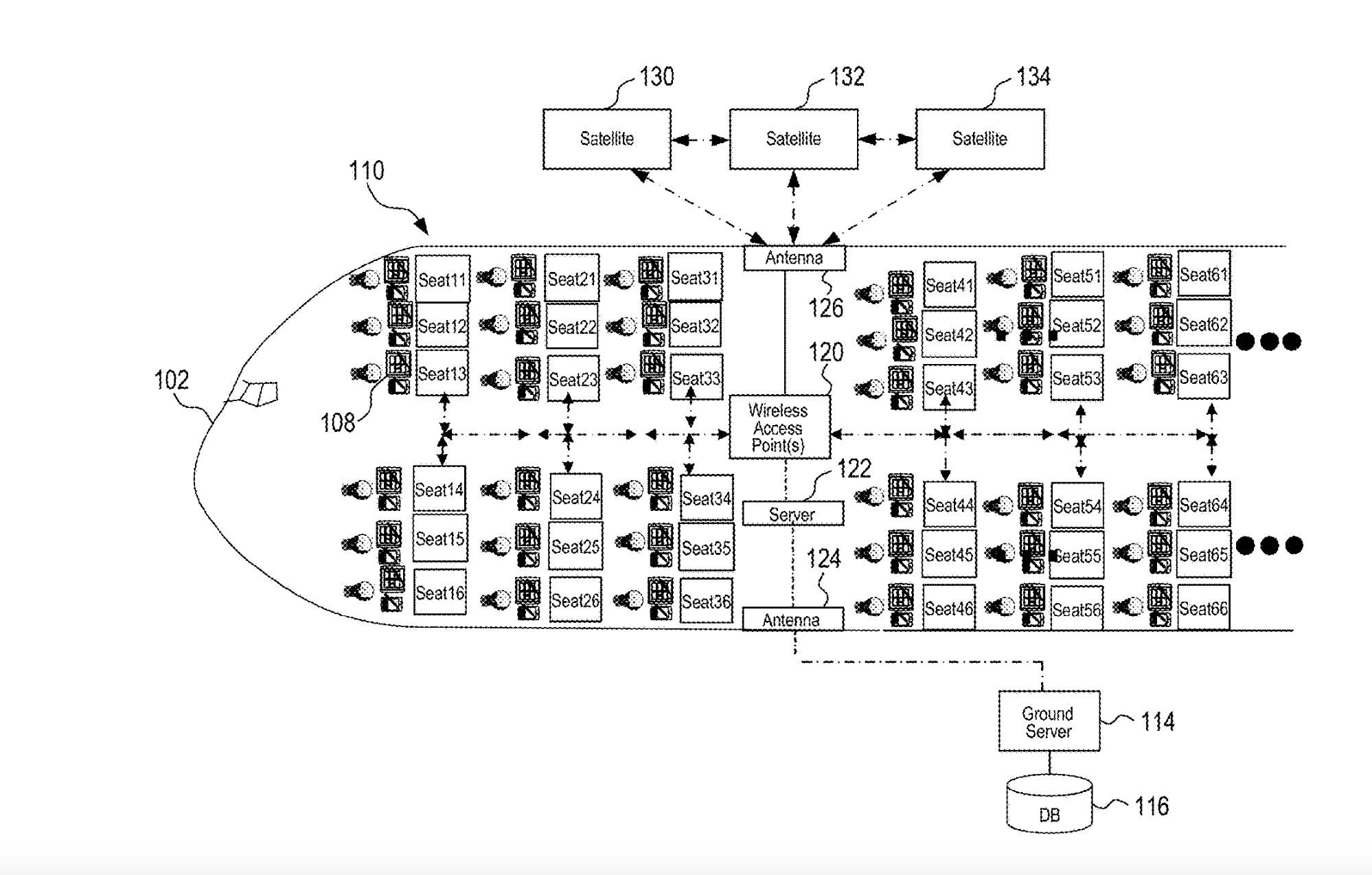
U.S. Patent Publication No. 2026/0100188, assigned to Panasonic, outlines an AI-powered in-flight assistant that materially expands the scope of passenger interaction beyond current infotainment systems. This is not an incremental UX improvement—it’s a shift toward autonomous, task-executing agents operating in constrained environments.
The disclosed system functions as a personal concierge at altitude. It can generate and manage itineraries, interface directly with a passenger’s personal computing device to edit documents, coordinate in-flight services such as food ordering, and communicate with cabin crew as a proxy for the passenger. It even contemplates real-time status checks for shared resources like lavatory availability.
What differentiates this filing is its forward-looking scope. The application explicitly extends these capabilities to spacecraft environments. Interacting with an in-flight AI model to manage elements of space travel may sound like something out of science fiction, but this filing highlights how rapidly such concepts are moving from imagination to implementation.
Rethinking Docking: Flexible Capture Systems in Space
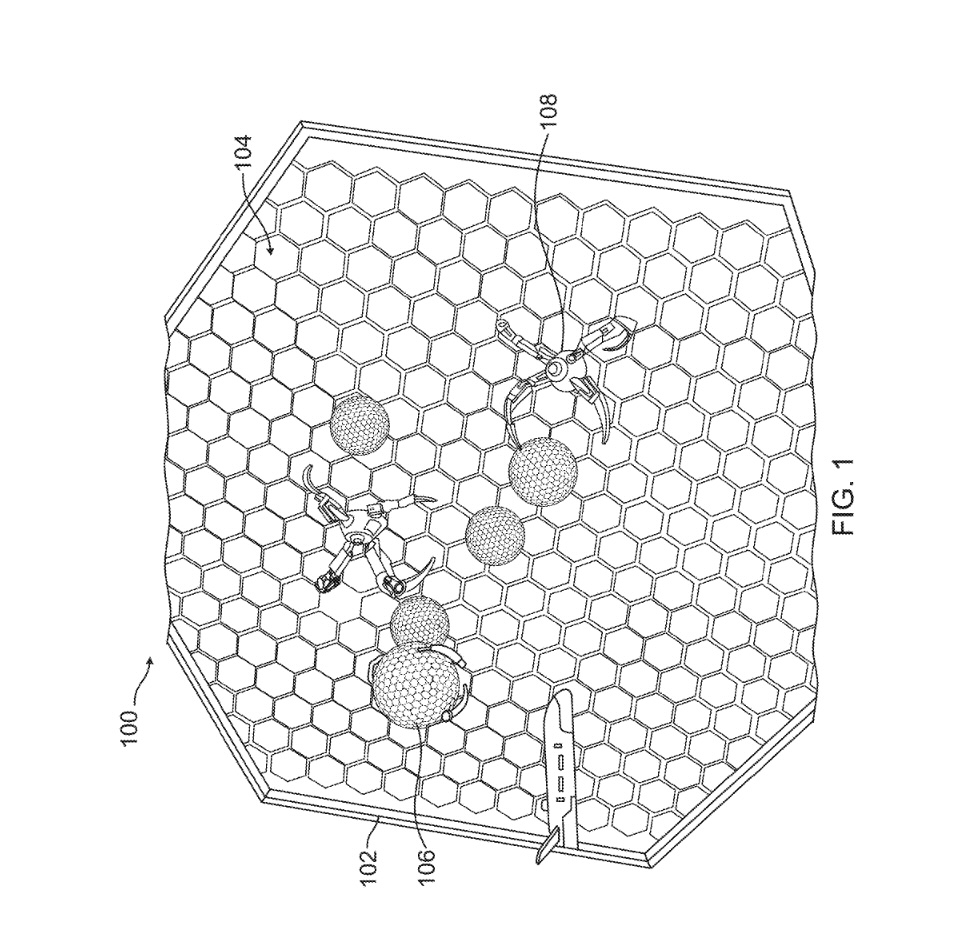
Our second patent this month moves fully into outer space. U.S. Patent No. 12,600,496, issued to Thomas Yost, discloses a spacecraft docking system built around a large, net-based capture mechanism designed to capture smaller spacecraft. The purpose is to facilitate repair, refueling, and resupply without requiring precise docking maneuvers. Once captured, autonomous robots can even traverse the net, reposition the spacecraft, and cluster multiple units together to form a larger spaceship.
Instead of relying on precise, rigid docking alignment, this system enables the capture of smaller spacecraft using a more adaptive system. From an intellectual property perspective, it also underscores the growing intersection of AI, robotics, and aerospace engineering. This is a classic example of convergence. The value is not in any single component, but in the integration of robotics, control systems, and adaptive physical infrastructure into a cohesive whole. It also reflects a broader shift toward resiliency and scalability in space operations—designing systems that tolerate variability rather than requiring perfection.
The Unifying Theme: AI as Embedded Infrastructure
Viewed together, these patent documents point to a clear trajectory. AI is no longer confined to software layers or back-office analytics. It is being embedded directly into operational systems that interact with the physical world—aircraft cabins, spacecraft, and everything in between.
That shift has two implications.
First, the competitive landscape is moving toward systems-level innovation. The companies that win will not just deploy AI—they will integrate it into workflows, environments, and hardware in ways that create real end-to-end capabilities.
Second, intellectual property is becoming more strategic, not less. As AI moves into regulated, safety-critical, and capital-intensive domains, patents will define not just ownership of AI models and methods, but control over entire operational ecosystems.
Whether it’s optimizing the passenger experience at 35,000 feet or enabling new forms of orbital logistics, AI is being operationalized at the leading edge of technology. Although these filings are early signals—they also point to a consistent directional march forward for AI across a multitude of sectors and use cases.
![[Advertisement]](https://ipwatchdog.com/wp-content/uploads/2026/08/IP.com-Sep-3-2026-sidebar-700x500-1.jpg)
![[Advertisement]](https://ipwatchdog.com/wp-content/uploads/2026/09/IP-Copilot-Sep-8-2026-sidebar-700x500-1.jpg)
![[Advertisement]](https://ipwatchdog.com/wp-content/uploads/2026/06/Womens-IP-Forum-2026-sidebar-regular-price-700x500-rev1.jpg)
![[Advertisement]](https://ipwatchdog.com/wp-content/uploads/2026/08/OneTransform_700x500_v1-REVISED.jpg)
![[Advertisement]](https://ipwatchdog.com/wp-content/uploads/2026/07/Juristat-Varsity-Ad-2026-IPW-ad-FreeTrial_1-UPDATED-on-Jul-15-2026.png)
![[Advertisement]](https://ipwatchdog.com/wp-content/uploads/2024/09/Patent-Prosecution-Training-sidebar-700x500-2025-03-27.jpg)



![[Advertisement]](https://ipwatchdog.com/wp-content/uploads/2021/12/WEBINAR-336-x-280-px.png)
![[Advertisement]](https://ipwatchdog.com/wp-content/uploads/2021/12/Ad-4-The-Invent-Patent-System™.png)




Join the Discussion
No comments yet.