
![[IPWatchdog Logo]](https://ipwatchdog.com/wp-content/themes/IPWatchdog%20-%202023/assets/images/temp/logo-small@2x.png)
Posts in US Supreme Court
Tariff Ruling ‘Trumps’ Volkswagen’s Bid to Stop Squires’ IPR Institution Policy
On February 20, 2026, the Supreme Court decided Learning Resources, Inc. v. Trump, 607 U.S. ___ (2026), affirming the Federal Circuit’s en banc decision in V.O.S. Selections, Inc. v. Trump, that the International Emergency Economic Powers Act (IEEPA) does not authorize the President to impose tariffs. And it means the Federal Circuit should rule in favor of Director Squires and against Volkswagen in one of the more constitutionally focused writs of mandamus challenging Squires and his use of discretion to decide institution of inter partes reviews (IPRs). And there is no need for an oral argument.
DOJ Urges Supreme Court to Deny Cert in Thaler’s Latest Bid to Copyright Work Created by AI
On January 23, the United States Department of Justice (DOJ) urged the U.S. Supreme Court to reject a petition from Stephen Thaler, who seeks copyright protection for a work created by his artificial intelligence (AI) system. The DOJ argued that the U.S. Court of Appeals for the District of Columbia Circuit correctly upheld the United States Copyright Office’s refusal to register a copyright for an image that was admittedly created without human authorship.
The Supreme Court Should Take Up the USAA Case to Bring Clarity to the Esoteric ‘Abstract Ideas’ Doctrine of Alice
In 2014, the Supreme Court held that an invention is patent-ineligible if directed to “abstract ideas,” but that there was no need to define the term. Alice Corp. Pty. Ltd. v CLS Bank Int’l, 573 U.S. 208, 221. Now, with the experience of more than a decade of confusing and unpredictable decision-making by lower courts trying to apply Alice, it is time for the Supreme Court to step in and provide a definition and workable test for the abstract-ideas exclusion…. The Court should grant the petition for certiorari filed by United States Automobile Association (USAA) in USAA v. PNC Bank on January 14, 2026. That will allow the Supreme Court to address the most basic of questions: What is an abstract idea?
The Federal Government’s Drug Price Negotiation Program Would Likely Violate Its Own Antitrust Laws
A recent U.S. Court of Appeals for the Third Circuit ruling upholding the federal Inflation Reduction Act (IRA)’s drug price negotiation program has been appealed to the U.S. Supreme Court, one of many challenges to the Act’s constitutionality. The IRA requires drugmakers to sell selected patented drugs to the government for its Medicare Parts B & D programs at a stipulated “maximum fair price”. If they don’t agree to these prices, then they face tax penalties on sales of the drug exceeding their profits from it, or the exclusion of all their drugs from Medicare and Medicaid purchases. This would foreclose access to up to 160 million patients, accounting for around 40% of US prescription drug spending or 20% of global prescription drug spending. US government purchases are valued at $200 billion annually.
Supreme Court to Review CAFC’s Induced Infringement Ruling in Hikma v. Amarin
On Friday, the U.S. Supreme Court granted certiorari to a petition filed by patent owner Hikma Pharmaceuticals, taking up Hikma’s appeal of the U.S. Court of Appeals for the Federal Circuit’s ruling from June 2024 finding that Amarin Pharma plausibly alleged patent infringement against Hikma’s generic omega-3 fatty acid product. The decision indicates that the nation’s highest court may be willing to overturn the Federal Circuit’s finding that Hikma’s U.S. Food & Drug Administration (FDA) -approved skinny label induced infringement in light of Hikma’s public statements about its generic product.
Why Petrella and SCA Hygiene Protect Against Equitable Defenses of Prosecution Laches
The Supreme Court rejected equitable defenses of laches in infringement suits, reasoning that by enacting a statute of limitation, Congress left no statutory “gap” for equitable judgments on timeliness. See Petrella v. Metro-Goldwyn-Mayer (2014), and SCA Hygiene Prods. v. First Quality Baby Prods (2017). These precedential holdings should have also governed U.S. Court of Appeals for the Federal Circuit (CAFC) decisions on prosecution laches in Hyatt v. Hirshfeld (2021) and in Hyatt v. Stewart (2025), particularly after the multiple briefings in the Hyatt case on the binding effect of such holdings. Yet, nowhere in these decisions can one find any reasons why the principles in SCA Hygiene and Petrella should be inapplicable for precluding prosecution laches.
Three Trademark Cases That Mattered in 2025 and What to Watch for Next Year
What do affiliated corporate entities, non-fungible token (NFTs) and cinnamon-flavored whiskey have in common? They each were the subject of significant trademark rulings in 2025. Below, we review three cases with big implications for trademark law and what’s on the horizon for 2026.
Not Just AI: Traditional Copyright Decisions of 2025 That Should Be on Your Radar
In a year dominated by artificial intelligence (AI) copyright cases, 2025 also featured several influential cases on traditional copyright issues that will impact copyright owners, internet service providers, website owners, advertisers, social media users, media companies, and many others. Although the U.S. Supreme Court did not decide a copyright case this year, it heard argument on secondary liability and willfulness issues in Cox v. Sony. Lower courts continued to wrestle with applying the fair use factors two years after the Supreme Court issued Warhol v. Goldsmith. The divide over whether the “server test” applies to embedded works deepened—and remains unsettled. And the Ninth Circuit further refined the standard for pleading access to online works. This article highlights some of the most important copyright cases from this year and their practical implications.
High Court Declines to Consider MSN’s Call for Clarity on CAFC’s After-Arising Technology Conflict
The U.S. Supreme Court on Monday denied certiorari to MSN Pharmaceuticals, Inc. v. Novartis Pharmaceuticals Corp., a case that asked the Justices to clarify U.S. Court of Appeals for the Federal Circuit (CAFC) precedent around using “after-arising technology” to hold a patent invalid in the context of patent-infringement suits. The case arises from a January 2025 precedential CAFC decision reversing a district court’s determination that certain claims of a patent for Novartis’ heart failure drug Entresto were invalid for lack of written description, and affirming a finding that the claims were not shown to be invalid for obviousness, lack of enablement, or indefiniteness.
To Beat China at Drug Innovation, Big Pharma and Generics Need the Supreme Court to End This Patent Absurdity
What’s really holding America back in the biopharma race against China isn’t just Beijing’s subsidies or cheaper labor. It’s the U.S. Court of Appeals for the Federal Circuit’s self-inflicted wound: a court so panel-dependent that no one—brand or generic—knows which rule will apply until the panel is drawn. The Supreme Court can fix this in one stroke by granting certiorari in MSN Pharmaceuticals v. Novartis (No. 25-225) and killing the bizarre “after-arising technology” exception that lets old, vague patents swallow future inventions.
SCOTUS Scraps Recentive’s Petition Seeking Clarity on Eligibility for Machine Learning Claims
The U.S. Supreme Court today declined to grant a petition filed by Recentive Analytics, Inc. asking the Court to weigh in on whether the U.S. Court of Appeals for the Federal Circuit’s (CAFC’s) approach to patent eligibility for machine learning claims is improper. The petition was filed in October following an April 2025 decision by the CAFC that addressed an issue of first impression in the patent eligibility context; the opinion held that “claims that do no more than apply established methods of machine learning to a new data environment” are not patent eligible.
SCOTUS Delays Trump Bid to Oust Perlmutter Pending Arguments in Similar Cases
Last week, the U.S. Supreme Court issued an order deferring a decision in Trump v. Perlmutter, a case in which President Donald Trump is asking the Court to stay an interlocutory injunction issued by the U.S. Court of Appeals for the D.C. Circuit in September that allowed Register of Copyrights Shira Perlmutter to return to her post pending her lawsuit against Trump for removing her from office.
Cox v. Sony Arguments Signal Justices May Fashion Middle-Ground Liability Test for ISPs
The U.S. Supreme Court justices today seemed skeptical of Cox Communications’ arguments that it should not be held liable for contributory infringement for failing to terminate internet access to subscribers who were alleged to have committed infringement, but had tough questions for both sides in Cox Communications, Inc. v. Sony Music Entertainment, Inc.
SCOTUS Passes on Green Glove Trademark Genericness Case
The U.S. Supreme Court on Monday denied certiorari on a petition filed by PT Medisafe asking the Court to overturn a precedential U.S. Court of Appeals for the Federal Circuit ruling upholding the U.S. Patent and Trademark Offices (USPTO’s) approach to genericness for color trademarks. Medisafe filed a trademark application claiming the color dark green for the surface of chloroprene examination gloves. The USPTO trademark examiner found that Medisafe’s claimed mark was generic despite a declaration from Medisafe’s Executive Vice President, as well as promotional literature and color advertisements within the industry.
The Jarkesy Question: Is a New Constitutional Challenge Brewing for ITC Enforcement?
Practitioners in the high-stakes world of the International Trade Commission (ITC) are familiar with the formidable power of a Section 337 remedial order. The threat of a cease-and-desist order, backed by civil penalties of up to $100,000 a day or twice the value of imported goods, is a powerful deterrent. For years, the process for enforcing these penalties has been a settled feature of ITC practice. But a recent Supreme Court decision, Jarkesy v. SEC, has introduced a new constitutional question that ITC litigators might want to watch out for.
Varsity Sponsors
![[Advertisement]](https://ipwatchdog.com/wp-content/uploads/2026/04/Cypris-April-26-2026-sidebar-left-700x500-1.jpg)
![[Advertisement]](https://ipwatchdog.com/wp-content/uploads/2026/04/Tradespace-Apr-28-2026-sidebar-700x500-1.jpg)
![[Advertisement]](https://ipwatchdog.com/wp-content/uploads/2026/04/Virtual-AI-2026-May-18-19-2026-sidebar-700x500-1.jpg)

Latest IPW Posts
Retired Judges Tell SCOTUS Justices to Take Newman Case, Citing ‘Grave Threat’
April 21, 2026 @ 04:15 pmDespite Growing Number of IP Advocates in Congress, C4IP Scorecard Finds Weak IP Engagement Overall
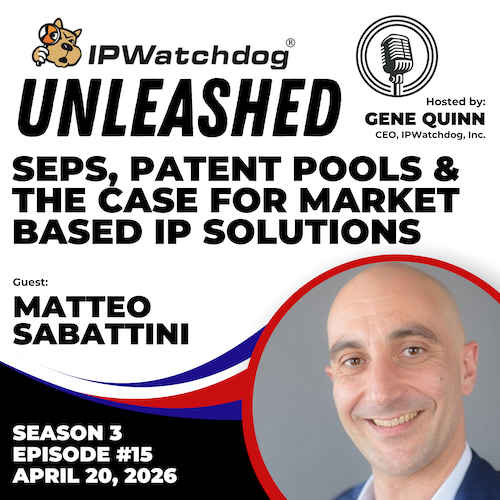
April 21, 2026 @ 12:30 pmSEPs, Patent Pools and the Case for Market-Based IP Solutions | IPWatchdog Unleashed
April 21, 2026 @ 11:33 amStrike Two for CPC at High Court in Rule 36 Challenge
April 20, 2026 @ 02:47 pm
Latest Podcasts

IPWatchdog Events
Webinar: Beyond Patent Data – Unifying IP and R&D with AI-Driven Intelligence
April 23 @ 12:00 pm - 1:00 pm EDT
Industry Events
Risk, Red Flags, and Reality: What secure AI looks like in patent law
April 30 @ 12:00 pm - 12:45 pm EDT24th Annual Rocky Mountain Intellectual Property & Technology Law Institute
May 28 @ 8:30 am - May 29 @ 4:30 pm MDTFrom IPWatchdog
![[Advertisement]](https://ipwatchdog.com/wp-content/uploads/2021/12/WEBINAR-336-x-280-px.png)
![[Advertisement]](https://ipwatchdog.com/wp-content/uploads/2021/12/Ad-4-The-Invent-Patent-System™.png)