
![[IPWatchdog Logo]](https://ipwatchdog.com/wp-content/themes/IPWatchdog%20-%202023/assets/images/temp/logo-small@2x.png)

 1
1 “We are being put to two extremes here… How do we announce a rule that deals with those two extremes?” – Justice Sonia Sotomayor
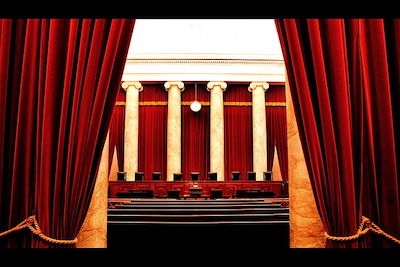 The U.S. Supreme Court justices today seemed skeptical of Cox Communications’ arguments that it should not be held liable for contributory infringement for failing to terminate internet access to subscribers who were alleged to have committed infringement, but had tough questions for both sides in Cox Communications, Inc. v. Sony Music Entertainment, Inc.
Cox petitioned the Supreme Court in August 2024 asking whether the U.S. Court of Appeals for the Fourth Circuit erred in finding that Cox materially contributed to the infringement of its users. The petition also questioned whether mere knowledge of infringement suffices to find willfulness under 17 U.S.C. § 504(c).
In February 2024, the Fourth Circuit affirmed a jury’s willful contributory infringement finding but remanded the case for a new trial on damages after overturning the vicarious liability finding for lack of Cox’s profit directly attributable to its subscribers’ acts of infringements. The jury verdict had awarded Sony $1 billion in damages.
Today, the justices heard from three parties: Joshua Rosenkranz of Orrick Herrington & Sutcliffe arguing for Cox; the U.S. Deputy Solicitor General Malcolm Stewart; and Paul Clement of Clement & Murphy arguing for Sony.
Questions for Cox
In their questioning of Rosenkranz, the justices pushed for a scenario in which Cox or another internet service provider (ISP) might be held liable. Justice Sonia Sotomayor, for instance, repeatedly noted that some of the alleged infringers in the case belonged to single family households and asked why it would be unreasonable to ask that Cox cut off service in that scenario, as much of Cox’s argument centered on the ramifications of cutting off service to entities such as universities and hospitals. But Rosenkranz denied that the record contained any evidence that Cox was alerted to the infringement of a specific individual.
Sotomayor challenged Rosenkranz on this point, charging that Cox’s “laissez faire attitude is probably what got the jury upset.” She distinguished the case from Twitter, Inc. v. Taamneh, which asked the Court to decide whether a defendant providing generic, widely available services to numerous users while regularly detecting and preventing terrorists from using services faces liability under Section 2333 of the Anti-Terrorism Act (ATA) “merely because it could have taken more ‘meaningful’ or ‘aggressive’ action to prevent such use. In Twitter, the Court emphasized the need for affirmative conduct with intent to facilitate wrongdoing. Cox referenced Twitter for the proposition that “internet or cell service providers [do not] incur culpability merely for providing their services to the public writ large.”
But Sotomayor said that, unlike Twitter, Cox knew of particular locations that were infringing and yet, “most of the time you’re doing nothing, so why aren’t you contributing to that infringement?”
Rosenkranz replied that “the notion that Cox did nothing is absurd” and cited the company’s efforts to create a “first-of-its kind” anti-infringement tool; to send out hundreds of warnings to alleged infringers; and to work with universities. According to Cox, its anti-infringement program suspended over 67,000 accounts during the claim period alone and deterred 98% of infringers.
But other justices also pressed Rosenkranz on just how far his theory would go, and whether an ISP could ever be culpable under it. Justice Ketanji Brown Jackson proposed a hypothetical in which a customer addicted to infringing on the internet wanted to buy Cox’s services, admitted they had been sued before, and said Cox is their only option for a provider. “If Cox sells to me knowing all of that, you still say no secondary liability in that situation?” asked Justice Jackson. Rosenkranz said that’s correct, although those facts would make it plausible for plaintiffs to sue the infringer directly.
Ultimately, Rosenkranz said that allowing the Fourth Circuit’s holding to stand would have “cataclysmic” consequences and that no other case “has suggested that knowledge alone can create the necessary culpability to find someone liable for infringement.” He added:
“There is no surefire way for an ISP to avoid liability, and the only way it can is to cut off the internet not just for the accused infringer but for anyone else who happens to use the same connection,” Rosenkranz said. “Turning internet providers into internet police for all torts perpetrated on the internet will wreak havoc with the essential medium through which modern public engages in commerce and speech.”
Government Position
Arguing for the government, Stewart reiterated Rosenkranz’s point that past case law does not support the Fourth Circuit’s ruling. “Both in copyright law and more generally, this form of secondary liability is reserved for persons who act for the purpose of facilitating violations of law,” Stewart opened. “Because Cox simply provided the same generic internet services to infringers and non-infringers alike there is no basis for inferring such a purpose here.”
The justices were most interested in asking Stewart which areas of law the Court should look to in creating a framework for secondary liability in this context. Stewart said in response to a question posed by Justice Thomas that the first place would be general principles of aiding and abetting law, but if the Court thinks IP cases are different than other general law areas, it could look to Congress’ codification of secondary liability in the Patent Act, which does not provide for secondary liability in circumstances like these.
Justice Amy Coney Barrett posed the hypothetical of whether Twitter could be held liable for child trafficking if it knew that a particular user was using its account for that purpose under Stewart’s theory. Stewart replied that, while it wouldn’t be secondarily liable, perhaps a platform like YouTube or Twitter could be directly liable in a situation like that.
Justice Neil Gorsuch asked if the government’s position then is that the Court should go no further than patent law with respect to ISPs, and Stewart said yes. Gorsuch also asked if the Court might not just say that since the common law requires purpose and the Fourth Circuit analyzed the case under a standard in which knowledge was sufficient, they should tell the court to go back and do its analysis over again. Stewart said the Court absolutely could do that but added later that he’d be curious to hear Clement’s/Sony’s opinion as to whether they could prevail under that standard.
Justice Sotomayor remained skeptical and asked Stewart if he was worried that “a ruling as broad as you’re stating it would be a disincentive for ISPs to provide any aid to copyright holders?” Stewart agreed it might be, but pushed back on “the assumption that good corporate citizenship would mean terminating repeat infringers.” For instance, if an individual was sued for direct infringement and found to have used the internet to infringe, the district court couldn’t enjoin the individual from using the internet ever again.
Sotomayor, however, was not convinced: “What’s left for any inducement for ISPs to in good faith try to control infringement?” she asked, to which Stewart replied, “not much economic incentive would be left, I’m simply questioning whether that’s a bad thing.”
Sony Responds
Finally, Clement, arguing for Sony, opened by saying that “it is beyond dispute that Cox provided the service to known infringers with substantial knowledge that what they themselves called habitual abusers would continue to infringe” and it is that reality that has caused Cox to take the “extreme position” of suggesting that “they can continue to provide service to habitual abusers in perpetuity, without consequences.”
Cox’s position, argued Clement, would “render the [Digital Millennium Copyright Act] and the cooperation it is intended to foster a dead letter.”
Justice Sotomayor again pushed for answers that would help the Court to fashion the right test for these cases, characterizing the arguments on each side as proposing two “extremes” that the Court was tasked with tempering. She explained:
“We are being put to two extremes here. The other side says, ‘there’s no liability because we’re just putting out into the stream of commerce a good that can be used for good or bad, and we’re not responsible for the infringer’s decision.’ We have the other side… moving away from petitioner’s and the SG’s position that the only way you can have aiding and abetting in this field is if you have purpose… And you’re saying, we don’t have to prove purpose. We have to prove only intent, correct? That’s the other extreme.
Sotomayor added that some of the problem is with the “amorphous” nature of the internet and how much knowledge ISPs actually have. While refusing to cut off internet access to an entire region of 50,000 people seems reasonable, refusing to cut off access to a household of five does not. “How do we announce a rule that deals with those two extremes?” she asked.
Clement focused his argument on the “substantial certainty” test, asserting that “I would say that the provider of the service has to know that specified customers are substantially certain to infringe.” But when Justice Alito asked how an ISP would practically deal with the situation where thousands of students at a university were infringing and they had to take action, Clement did not have a clear response as to how that would be workable, except that they should have a conversation, which Rosenkranz called in his rebuttal “a terrible answer from the perspective of the company that is trying to figure out what its legal obligations are facing crushing liabilities.”
Instead, Clement gave the example of hotels, which provide a low-speed internet service to avoid guests infringing, but Alito sounded doubtful that restricting university students in that way would be practicable.
Asked by Justice Coney Barrett what the effect would be on copyright holders were Sony to lose, Clement told her “we would be without scalable, functional recourse” because “direct infringement is a teaspoon solution to an ocean problem.” But Rosenkranz said in rebuttal that plaintiffs could have a conversation with the ISPs about how to work together and design better programs and help pay for them.”
The case has drawn a number of amicus briefs and the High Court’s decision is likely to produce at least “some sort of shake-up of contributory infringement doctrine,” said Bruce E. Boyden, who provided an analysis of the case on the Marquette University Law School Faculty Blog.
And Bob Zelnick of McDermott Will & Schulte noted that Cox’s behavior on record in this case likely contributed to the justice’s line of questioning. Zelnick explained:
“Cox’s DMCA enforcement division told his team via email to ‘F*** the DMCA.’ Cox’s policy was to wait until 13 instances of infringement before taking remedial action against an IP address. Thus, the focused questions in the case become whether it is reasonable for an ISP to give an IP address 12 strikes before shutting down internet access for the infringer, and whether ‘turning a blind eye’ to 12 instances of reported infringement creates an inference of intent to help the infringer.”
This article was updated at 6:25PM to add Bob Zelnick’s comment.
![[Advertisement]](https://ipwatchdog.com/wp-content/uploads/2026/09/Lighthouse-IP-Sep-15-2026-sidebar-700x500-1.jpg)
![[Advertisement]](https://ipwatchdog.com/wp-content/uploads/2026/09/Clerq-RPX-Sep-16-2026-sidebar-700x500-1.jpg)
![[Advertisement]](https://ipwatchdog.com/wp-content/uploads/2026/09/Patently-Sep-17-2026-sidebar-700x500-1.jpg)
![[Advertisement]](https://ipwatchdog.com/wp-content/uploads/2026/06/Womens-IP-Forum-2026-sidebar-regular-price-700x500-rev1.jpg)
![[Advertisement]](https://ipwatchdog.com/wp-content/uploads/2026/08/OneTransform_700x500_v1-REVISED.jpg)
![[Advertisement]](https://ipwatchdog.com/wp-content/uploads/2024/09/Patent-Prosecution-Training-sidebar-700x500-2025-03-27.jpg)



![[Advertisement]](https://ipwatchdog.com/wp-content/uploads/2021/12/WEBINAR-336-x-280-px.png)
![[Advertisement]](https://ipwatchdog.com/wp-content/uploads/2021/12/Ad-4-The-Invent-Patent-System™.png)



Join the Discussion
One comment so far.
Anon
December 1, 2025 04:51 pmGreat connection to the patent “case” of contributary/inducing infringement.
https://www.law.cornell.edu/uscode/text/35/271