
![[IPWatchdog Logo]](https://ipwatchdog.com/wp-content/themes/IPWatchdog%20-%202023/assets/images/temp/logo-small@2x.png)

 1
1 “The outcome of [Cox v. Sony] could have ripple effects in other industries, including AI, where systems are often used to generate infringing works without the direct knowledge of the service provider.”
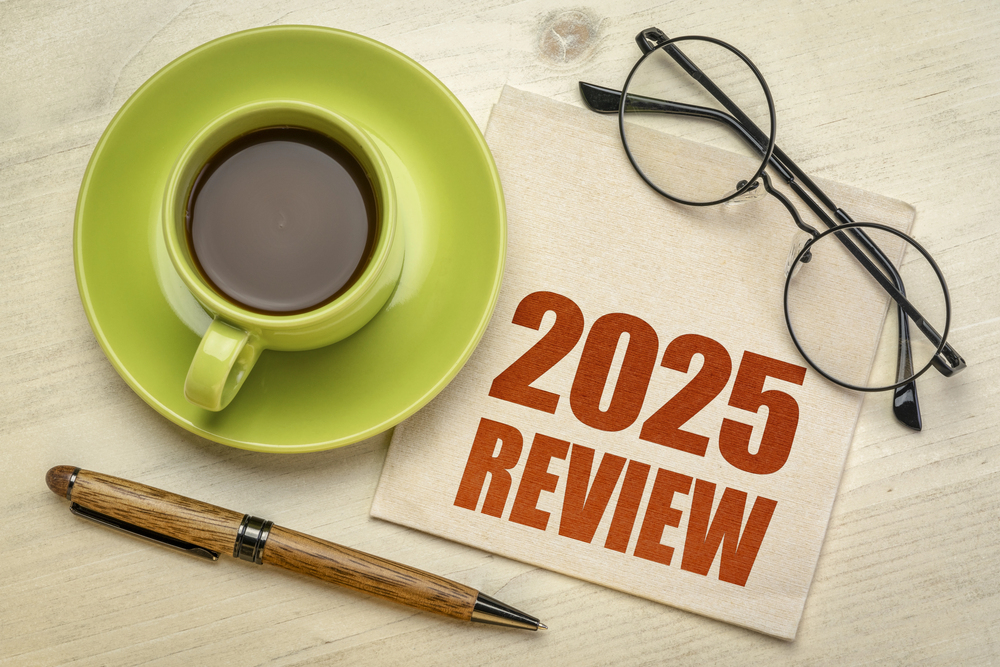 In a year dominated by artificial intelligence (AI) copyright cases, 2025 also featured several influential cases on traditional copyright issues that will impact copyright owners, internet service providers, website owners, advertisers, social media users, media companies, and many others. Although the U.S. Supreme Court did not decide a copyright case this year, it heard argument on secondary liability and willfulness issues in Cox v. Sony. Lower courts continued to wrestle with applying the fair use factors two years after the Supreme Court issued Warhol v. Goldsmith. The divide over whether the “server test” applies to embedded works deepened—and remains unsettled. And the Ninth Circuit further refined the standard for pleading access to online works. This article highlights some of the most important copyright cases from this year and their practical implications.
The U.S. Supreme Court Reviews Secondary Liability and Willfulness
The most prominent copyright case from 2025 could redefine the contours of secondary liability and willfulness under the Copyright Act. In Cox Communications, Inc. v. Sony Music Entertainment, a group of music companies sued Cox for contributory and vicarious infringement based on its alleged failure to implement a reasonable policy to terminate repeat infringers. After a jury found Cox liable and awarded the music companies roughly $1 billion, the Fourth Circuit affirmed a verdict of willful contributory infringement but remanded the case for a new trial on damages. 93 F.4th 222 (4th Cir. 2024). Both Cox and Sony filed petitions for a writ of certiorari with the U.S. Supreme Court. The Court granted Cox’s petition and agreed to consider: (1) whether internet service providers (“ISPs”) can be liable for “materially contributing” to infringement if they do not terminate accounts used for infringement and (2) whether mere knowledge of infringement constitutes willfulness under 17 U.S.C. § 504(c). No. 24-171, 145 S. Ct. 2841 (U.S. June 30, 2025).
At the Court’s request, the U.S. Solicitor General filed a brief in support of Cox, arguing that ISPs should not be held liable for contributory infringement without proof of intent to promote infringement. More than 20 amicus briefs were filed in support of both sides.
During oral argument on December 1, 2025, the music companies accused Cox of prioritizing profits over compliance by failing to terminate repeat infringers, while Cox argued it merely provided a service with no intent to infringe. The Court’s decision could affect copyright owners’ ability to police online infringement and the extent to which ISPs are liable for subscribers’ conduct. Beyond ISPs, the outcome of the case could have ripple effects in other industries, including AI, where systems are often used to generate infringing works without the direct knowledge of the service provider.
Courts Grapple with Fair Use after Warhol
Lower courts have continued navigating fair use two years after the U.S. Supreme Court decided Warhol Foundation for the Visual Arts, Inc. v. Goldsmith, 598 U.S. 508 (2023), which held that the first factor—the purpose and character of the use—weighed against fair use because Goldsmith’s photograph and Warhol’s licensed silkscreen of Prince were used for the same commercial purpose.
This year, the Second Circuit held that the use of a photograph of a Russian woman with two pet snakes alongside other similar photos in an online article about the growing online trend to publish pet photos was not fair use. Romanova v. Amilus Inc., 138 F.4th 104 (2d Cir. 2025). Citing Warhol, the court found that the use of the photograph in the online article did not communicate a meaning distinct from the original use—in an article in National Geographic Magazine about photos of people with their snakes—and lacked a justification such as commentary or critique, negating fair use.
By contrast, the Second Circuit found fair use when a Hostos Community College faculty member used text written by a Lehman College faculty member in a conference presentation for a different purpose. Wilder v. Hoiland, No. 24-1436, 2025 WL 783642 (2d Cir. Mar. 12, 2025). The Lehman College faculty member created the text to teach faculty how to create individualized assessment tools to evaluate their teaching, whereas the Hostos Community College faculty member used the text to comment on the program’s successes and to educate those setting up similar initiatives. The court found this to be a fair use because the use was sufficiently transformative and made within the context of teaching and scholarship, which are “paradigmatic examples” of fair use.
The Southern District of New York held that embedding a video of Michael Jordan from an X post at the bottom of an online article was fair use because the video was the subject of the article, which added new information and context about the video. Richardson v. Townsquare Media, Inc., No. 24 Civ. 4217, 2025 WL 89191 (S.D.N.Y. Jan. 14, 2025). The court also found the use of screenshots of the video in the article to be de minimis.
The Northern District of California held that livestreams containing clips of and commentary on a video about a video game were fair use. Stebbins v. Alphabet Inc., No. 22-cv-00546, 2025 WL 2233208 (N.D. Cal. July 2, 2025). The livestreams, which lasted 14 hours, featured live reactions and critiques that differed significantly from the informational nature of the original 90-minute video. The court reasoned that extensive copying was necessary to critique the video, and the livestreams were not a market substitute because they served a different purpose and offered a different viewing experience.
Although fair use outcomes remain context-specific, these cases show that courts are more likely to find uses with genuine commentary, critique, or a distinct purpose to be fair. Nevertheless, even after Warhol, courts are still grappling with the complex fair use determinations. Given the fact-specific nature of fair use inquiries, there is little certainty as to what uses will be determined to be fair and what uses will not.
The ‘Server Test’ for Embedded Works Remains Unsettled
The viability of the “server test” outside the Ninth Circuit continues to divide courts. While the Ninth Circuit held in Perfect 10, Inc. v. Amazon.com, Inc., 508 F.3d 1146 (9th Cir. 2007), that a website owner does not infringe a copyrighted work shown on its site unless the work is copied on its servers (the “server test”), other courts, such as the Southern District of New York, have refused to adopt that view, holding instead that merely displaying a copyrighted work can be infringement whether or not a copy is made on a server. See, e.g., Goldman v. Breitbart News Network, LLC, 302 F. Supp. 3d 585, 587 (S.D.N.Y. 2018). The U.S. Supreme Court declined to resolve the split this year. See McGucken v. Valnet, Inc., No. 24-511, 2024 WL 5166624 (9th Cir. Dec. 19, 2024), cert. denied, 145 S. Ct. 1965 (2025).
Meanwhile, the Southern District of New York reaffirmed its rejection of the server test, again ruling that displaying third-party content without authorization constitutes infringement and that the server test conflicts with the Copyright Act’s text and legislative history. Lynk Media LLC v. Mediaite, LLC, No. 24-cv-29, 2025 WL 89226, at *3 (S.D.N.Y. Jan. 14, 2025). The Western District of Texas likewise rejected the server test, finding that “a server-storage requirement adds a condition absent from the [Copyright] Act’s plain text.” Urbanimage Media LTD. v. iHeartMedia, Inc., 793 F. Supp. 3d 852, 863 (W.D. Tex. 2025). But another Fifth Circuit court adopted the opposite view, calling the server test the more reasonable interpretation of the Copyright Act. Emmerich Newspapers, Inc. v. Particle Media, Inc., No. 23-cv-391, 2025 WL 2146609, at *13 (S.D. Miss. July 29, 2025), motion to certify appeal granted, 2025 WL 2906046 (S.D. Miss. Sept. 18, 2025). Without guidance from appellate courts, this patchwork of policies among trial courts is likely to persist, and risks remain for media companies and content creators using other parties’ works online.
The Ninth Circuit Clarifies What Constitutes ‘Access’ to Online Works
In Woodland v. Hill, a freelance artist and model who posts semi-nude photographs of himself on Instagram sued Montero Lamar Hill (Lil Nas X) for allegedly posting semi-nude photographs of himself on Instagram using similar poses. 136 F.4th 1199 (9th Cir. 2025). The Ninth Circuit affirmed dismissal for, among other reasons, failure to plead access. The complaint did not allege that Lil Nas X followed the artist’s account, liked any of his posts, or otherwise interacted with similar posts or accounts. The court rejected the artist’s arguments that general social-media activity, algorithmic recommendations, or the number of allegedly similar images sufficed to plead access. The Ninth Circuit also found that the artist failed to plead substantial similarity in the selection and arrangement of the photos, which contained different backgrounds, lighting, angles, colors, and positions.
Image Source: Deposit Photos
Author: PixelsAway
Image ID: 842649318

![[Advertisement]](https://ipwatchdog.com/wp-content/uploads/2026/08/Anaqua-Aug-25-2026-sidebar-700x500-1.jpg)
![[Advertisement]](https://ipwatchdog.com/wp-content/uploads/2026/08/Solve-Intelligence-Aug-27-2026-sidebar-700x500-rev1.jpg)
![[Advertisement]](https://ipwatchdog.com/wp-content/uploads/2026/07/Womens-IP-Forum-2026-sidebar-register-early-bird-now-700x500-1.jpg)
![[Advertisement]](https://ipwatchdog.com/wp-content/uploads/2026/07/Juristat-Varsity-Ad-2026-IPW-ad-Solo_1.png)
![[Advertisement]](https://ipwatchdog.com/wp-content/uploads/2026/08/OneTransform_700x500_v1.png)
![[Advertisement]](https://ipwatchdog.com/wp-content/uploads/2024/09/Patent-Prosecution-Training-sidebar-700x500-2025-03-27.jpg)



![[Advertisement]](https://ipwatchdog.com/wp-content/uploads/2021/12/WEBINAR-336-x-280-px.png)
![[Advertisement]](https://ipwatchdog.com/wp-content/uploads/2021/12/Ad-4-The-Invent-Patent-System™.png)




Join the Discussion
One comment so far.
Anon
December 22, 2025 08:22 amGreat coverage of what remains fact-intensive – and nuanced – understanding of application of the Fair Use factors.