
![[IPWatchdog Logo]](https://ipwatchdog.com/wp-content/themes/IPWatchdog%20-%202023/assets/images/temp/logo-small@2x.png)

 0
0 “With respect to the first question in Cox’s petition,…the DOJ Said the Fourth Circuit’s ruling is in ‘substantial tension’ with a recent Supreme Court analysis of contributory liability in Twitter v. Taamneh.”
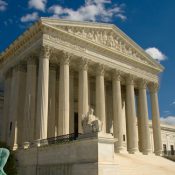
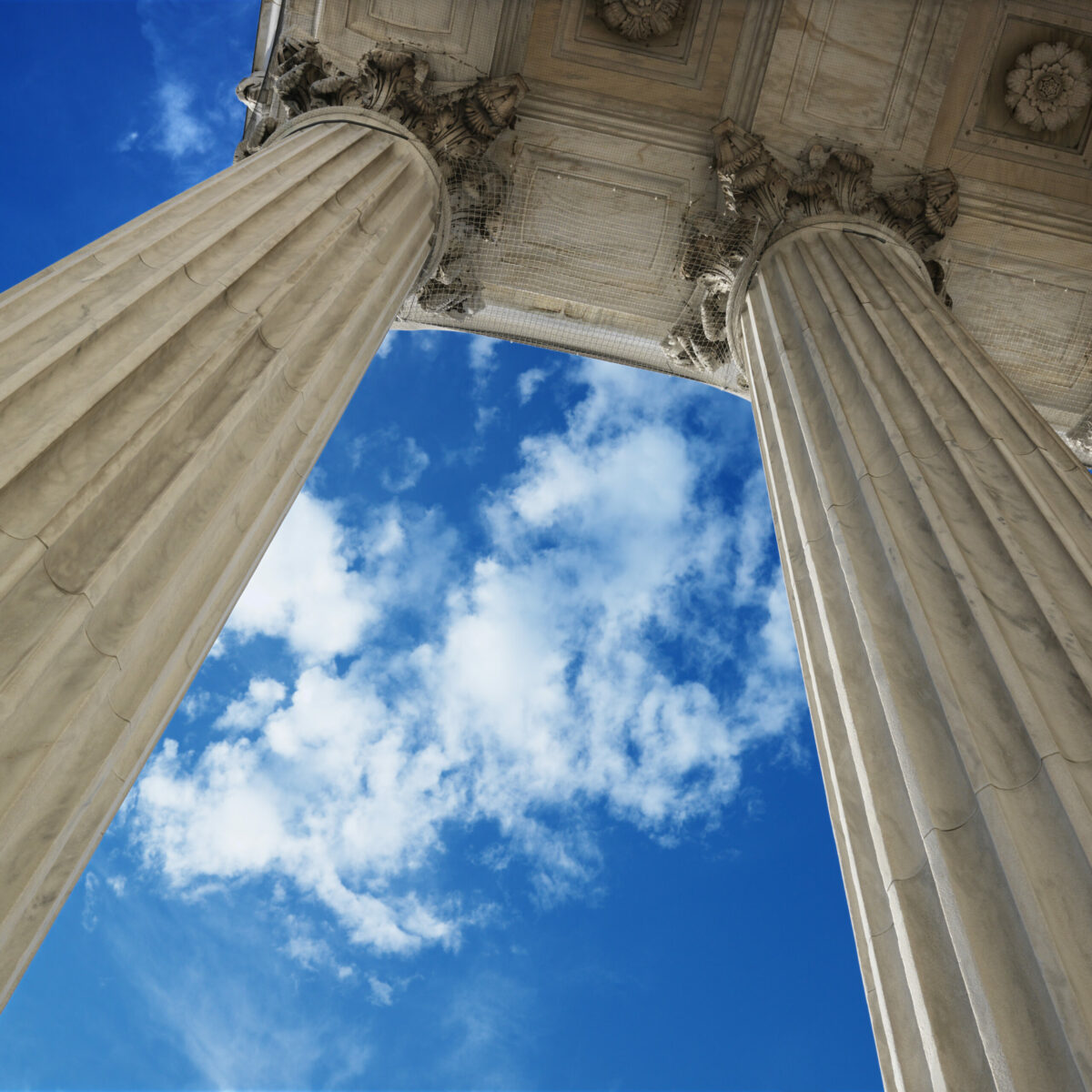 The U.S. Supreme Court today took the advice of the Solicitor General in granting a petition for certiorari brought by Cox Communications and denying one brought by Sony in the same matter.
Music publishers including Sony, Arista Records, Warner Music and Universal Music Group filed copyright claims against Cox in July 2018, alleging that Cox was liable for the infringement of 10,017 musical works that were illegally distributed by the ISP’s subscribers. A 2020 jury verdict found Cox liable for both vicarious and contributory infringement, leading to a $1 billion damages verdict against Cox after damages were increased for the jury’s willfulness finding.
In February 2024, the Fourth Circuit ruled on Cox’s appeal, affirming the willful contributory infringement finding but remanding for a new trial on damages after overturning the vicarious liability finding for lack of Cox’s profit directly attributable to its subscribers’ acts of infringements.
Cox petitioned the Supreme Court in August 2024 asking whether the U.S. Court of Appeals for the Fourth Circuit erred in finding that Cox materially contributed to infringement merely because it did not terminate Internet access to subscribers who were alleged to have committed infringement without proof. The petition also questions whether mere knowledge of infringement suffices to find willfulness under 17 U.S.C. § 504(c).
Sony filed a competing petition one day later asking the Court whether the profit requirement for vicarious liability only permits liability where the defendant expects commercial gain from the alleged infringing act, or whether other circuits are correct in holding that this requirement is fulfilled when the defendant expects to gain from the enterprise, allowing infringement to occur.
In September 2024, amici representing both ISPs and music publishers weighed in on each petition. The Solicitor General was invited by the Court to file a brief on November 25.
The Department of Justice said the High Court should grant Cox’s petition on both questions, but deny Sony’s. With respect to the first question in Cox’s petition, “whether an ISP materially contributes to copyright infringement by continuing to provide internet access to particular subscribers after receiving notice that copyright infringement has occurred on their accounts,” the DOJ Said the Fourth Circuit’s ruling is in “substantial tension” with a recent Supreme Court analysis of contributory liability in Twitter v. Taamneh (2023). There, the Court found no contributory liability for Twitter’s provision of communication services to terrorist groups like ISIS who used the platform for recruiting purposes because it was mere passive nonfeasance and did not rise to the aiding and abetting standard required to find contributory liability under common law principles. “The contributory-infringement question is legally and practically important, and courts of appeals have taken divergent approaches to the question,” said the DOJ.
On Cox’s second question, which addresses the “circumstances under which a contributory infringer can be held liable for enhanced statutory damages based on a finding of ‘willful’ infringement,” the DOJ said the Court should review whether the jury instruction given constituted “substantial legal error” since it told jurors that they could find willfulness if Cox knew its subscribers had committed infringement, rather than assessing whether Cox “reasonably believed” that its own conduct comported with the Copyright Act.
With respect to Sony’s vicarious liability question, the DOJ said “[t]here is no disagreement among the courts of appeals” on the Fourth Circuit’s holding that “a plaintiff alleging vicarious infringement must show that the defendant profited from the infringement.” The Court today denied that petition.
Cox sent the following statement to IPWatchdog via email:
“We are pleased the U.S. Supreme Court has decided to address these significant copyright issues that could jeopardize internet access for all Americans and fundamentally change how internet service providers manage their networks.
Today’s development supports our goal of protecting consumers, preserving open internet access, and ensuring that broadband remains a reliable resource for the communities we serve. We look forward to presenting our arguments to the Court.”
Inventor Petition Denied
The Court also today denied a petition filed by inventor Matthew McLeay against the U.S. Patent and Trademark Office (USPTO)/ Coke Morgan Stewart on appeal from In re: McLeay. There, the Federal Circuit affirmed the Patent Trial and Appeal Board’s (PTAB) decision to uphold a patent examiner’s rejection of a patent application claiming the use of ribavirin for the treatment of respiratory conditions including SARS-CoV-2. The Federal Circuit found that the PTAB’s undue experimentation findings were supported by substantial evidence, including the application’s own recognition that the use of ribavirin was not expected by skilled artisans to have success against COVID-19, and a lack of any other disclosures showing efficacy for the 50% ribavirin formulation claimed by McLeay. McLeay’s petition argued that these arguments had been waived by the Office and the CAFC revived them on its own. “The waived arguments became the winning arguments on appeal,” said the petition.
Image Source: Deposit Photos
Author: iofoto
Image ID:
![[Advertisement]](https://ipwatchdog.com/wp-content/uploads/2026/09/Patently-Sep-22-2026-sidebar-700x500-1.jpg)
![[Advertisement]](https://ipwatchdog.com/wp-content/uploads/2026/06/Womens-IP-Forum-2026-sidebar-regular-price-700x500-rev1.jpg)
![[Advertisement]](https://ipwatchdog.com/wp-content/uploads/2026/09/WE-BUY-PATENTS-SIM-IP-Ad-1-700x500-1.jpeg)
![[Advertisement]](https://ipwatchdog.com/wp-content/uploads/2026/08/OneTransform_700x500_v1-REVISED.jpg)
![[Advertisement]](https://ipwatchdog.com/wp-content/uploads/2024/09/Patent-Prosecution-Training-sidebar-700x500-2025-03-27.jpg)




![[Advertisement]](https://ipwatchdog.com/wp-content/uploads/2021/12/WEBINAR-336-x-280-px.png)
![[Advertisement]](https://ipwatchdog.com/wp-content/uploads/2021/12/Ad-4-The-Invent-Patent-System™.png)

Join the Discussion
No comments yet.