


 0
0 “If we considered an untethered $50,000 amount in Allflex to be considered a ‘token or arbitrary sum’ that did not create a live case or controversy, then surely the untethered $100 amount here is an even smaller token…” – Federal Circuit opinion
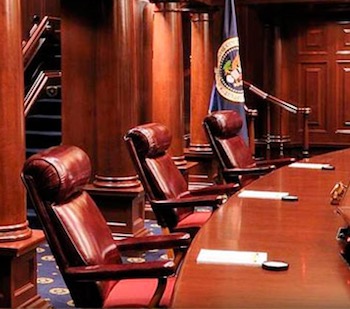 The U.S. Court of Appeals for the Federal Circuit (CAFC) issued a decision Tuesday in In re Hybir, Inc., dismissing an appeal as moot and leaving intact the United States District Court for the District of Massachusetts’s judgment granting Veeam Software Corp.’s motion to dismiss and holding that the asserted claims of Hybir’s patent were ineligible under Section 101. The CAFC determined that a settlement agreement between Hybir and Veeam Software Corp. rendered the appeal moot because the terms constituted a “side bet” on the appeal’s outcome. The opinion was authored by Judge Stoll and joined by Judge Chen and Judge Hughes.
The underlying dispute centered on U.S. Patent No. 8,051,043. Following the district court’s ruling that claims 3, 4, 7, 16, 17, and 20 of the ‘043 patent were ineligible, Hybir and Veeam Software Corp. entered into a Settlement and Limited Patent License Agreement. Under this agreement, Hybir licensed several other patents to Veeam Software Corp., while expressly reserving the right to appeal the final judgment regarding the ‘043 patent. Veeam Software Corp. agreed not to participate in any appeal, which included not filing a responsive brief and not participating in oral argument. Crucially, the agreement provided that after the appeal concluded, Veeam Software Corp. would have the option to add the ‘043 patent to the list of licensed patents for $100.
The CAFC evaluated whether this arrangement maintained a live case or controversy. The court found the facts indistinguishable from its 2013 decision in Allflex USA, Inc. v. Avid Identification Systems, Inc., in which it held that a settlement agreement reducing a payment by $50,000 if the appellant succeeded on appeal was insufficient to avoid a ruling of mootness. In Allflex, the Federal Circuit concluded that Allflex and Avid had merely placed a “side bet” on the outcome of the appeal and that the sum was “completely untethered to the value of any of the issues on appeal.”
Applying this precedent, the CAFC reasoned that the $100 option for Veeam Software Corp. to add the ‘043 patent to the licensed patents served the same purpose as the $50,000 payment reduction in Allflex. The court found the $100 amount was similarly untethered to the value of any of the issues on appeal and emphasized that “if we considered an untethered $50,000 amount in Allflex to be considered a ‘token or arbitrary sum’ that did not create a live case or controversy, then surely the untethered $100 amount here is an even smaller token that likewise cannot create such a controversy.”
During oral argument, Hybir attempted to distinguish the case from Allflex by noting that the agreement only gave Veeam Software Corp. an option to pay the $100, rather than requiring it. Hybir argued that if the Federal Circuit were to reverse the district court and deem the claims eligible, Veeam Software Corp. would quite likely choose not to exercise the option and would instead try to invalidate the patent another way. The CAFC rejected this argument, characterizing it as “unsubstantiated speculation” that failed to demonstrate a real and imminent injury or threat of future injury.
Since Hybir failed to show a live controversy, the CAFC ultimately dismissed the appeal as moot, left the district court’s judgment undisturbed, and ordered Hybir to bear its own costs.
![[Advertisement]](https://ipwatchdog.com/wp-content/uploads/2026/10/ClaimHit-Oct-28-2026-sidebar-700x500-1.jpg)
![[Advertisement]](https://ipwatchdog.com/wp-content/uploads/2026/10/Patsnap-Oct-29-2026-sidebar-700x500-1.jpg)
![[Advertisement]](https://ipwatchdog.com/wp-content/uploads/2024/09/Patent-Prosecution-Training-sidebar-700x500-2025-03-27.jpg)





![[Advertisement]](https://ipwatchdog.com/wp-content/uploads/2021/12/WEBINAR-336-x-280-px.png)
![[Advertisement]](https://ipwatchdog.com/wp-content/uploads/2021/12/Ad-4-The-Invent-Patent-System™.png)




Join the Discussion
No comments yet.