


 0
“Theranos 2.0, 3.0, or 100.0 is likely to go nowhere without Theranos’ patents, but the film depicts Holmes and Evans proceeding as if they remain in Holmes’ hands.”
 You Can See Everything is a thought-provoking amalgam of fact, flare and creative personality profiling inventor Elizabeth Holmes and her partner, Billy Evans, as she prepares for an 11-year prison sentence for defrauding high-profile investors. While her name is associated with more than 150 patents, it is unclear exactly what she invented and the nature of the value it has generated.
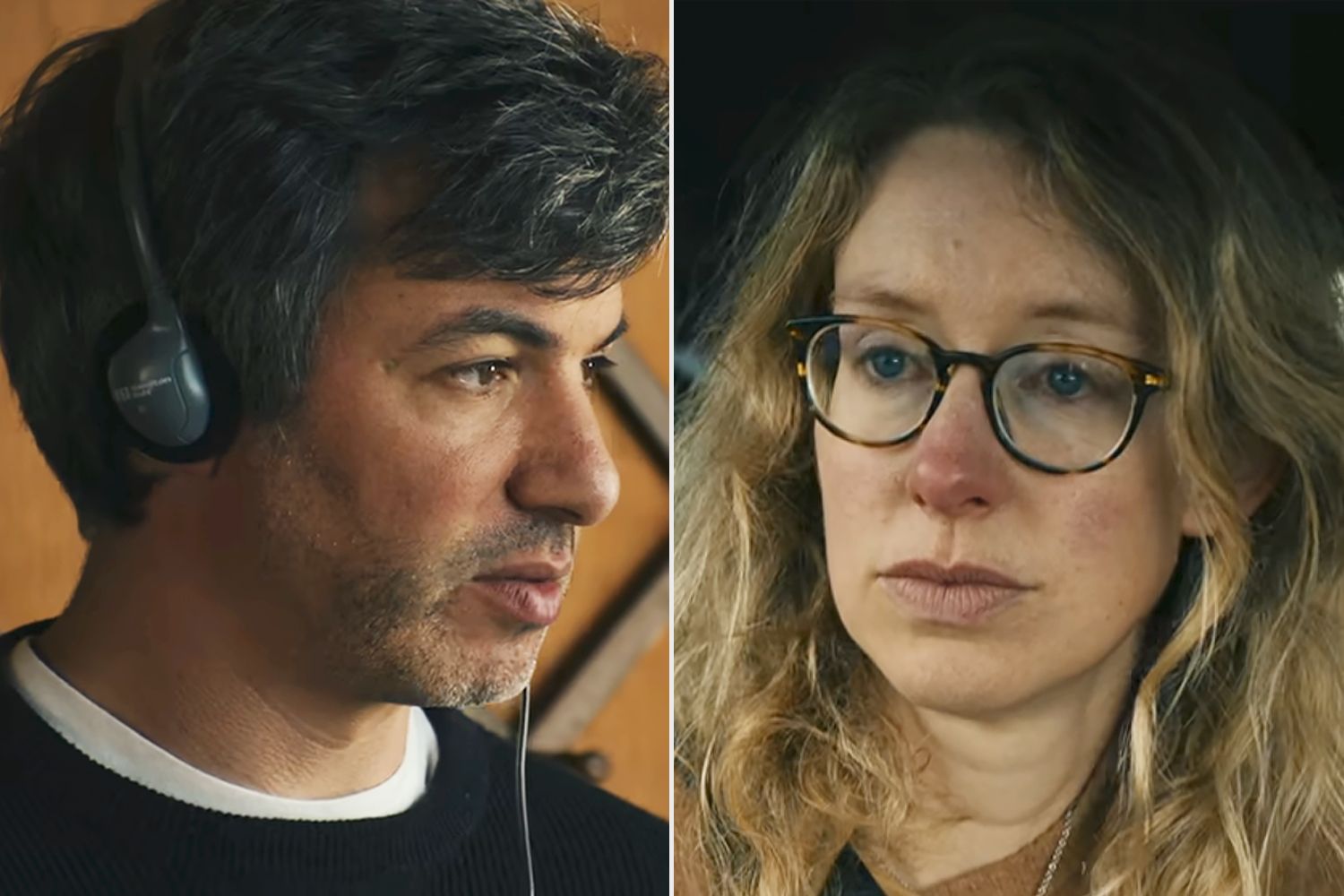
Included in this sometimes confrontational exploration are fictionalized reenactments played by an actor and orchestrated by a director best known for his work in dark comedy. Sounds strange, but it works. Co-directors Nathan Fielder and Lance Oppenheim are challenging traditional documentary filmmaking as much as allowing Holmes and Evans to reveal themselves.
Holmes at Home
The fictionalized segments, some of which are stated, are a strange compliment to the low light Cinema Verite footage in this intriguing film about invention and inventors. The portions filmed in Holmes’ rented California home, preceding 34 days from serving an 11-year sentence in a Texas jail for defrauding high-profile investors, are theater, and Holmes, Evans, and their two beautiful children, willing players.
Whether or not Holmes is guilty of wrongdoing is not the focus of this film. Her persona and that of her husband are. Holmes and Evans are shown at home as an attractive couple—she as a breastfeeding mom in a rented cabin about to go to prison for a crime she does not believe she committed and for lies and half-truths she does not believe she perpetuated; he as a zealous partner willing to go to the mat to vindicate her and Theranos’ tech. That Holmes’ victims are some of the most celebrated people in government, law and science, and that her net worth was once $4.5 billion, add to the mystique.
 You Can See Everything cost about $7 million to shoot and another $10 million was spent on marketing—unusual for an almost three-hour documentary. To date, it has grossed $80 million and it is expected to exceed $100 million. Critical and audience reception has been exceptional. The movie holds a 98% to 99% critic score and a 95%-99% verified audience score. To say this film touches a nerve is an understatement, even if viewers are likely to emerge from it more confused about Holmes’ and Evans’ (and Nathan and Amanda Seyfried’s) performances than convinced about any deception.
The recorded dialogues show that Holmes and Evans focused on “Theranos 2.0”. They believe “Edison,” the infamous blood analyzing machine, works, without question; it is the incompatible samples that are preventing results from being accurately recorded. They plan to continue developing her product, even when she is in prison. “We are of one mind,” Evans explains.
There is just one problem. The patents covering her device are no longer Holmes’ or the original assignee’s. In August 2017, Theranos announced it had reached a settlement with Walgreens. “In December 2017,” reports Wikipedia, “Fortress Investment Group, a wholly owned company of [Japanese tech investor] Softbank Group, loaned $100 million to Theranos for 4% of the company.” The loan was secured by Theranos’ patents.
Taking advantage of the new market conditions during the COVID-19 pandemic, Softbank/Fortress set up a shell company called Labrador Diagnostics, which sued one of the companies making COVID-19 tests, saying that its test violated those Theranos patents. Following public backlash, Fortress quickly offered royalty-free licenses for COVID-19 testing. Theranos 2.0, 3.0, or 100.0 is likely to go nowhere without those patents, but the film depicts Holmes and Evans proceeding as if they remain in Holmes’ hands.
Holmes’ name is listed as an inventor on approximately 150 U.S. patents. Some sources cite over 200 total U.S. and foreign patents combined. Many believe she is not the primary inventor, although she may not agree. Did the patent filings meet the proper enablement criteria, or were they yet more deception on her part and that of her colleagues?
“It is the technology that is the asset – not the patent,” writes law firm Squire Patton Boggs about Holmes’ applications. “Businesses should keep in mind that patents exist to simply stake out a ‘claim’ for the technology. Like a claim for a gold mine, a patent claim is worthless if there is no underlying value.”
Everything and Nothing (like a Patent)
You Can See Everything is a multilayered work of non-fiction (semi-fiction may be more apt) that raises serious questions about veracity and how best to convey it. If anything, this film validates that while viewers can, in effect, see everything, they are not seeing much—only slices of reality, some of them reenacted for purposes of the film and for effect. It is what viewers are encouraged to bring to this experience that matters most.
For legal professionals it is a particular conundrum. Right and wrong in the eyes of the law are not so explicitly spelled out. Indeed, “fake it until you make it” is a tech code that many science and technology businesses have lived by and succeed with. When peoples’ lives are at stake, it is another matter.
There is little doubt that Holmes is often lying, or at least conveying her version of the truth. Hypnotically wide-eyed, like a deer caught in the headlights, she has trained herself not to blink. This film’s goal is to go beyond that and determine why she says what she does before prison and how she conveys it. The irony of it is that you can see everything but nothing at the same time. At the point of the filmmaking, Holmes had not spoken to the press for several years.
Co-director Fielder, known for his bold, largely comedic reality series, “The Rehearsal,” on HBO Max, is commenting on many things. To better render the truth, he builds sets and hires actors, including Seyfried, who played Holmes in The Dropout, a 2022 Emmy Award Winning series that holds a 90% positive Rotten Tomatoes score. An Academy Award nominee, Seyfried was named one of the 100 most influential people in the world by Time in 2022. The fictionalized account she stars in, while sympathetic, leaves little room for doubt about Holmes’ character and motivation.
Fielder has Seyfried, who is apparently not acting and appears as herself much of the time, read lines he wrote for her, as a reflection of what Holmes might say. Yes, this is confusing. The fiction starts to merge with the semblance of reality. Seyfried, the actor, is adamant about Holmes’ guilt and Evans’ and former partner Ramesh “Sunny” Balwani’s culpability. It is easy to lose context. Holmes met Balwani when she was 18 and in her senior year of high school. Balwani was 37. They were together for 12 years. Are Seyfried’s “real,” apparently unscripted comments about Holmes and Evans’ relationship also scripted? I don’t think so, but in this provocative film, things are never quite as clear as we would like them to be – and that is a good thing.
The Elements of Deception
At the end of the day, You Can See Everything be a movie more about Fielder than Holmes, and what it means to reveal the truth.
In an earlier life I studied for my Ph.D. in film scholarship at Columbia University. The focus was documentary film theory, which I taught to graduate film and other Columbia College students. A handful of journalism grads took the course to better understand their craft. Lawyers will agree that revealing the truth is harder than documenting the facts.
For many, You Can See Everything will reinforce the popular view of Holmes as a criminal and seductress who bilked smart people out of hundreds of millions of dollars, endangered patients and secured questionable patents. But it also establishes her as a sort of American anti-hero, screen worthy and still enigmatic, prison fatigues replacing her black turtlenecks.











Join the Discussion
No comments yet. Add my comment.
Add Comment