

 0
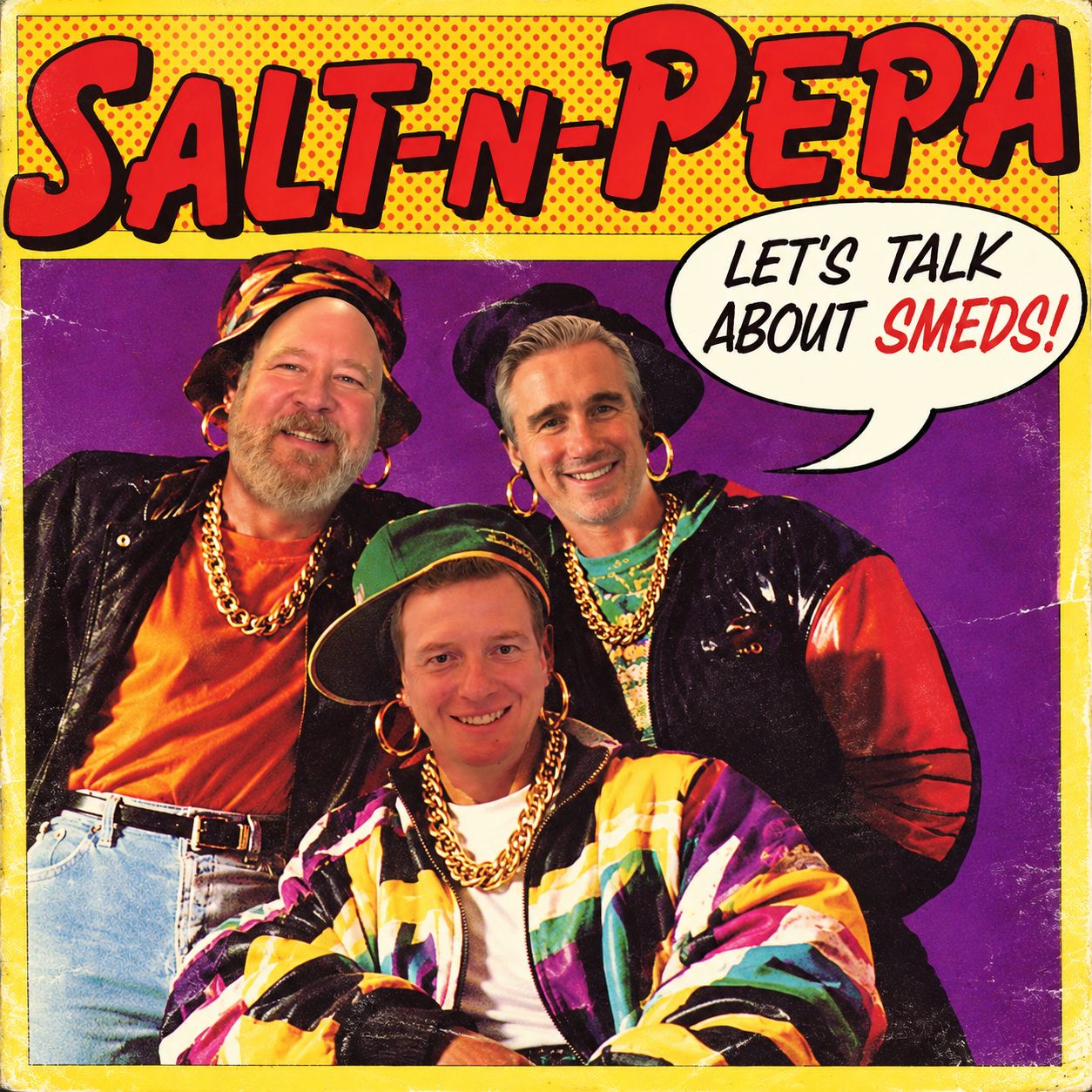 Editor’s Note: For some more and…particularly colorful…commentary on this episode, visit Clint Mehall’s LinkedIn page.
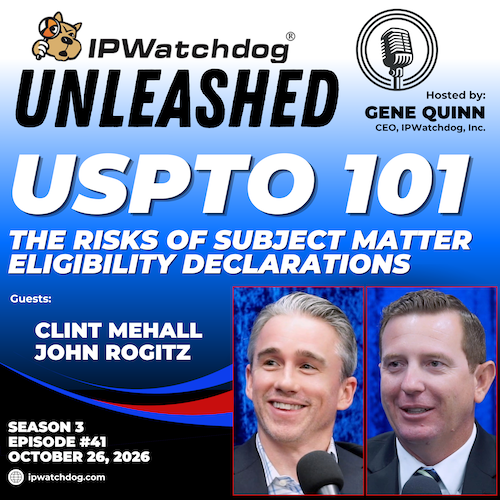
This week on IPWatchdog Unleashed, I spoke with John Rogitz and Clint Mehall. Our conversation focused on subject matter eligibility declarations, or SMEDs, and a consequential question for patent owners: When does evidence submitted to overcome a Section 101 rejection strengthen an application, and when does it create vulnerabilities that follow the patent into litigation? For software companies, developers of computer-implemented technologies, and the counsel responsible for protecting those inventions, the answer requires looking beyond allowance to the commercial value and defensibility of the resulting rights.
The USPTO deserves some credit for recognizing that applicants may at times need an opportunity to explain technical improvements that examiners have failed to appreciate, but there is real risk associated with filing a SMED that should cause practitioners to pause rather than race forward without serious consideration. A declaration under 37 C.F.R. 1.132 can provide evidence about how a skilled artisan would understand the disclosed invention, the technological problem it addresses, and the significance of the claimed solution. But good intentions do not eliminate prosecution risk that an examiner will simply ignore the filing, or worse reach the conclusion that the original disclosure is deficient and the attorney is merely trying to sneak into the application matter that should have been there at the time of filing.
A Last Resort, Not the First Response
An additional tool is useful only if its likely benefit justifies the cost of using it and the record it creates. And despite some difference of opinion, we all agreed on an essential point: Filing a SMED should not be the first line of defense against an eligibility rejection; it should should be treated as a last resort. Filing a SMED requires serious consideration of the advantages, disadvantages, and alternatives. Examiner interviews, arguments grounded in the existing specification, appropriate claim amendments, and appeals all deserve careful consideration before ever adding sworn statements to the prosecution history. The question must be whether the declaration supplies something genuinely necessary to advance the case, and even then must be intentionally specific and narrow.
Mehall offered the practical counterweight to our skepticism. He described using a declaration in an inherited application where an examiner interview revealed the need for a clearer technical explanation. Comparative reasoning tied to the specification and the cited technology could provide a foundation for overcoming the rejection or presenting the case on appeal. His point is important: A patent carrying some litigation risk is still be preferable to having no patent at all; logic that is impossible to argue with. But that possibility supports a case-specific decision, not routine reliance on subject matter eligibility declarations.
Why Volunteer a Problem Before There is a Rejection?
The timing discussion sharpened our concerns. The USPTO’s September 29 guidance expressly identifies filing before the first action on the merits as an important option applicants should consider, explaining that early submission can avoid later procedural complications and permit consideration during the initial eligibility assessment. That may be administratively convenient for the USPTO, but strategically it seems rather crazy to encourage applicants to volunteer sworn explanations of a perceived eligibility problem before an examiner has even raised one. Why flag a vulnerability that may never become an issue?
Rogitz was particularly critical of that approach. A preemptive declaration creates consequential statements before the applicant knows the examiner’s actual theory. An early filing is not necessarily an admission that the claims are ineligible, but opposing counsel will have every incentive to characterize the record unfavorably later. There is also a difference between responding promptly to an identified rejection and anticipating every rejection an examiner might conceivably make. Procedural permission to file early is not a strategic reason to do so, and I am hard-pressed to think of a reason why an applicant should ever file a SMED before an eligibility rejection by an examiner.
Explaining the Disclosure—or Exposing Its Absence?
The most delicate issue is the boundary between explaining an adequately disclosed invention and attempting to supply what the application should have disclosed at filing. A declaration can explain how a skilled artisan would understand existing technical teachings, including why those teachings represent an improvement. It cannot retroactively repair an inadequate original disclosure. The specification need not necessarily announce an improvement in those exact words, but the supporting disclosure must already be sufficient. That distinction is legally significant and, in practice, exceptionally easy to mishandle.
Rogitz highlighted the question in the SMED flowchart asking whether the evidence supplies information required in the original disclosure. For him, that inquiry makes the risk particularly serious. Counsel may believe a declaration merely illuminates what is already present; an examiner may interpret the same explanation as an effort to introduce missing subject matter. The applicant then faces an adverse statement in the record about disclosure adequacy, potentially inviting Section 112 issues alongside the original Section 101 rejection. For an examiner who misunderstands the specification, the declaration may create another opportunity to memorialize that misunderstanding.
Of course, later-submitted evidence is not automatically new matter merely because it was prepared after filing. The question is whether it explains the original disclosure and relevant facts or attempts to substitute for a complete disclosure that was required at the outset. Nevertheless, the practical danger remains: Language intended to clarify a technical improvement may be read as conceding that the improvement was absent. Every material statement therefore requires careful attention to its support in the application and its connection to the claims. The declaration must survive scrutiny beyond the immediate prosecution exchange otherwise you may win the battle but lose the war in litigation.
The Inventor-Testimony Contradiction
I also questioned why inventors are encouraged—or even permitted—to submit these declarations when patent law so often approaches their testimony with skepticism. The concern about interested inventor testimony is familiar, particularly where uncorroborated recollections are offered to establish inventorship or an earlier invention date. That does not mean inventors are categorically barred from giving evidence, or that every inventor declaration requires independent corroboration. But it creates an obvious strategic tension: Why invite testimony from the person whose stake in the outcome may then be invoked to discount it entirely?
A declaration from an independent expert will address that concern, but independence costs money and does not eliminate the risks of sworn testimony. An inventor may have the best firsthand knowledge of the technology; an outside expert may provide greater distance from the commercial outcome. Neither choice should be automatic. My concern is the asymmetry: Favorable statements may be discounted as self-interested, while an unfortunate statement remains available as an admission. Patent owners should understand that possibility before deciding who should sign and what the declaration should say.
Evidence Must be Treated as Evidence
Another source of frustration is the apparent failure to give declarations their proper evidentiary significance. My point during the conversation was straightforward: When an applicant supplies competent, specific factual testimony under penalty of perjury, an examiner should take those facts at face value absent a reasoned basis to question them, which ordinarily should not exist because examiners are simply not in a position to challenge the veracity of statements of fact. Simply disliking the conclusion a declaration supports is not a substitute for addressing the evidence. A declaration is evidence; it does not become attorney argument because it supports the applicant’s position, or because the examiner wants to disagree.
There is an important distinction between accepting a factual showing and accepting the ultimate legal conclusion that the claims are eligible. A declarant cannot compel allowance merely by announcing that an invention is not abstract. Examiners must evaluate relevance, factual support, and the entire record. But the USPTO’s own instructions require consideration of properly submitted declarations and a specific explanation when evidence is insufficient. The problem we discussed is what happens when meaningful technical evidence is brushed aside with the same conclusory treatment applicants are told to avoid.
That distinction also matters when detailed technical reasoning is involved. Evidence need not always take the form of a trade-journal article or a table of measured results. A qualified declarant may explain why the claimed operations cannot practically be performed mentally, how a disclosed architecture changes computer operation, or how the claimed approach differs technically from a conventional one. The explanation must have a factual foundation and address the actual claims.
Clients Must Fund the Strategy They Need
If a declaration is justified as a last resort, clients must pay enough for counsel to prepare a good one. That requires facts and/or meaningful technical reasoning, careful examination of disclosure support, and deliberate attention to downstream consequences. A conclusory submission prepared within a budget that barely covers an ordinary office-action response is unlikely to accomplish those objectives. Rogitz emphasized the expense of doing the work properly; Mehall likewise stressed that clients cannot reasonably expect persuasive, defensible evidence without funding the necessary effort.
For in-house counsel, the broader lesson reaches beyond SMEDs. Repeated claim narrowing can become the path of least resistance when prosecution budgets discourage investigation, interviews, and strategic challenges. Eventually, the company may obtain a patent that does little to cover its actual product or service. Spending less on each response can become expensive if the resulting rights lack commercial relevance. Stronger drafting at the outset and thoughtful decisions during prosecution deserve to be evaluated against that business consequence.
SMEDs may have a place in a difficult case, but our shared recommendation was caution, not enthusiasm for routine use. Treat them as a last resort, understand the “witness” and record being created, and fund the work accordingly. The objective is to obtain meaningful protection without creating avoidable weaknesses that compromise its value. Our conversation explores why that judgment is so difficult—and why patent owners should be involved before the declaration is filed, rather than learning about its consequences during litigation.
More IPWatchdog Unleashed
You can listen to the entire podcast episode by downloading it wherever you normally access podcasts or by visiting IPWatchdog Unleashed on Buzzsprout. You can also listen to IPWatchdog Unleashed conversations on the IPWatchdog YouTube channel. For more IPWatchdog Unleashed, see below for our growing archive of previous episodes.












Join the Discussion
No comments yet. Add my comment.
Add Comment