


 0
“The correction mechanism has conditions, and for AI-assisted research, where records may be fragmented across people, tools, sessions, and employers, failing to meet them makes attribution uncertainty a practical valuation issue.”
 Attribution uncertainty should be treated as a distinct source of intellectual property risk and priced into the valuation of AI-assisted inventions. When an invention emerges from a workflow in which human contributions were not documented, an inventorship error can threaten patent validity and, in some circumstances, may not be correctable. A patent is worth less if its owner cannot reliably establish who invented the claimed subject matter, which matters to buyers, licensees, lenders, insurers, and technology-transfer offices alike.
The U.S. Patent and Trademark Office’s (USPTO’s) November 2025 revised guidance confirmed that the same inventorship standard applies whether or not artificial intelligence was used. AI systems are tools, not inventors (see also Thaler v. Vidal, 43 F.4th 1207 (Fed. Cir. 2022)), and the guidance withdrew the Pannu joint-inventorship analysis for inventions developed by a single natural person with AI assistance. The inquiry remains focused on human conception, and an inventor must be able to describe the invention with particularity. The guidance prescribes no recordkeeping method, leaving organizations responsible for ensuring that their evidence supports the inventorship they declare.
The Federal Circuit’s April 2026 decision in Fortress Iron, LP v. Digger Specialties, Inc. shows why the stakes can be high. Although the case did not involve AI, the court affirmed summary judgment invalidating two patents for omission of a coinventor and affirmed denial of correction. Under 35 U.S.C. § 256(b), judicial correction requires notice and an opportunity to be heard for all parties concerned. Deciding a question of first impression, the court held that the omitted inventor qualified even without an economic interest in the patents, and because that person could not be located, correction was unavailable. The decision does not mean every inventorship error is incurable. But the correction mechanism has conditions, and for AI-assisted research, where records may be fragmented across people, tools, sessions, and employers, failing to meet them makes attribution uncertainty a practical valuation issue.
Ownership Is More Than a Diligence Checkbox
The income, market, and cost approaches each price a right. Each can account for familiar risks such as prior-art exposure or weak claim support, yet each can overlook whether the party offering the asset can actually grant the rights being valued. In ordinary diligence, reviewers examine assignments, security interests, and warranties. Those documents show that the named inventors transferred their rights, not that the correct inventors were named. A single-inventor patent with clean assignments looks identical whether it came from a well-documented workflow or from one in which three people and a language model each contributed.
Attribution uncertainty differs from conventional validity risk in three ways. It may depend on private records absent from the patent file. Correction may be unavailable if a necessary person cannot be located and heard. And it is shaped by institutional practices, including record retention, inventor interviews, and contractor management, more than by technology or claim language.
Why a Small Contribution Can Threaten an Entire Patent
Inventorship turns on contribution to conception of the claimed subject matter, not on who did the most work. In Ethicon, Inc. v. U.S. Surgical Corp., the Federal Circuit held that a person who contributed to two of the patent’s 55 claims was a joint inventor with an undivided interest in the entire patent. He licensed that interest to the accused infringer, and because all co-owners generally must join an infringement action, the suit was dismissed. There is no proportional dilution: however small the omitted contribution, the loss can be the asset’s exclusivity.
AI-assisted workflows make establishing inventorship harder. One person may frame the problem, another develop prompts, and another select among generated candidates, refine an output, or validate the result. The legal question is not whether AI was used but which natural persons contributed to conception. If prompts, model versions, candidate outputs, selection rationales, and contributor identities are not retained, reconstruction is difficult. An inventor’s recollection alone may not suffice: conception requires corroboration, assessed under a rule of reason, and records assembled after a dispute arises are worth little.
What Diligence Should Examine
Attribution risk may not be visible on the face of a patent, but diligence can test whether the supporting records are reliable.
Institutional practices. Does the organization have a policy governing AI-assisted research, and when did it take effect? Are prompts, outputs, model versions, and selection decisions retained? Is inventorship assessed through substantive interviews with contributors and counsel rather than assigned by default? Do agreements cover contractors, visiting researchers, and collaborators?
Portfolio patterns. Do sole-inventor filings come from teams that otherwise file jointly? Were patents filed after AI tools were adopted but before recordkeeping policies existed? Are there frequent inventor departures, late corrections under 37 C.F.R. § 1.48, or irregularities in declarations?
Asset-level evidence. Is there a contemporaneous conception record that names natural persons and their contributions rather than a team generally? Is there independent corroboration? Can the workflow be reconstructed without relying on a later account?
Diligence cannot prove that no omitted inventor exists or that a record is complete. It can distinguish a documented process from one in which inventorship was decided with little supporting evidence, and that distinction is relevant to price and deal terms.
A Provisional Pricing Framework
An attribution-confidence score (ACS) can organize the evidence across four dimensions: completeness (C), how much of the invention pathway is documented; contemporaneity (T), whether records were created as the work occurred; identifiability (I), whether contributions are attributed to named individuals; and independent corroboration (R), whether evidence exists beyond the named inventor’s own account.
ACS = w_1 C + w_2 T + w_3 I + w_4 R
Each dimension is normalized between zero and one, and the weights sum to one. I suggest 0.25, 0.35, 0.25, and 0.15, giving contemporaneity the most weight because reconstructed evidence is less persuasive. These weights are analytical judgments drawn from the emphasis courts place on each factor, not empirically calibrated measures, and no reliable base rate yet shows how often AI-assisted patents face inventorship challenges. The score is a framework for structured judgment, not a calibrated probability.
Expected loss can then be expressed as:
E[L] = P(\text{challenge}) \times P(\text{defect} \mid \text{challenge}) \times P(\text{uncurable} \mid \text{defect}) \times L(\text{invalidity or lost exclusivity})
P(challenge) is the probability that inventorship is put in issue during the asset’s economic life. P(defect | challenge) can be first approximated as 1 ? ACS, tempered by the clear-and-convincing standard that favors the patentee.[5] P(uncurable | defect) turns on contributor locatability and workforce stability, and L is the economic harm if validity or exclusivity is lost. Inputs should rest on documented assumptions and sensitivity analysis, not be presented as observed market statistics.
Take two comparable portfolios, each valued at $50 million before attribution risk, with a 15% chance of challenge and a loss of 90% of value if the exposure materializes. Portfolio A is well documented (ACS 0.85), with a 20% chance that a defect is uncorrectable. Portfolio B is poorly documented (ACS 0.30), with a 45% chance. Expected loss is about $203,000 for A (0.15 × 0.15 × 0.20 × 0.90 × $50 million) and about $2.13 million for B (0.15 × 0.70 × 0.45 × 0.90 × $50 million).
These figures are illustrative, not predictions, and P(challenge) is the weakest input: at 40% for an actively asserted portfolio, the gap grows to roughly $5 million. The relative spread holds across plausible parameter ranges, which is the point: documentation quality can be priced. The framework also treats the four terms as independent, although poor documentation likely travels with poor contractor management, and it does not apply to defects already known, which should be modeled directly.
Under the income approach, the adjustment is better reflected in expected cash flows than in the discount rate, because the risk is discrete. Under the market approach it informs comparability adjustments, although comparable transactions may carry the same unpriced risk. The cost approach is less useful because the cost of recreating an invention does not show whether its owner can enforce the patent.
Transaction Consequences and the Upstream Remedy
For acquisitions and financing, diligence should request AI-use policies and adoption dates, retention practices, inventor-identification procedures, contributor assignment agreements, and conception records for material assets. Where records are weak, parties can negotiate price, tailored representations, or indemnities, or decline to proceed. Indemnity is no substitute for prevention because it may be capped, time-limited, or worth only what the indemnitor can pay. Lenders and IP insurers, which bear these losses directly, are natural early adopters.
Licensees paying for exclusivity should examine how inventorship was determined, because a co-owner’s rights can erode exclusivity even where the license was negotiated in good faith. Universities and technology-transfer offices have particular reason for care. Research involves students, postdoctoral researchers, and visiting scholars whose roles change, and a postdoc who contributed in 2024 and left the country in 2025 may be unlocatable, which is the Fortress Iron fact pattern in a university setting.
The least expensive remedy is upstream. Organizations can retain relevant AI interaction records and model information, document material human decisions, identify contributors by name, and review inventorship before filing. This does not require logging every experiment or preserving every generated output. A researcher who generates 200 candidates and selects one need only record that the selection occurred, who made it, when, and why. Such records may raise confidentiality, trade-secret, and discovery concerns, which call for sensible scope, access controls, and retention rules developed with counsel, not for keeping no records. Once a dispute arises, a missing contemporaneous record may be impossible to recreate persuasively.
Attribution uncertainty is not yet a precisely measurable market category, and the framework needs empirical calibration. But uncertainty does not become zero because the market has not measured it. The legal rules are established, the financial implications are real, and the evidence that helps manage the risk is cheapest to create when the invention is made. A reliable conception record is therefore more than compliance paperwork: it preserves the value of the innovation asset itself.
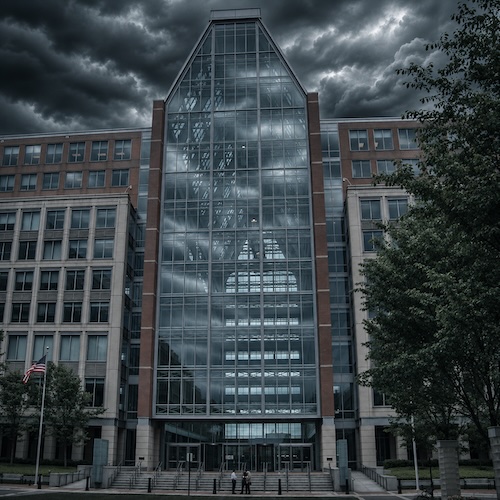
Image Source: Deposit Photos
Image ID: 50390993
Copyright: IzelPhotography













Join the Discussion
No comments yet. Add my comment.
Add Comment