


 1
“While ChromaDex’s arguments ultimately did not prevail, it cannot be said that the substantive strength of its § 101 position was so [exceptionally] meritless or unreasonable as to make this case stand out from others.”
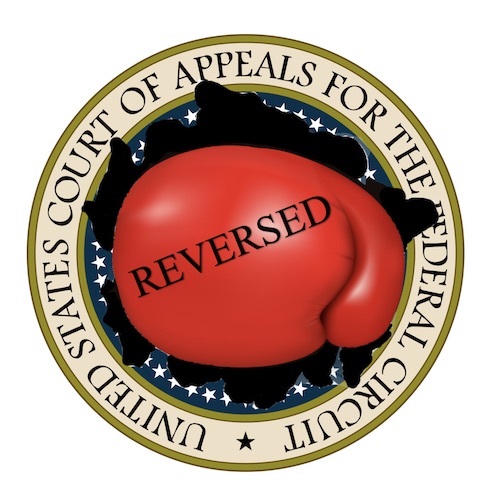 The U.S. Court of Appeals for the Federal Circuit (CAFC) on Friday reversed a district court’s award of attorneys’ fees to Elysium Health, Inc., holding that the lower court erred in assessing the substantive strength of ChromaDex’s Section 101 position.
The appeal is rooted in the CAFC’s 2023 decision affirming the U.S. District Court for the District of Delaware’s grant of summary judgment for Elysium Health that the asserted claims of ChromaDex’s patent on an isolated form of vitamin B3 were directed to unpatentable subject matter under Section 101.
U.S. Patent No. 8,197,807 is titled “Nicotinamide riboside kinase compositions and methods for using the same.” Nicotinamide riboside (NR) is a form of vitamin B3 that is naturally present in cow’s milk. The invention covers a composition containing isolated NR that results in increased biosynthesis of the coenzyme nicotinamide adenine dinucleotide (NAD+) upon oral administration.
ChromaDex sells dietary supplements embodying the patent, which it licenses from Dartmouth College, and sued Elysium for patent infringement in 2018. Elysium moved for summary judgment that the claims were invalid under Section 101 and the district court agreed, finding that the claims were directed to a natural phenomenon, specifically, “compositions comprising isolated [NR], a naturally occurring vitamin present in cow milk.” The CAFC ultimately agreed with the Delaware court that the claims were directed to a product of nature under Ass’n for Molecular Pathology v. Myriad Genetics, Inc. and Diamond v. Chakrabarty.
Following that decision, Elysium moved for an award of attorneys’ fees under 35 U.S.C. § 285, arguing that the case was exception because ChromaDex failed to show how its claims could survive Myriad. The district court agreed, and awarded Elysium $9.1 million in attorneys’ fees.
On appeal, however, the CAFC disagreed with the district court, explaining that “the patent-eligibility question here required evaluating several considerations beyond Myriad.” Because the district court erred in its understanding of the “substantive strength” of ChromaDex’s 101 argument, the CAFC found the court abused its discretion in granting the fee award and reversed.
After reviewing the holding of the underlying decision, the CAFC explained that “[i]n our view, it was legal error to treat Myriad as the beginning and the end of the patent-eligibility analysis for ChromaDex’s claims.” Because ChromaDex’s arguments went beyond the assertion that its NR “is structurally isolated from other components in its claimed compositions,” they required “additional, meaningful analysis,” said the CAFC.
In the 2023 appeal, the CAFC distinguished the case from Natural Alternatives Int’l, Inc. v. Creative Compounds, LLC, explaining that the patent here is not markedly different from milk. While the appellants claimed the compositions are preferable to milk because isolating the NR allows for greater NAD+ biosynthesis than found in milk alone and that the isolated NR alone can increase NAD+ biosynthesis, the CAFC said that 1) the claims lack a minimum required quantity of isolated NR and 2) the claims attribute the increase in NAD+ only to the composition, rather than the isolated NR alone. The court further explained:
“To be sure, the claims cover several different composition embodiments, some of which are structurally different from milk. However, as noted above, the claims also encompass—as both parties agree—at least one embodiment that covers milk, except that the NR element is ‘isolated.’ Because the claims are broad enough to encompass a product of nature, it is invalid under § 101.”
Pointing to this analysis , the CAFC said today that “[e]valuating the merits of Cho[r]maDex’s po- sition required working through several distinct considerations, beyond just Myriad, including whether the claimed compositions have markedly different characteristics and the potential for significant utility, the amount of NR required by the claims, and NR’s role in increasing NAD+ biosynthesis.”
Therefore, said the opinion, “while ChromaDex’s arguments ultimately did not prevail, it cannot be said that the substantive strength of its § 101 position was so [exceptionally] meritless or unreasonable as to make this case stand out from others.” The decision was thus reversed.
Image Source: Deposit Photos
Image ID: 10042948
Author: almoond











Join the Discussion
One comment so far. Add my comment.
Model 101
October 30, 2026 02:54 pmEligibility nonsense.
Add Comment