


 0
“Memes may spread freely, but they are not necessarily free to use.”
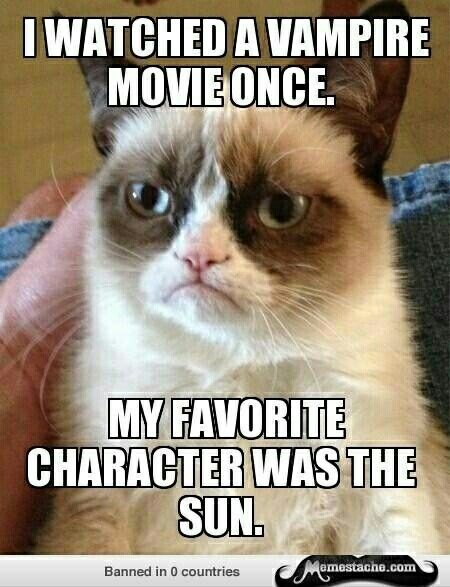
The Grumpy Cat Meme
A meme can travel from a private joke to a global advertising campaign before its creator – or the owner of the image behind it – has time to object. Coined by Richard Dawkins in 1976 to describe a unit of cultural transmission that replicates and mutates as it spreads, “memes” include reaction GIFs, catchphrases, and familiar templates such as “Distracted Boyfriend” and “Surprised Pikachu.” For brands and creators, that speed and reach can be irresistible: the right meme, deployed at the right moment, can reach millions within hours.
But virality is not a license. Nearly every meme begins with someone else’s photograph, film still, illustration, or other creative work, and permission is rarely part of the reposting process. Even a brand that creates its own meme may struggle to determine which rights it owns and how the resulting content can be commercialized without infringing.
Who Owns the Copyrights in a Meme?
A. The Underlying Work
However widely a meme circulates, its popularity does not erase copyrights in the underlying work. Under the Copyright Act, copyright attaches automatically when an original work of authorship is fixed in a tangible medium. The photograph behind an image macro, the film still behind a reaction GIF, or the drawing behind a cartoon template are therefore typically protected works owned by the photographer, studio, artist, or their employer under work-for-hire principles. Neither widespread sharing nor internet fame places a work into the public domain. In short, sharing a meme often means using someone else’s intellectual property without permission.
B. The Elements of the Meme
A harder question is whether the meme’s added elements, such as captions, arrangements, or modifications to the underlying work, are independently protectable. Copyright may cover material that is independently created and possesses a “modicum of creativity.” But ideas, short phrases, slogans, and familiar symbols are not copyrightable. A meme template or brief caption such as “One does not simply…” therefore is generally unprotected by copyright, although a longer, creative text overlay may qualify.
A meme creator may also hold a thin copyright in modifications made to the underlying work that qualify as a derivative work. That protection covers only the new material; under the Copyright Act, it does not extend to preexisting material used without permission. And because the right to prepare derivative works belongs to the owner of the underlying copyright, creating the meme may itself be an infringement.
C. Ownership of AI-Generated Memes
Generative AI creates an additional set of issues. The Copyright Office recognizes copyright only in human-authored expression. Under current technology, prompting alone generally does not provide enough control over an AI system’s expressive choices to make the user the author of the output. As a result, an AI-generated meme image or caption may be unprotectable. Copyright may nevertheless extend to a human’s original selection, arrangement, or modification of AI-generated material, but only to human-authored elements.
In practice, the practical consequences are significant. An image generated entirely from a prompt may have no copyright owner and therefore may be freely copied. By contrast, a creative arrangement of panels or substantial human edits may be protected to the extent of the human contribution. Companies commissioning AI-assisted memes should therefore document meaningful human input and accurately disclose AI-generated material in any copyright registration application.
Can a Meme Function as a Trademark?
Copyright is not the only potential source of protection for a meme. Trademark law may also apply, but only when the meme functions as a source identifier for goods or services, rather than merely as cultural content. The U.S. Patent and Trademark Office (USPTO) routinely refuses to register popular phrases, slogans, and widely used expressions under the “failure to function” doctrine because consumers perceive them as messages, not as indicators of a single source. A meme phrase displayed prominently across the front of a T-shirt, for example, is typically ornamental or informational rather than trademark use.
Still, a meme-derived character or phrase can become a protectable mark if its owner consistently uses it to identify a single source, such as on licensed goods bearing recognizable branding, trade dress, or labels. The famous Grumpy Cat meme is a classic example of a meme protected by trademark law: its owners developed a licensing business around the character and enforced it as a brand. But the more broadly a phrase circulates as internet slang, the harder it becomes to show that consumers associate it with one source. In that sense, virality may build cultural recognition while undermining trademark distinctiveness.
Risks of Unauthorized Use and Defenses
A. The Risk of Unauthorized Use
Using a meme without permission can create significant copyright risk because a third party may own its underlying image. Available remedies may include an injunction, recovery of the rightsholder’s attorneys’ fees, and statutory damages of up to $150,000 per work for willful infringement. Businesses should also be cautious with GIFs and other content available through social-media platforms. Permission to share content within an app does not necessarily include the right to use it in advertising or for other commercial purposes.
Trademark risk may arise when a meme includes another party’s character, logo, or other identifying material. A claim for false endorsement or association may exist if consumers are likely to believe that the mark owner sponsored or approved the campaign. Although parody or commentary may help in some contexts, the central trademark question is whether consumers are likely to be confused about source, sponsorship, or affiliation. That defense becomes weaker when a business uses the meme as a product name, logo, or other brand identifier. Owners of famous marks may also assert dilution claims if the use weakens the mark’s distinctiveness or harms its reputation.
A meme featuring an identifiable person may create an additional risk. Using that person’s image in advertising can trigger privacy or right-of-publicity claims, regardless of who owns the copyright in the image.
B. Licensing and Fair Use of Memes
Licensing is generally the safest way to use a meme commercially, but the license must cover the intended use. The consequences of exceeding a license can be substantial. In 2018, for example, the owners of Grumpy Cat won a jury verdict of approximately $710,000 against a beverage company licensed to use the images and marks for “Grumpy Cat Grumppuccino” iced coffee. The company exceeded that license by using them for a line of ground coffee products. The creators of Nyan Cat and Keyboard Cat similarly sued Warner Bros. and 5th Cell over their use of the characters in the Scribblenauts video games; eventually reaching a settlement for continued use.
Without a license, a user may rely on fair use. Courts consider four factors: (1) the purpose and character of the use, including whether it is commercial; (2) the nature of the copyrighted work; (3) how much of the work was used and whether that portion was important; and (4) the effect on the market for the original work.
The first factor often turns on whether the new use has a different purpose from the original. Parody and commentary may favor fair use, but adding a new meaning or message is not enough by itself. In Andy Warhol Foundation for the Visual Arts, Inc. v. Goldsmith, 598 U.S. 508 (2023), the Supreme Court instructed courts to compare the specific purposes of the two uses and weigh the commercial nature of the challenged use. Commentary directed at the original work is more likely to qualify as fair use. Using the work to convey an unrelated message (especially in advertising or another market served by licensing) is less likely to qualify.
For meme users, the practical distinction is straightforward. A noncommercial meme that comments on the source material or current events may present a stronger fair-use case because it is expressive, not monetized, and less likely to replace a licensed use. A brand using the same image to sell a product faces greater risk because the use is commercial. The remaining factors also matter. Using a single film still may be viewed differently from copying an entire illustration, as copying an entire work generally weighs against fair use unless the entire image is needed for the commentary. The market factor may also favor the rightsholder because licensing viral images is now common.
Practical Takeaways
For Brands
- Treat memes as licensed content. Clear the underlying image, any depicted person’s likeness, and any third?party marks before commercial use.
- Do not assume that parody or “meme culture” will protect a marketing use. Commercial purpose weakens fair use, and using another’s mark as a source identifier removes the parody shield.
- Have marketing teams adopt a quick clearance protocol for real-time social posts, with escalation for any recognizable photo, character, or person.
For Content Creators
- If you created an original image that became a meme, register it promptly as a copyright and/or trademark. Timely registration preserves statutory damages and attorney’s fees, and may be necessary for asserting certain claims.
- To build a brand from a meme character or phrase, use it consistently as a source identifier on goods and services rather than as decoration, and police uses of your mark.
- Document your human creative contributions when using AI tools, and disclose AI-generated material in registration applications.
For Practitioners
- Start every meme dispute by identifying the underlying work and its owner; that is usually where the enforceable right lies.
- Prioritize enforcement against commercial uses, where damages, fair use, and public perception all favor the rightsholder, and weigh reputational risk before targeting individuals.
Identify, Assess, Secure
Memes may spread freely, but they are not necessarily free to use. Copyright usually remains with the owner of the underlying work. Fair use may protect genuine commentary, but commercial uses present greater risk. Trademark protection applies only when a meme identifies a source. The practical lesson is simple: identify the rights, assess the use, and secure permission when needed.









Join the Discussion
No comments yet. Add my comment.
Add Comment