


 0
“C4IP President and CEO Coke Morgan Stewart said the rule should ‘distinguish transactions that pose genuine security risks from those that bring valuable intellectual property into American hands.’”
 The Council for Innovation Promotion (C4IP) issued a statement Tuesday expressing concern about a rule recently proposed by the U.S. Department of the Treasury to enact the Comprehensive Outbound Investment National Security (COINS) Act, which was itself enacted as part of the Fiscal Year 2026 National Defense Authorization Act.
According to the Treasury Department, “the COINS Act builds upon the framework for regulating certain outbound investments by U.S. persons under Treasury’s existing Outbound Investment Security Program (OISP) and the regulations at 31 C.F.R. Part 850.” The Treasury Department issued a Notice of Proposed Rulemaking (NPRM) on October 22 that would extend the investment restrictions inherent in the Act to biotechnology, including certain pharmaceutical and life sciences activities.
Countries of concern include China (including Hong Kong and Macau), Cuba, Iran, North Korea, Russia, and Venezuela “under the regime of Nicolás Maduro Moros.”
The proposed rule would expand the U.S. outbound-investment screening program to cover additional technologies and countries, with potentially significant consequences for life sciences companies and other owners of sensitive technology.
Biotechnology is a central expansion. The proposal would classify specified biotechnology activity as prohibited technology, including developing, engineering or using biological systems to modify or produce certain agents, materials, pharmaceutical compounds or biofuels. The pharmaceutical examples are broad: small molecules, polymers, vaccines, blood and blood components, allergenics, cell and gene therapies, monoclonal antibodies and other recombinant therapeutic proteins, as well as their delivery systems. Coverage would also reach certain biomanufacturing equipment and related software, biological sequencing technology, some flow cytometers and cell sorters, liquid chromatography mass spectrometry instruments, bioinformatics tools, and automated research or cloud-lab infrastructure.
The NPRM acknowledges that this scope could affect public health and U.S. businesses. It specifically asks whether “pharmaceutical compounds” should be narrowed to advanced or frontier technologies, and whether the proposed biological-system and equipment definitions need more precise limits.
The restrictions would apply to specified transactions by U.S. persons involving a “covered foreign person” connected to a country of concern and engaged in covered technology. Transactions include certain equity acquisitions, debt financing with equity-like rights, joint ventures, greenfield investments, limited-partner investments and certain transactions directed by a U.S. person. U.S. persons would also have to take reasonable steps to prevent their controlled foreign entities from undertaking prohibited transactions.
Transactions in prohibited technologies would generally be barred unless an exemption applies; transactions involving notifiable technologies could proceed with required reporting. Exceptions include certain publicly traded securities, investment funds, limited-partner investments of no more than $2 million, intracompany fund transfers and ordinary administrative transactions. The proposal also provides for national-interest exemptions and confidential, nonbinding Treasury feedback on actual proposed transactions. It would not apply retroactively, but the existing rules would continue to govern covered activity from January 2, 2025, until the new regulations take effect.
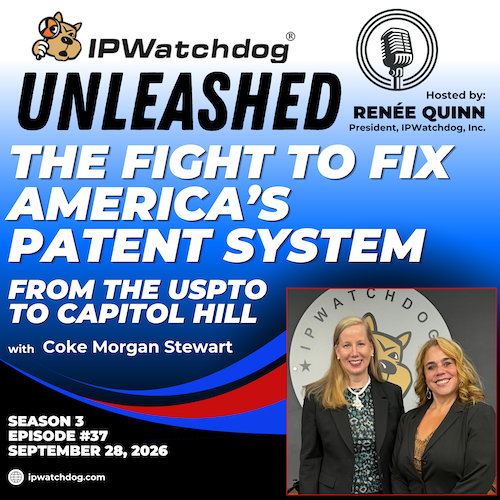
C4IP’s statement said the proposed rule could threaten American companies’ ability to “acquire, license, and commercialize valuable biotechnology discoveries developed abroad.” C4IP President and CEO Coke Morgan Stewart said the organization supports Treasury’s efforts, but that the rule should “distinguish transactions that pose genuine security risks from those that bring valuable intellectual property into American hands.”
“A carefully tailored approach can advance our national security objectives while preserving America’s leadership in innovation,” Stewart said.
Comments on the NPRM are due December 7, 2026.
Image Source: Deposit Photos
Image ID: 205970290
Author: Maksym Yemelyanov















Join the Discussion
No comments yet. Add my comment.
Add Comment