


 0
“Gilead sufficiently alleged that counterfeit medications were sold with fraudulent elements… including labelled bottles containing the wrong pills.”
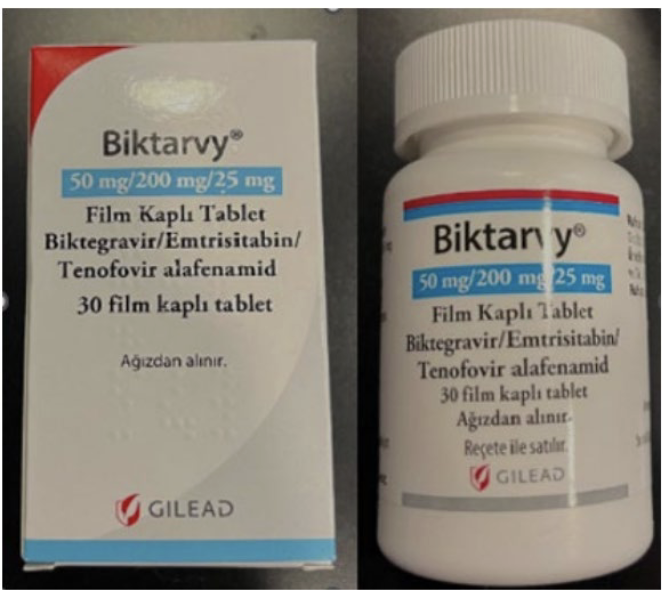 Last Friday, U.S. District Judge Natasha Merle of the Eastern District of New York entered an order adopting a U.S. magistrate judge’s report and recommendation to grant Gilead Sciences’ motion for default judgment against eight individuals and 18 shell companies involved in a conspiracy to market counterfeit HIV treatments, many of them improperly labelled and sold with falsified chain-of-sale documents. Along with awarding more than $69 million in damages, Judge Merle also ordered the entry of a permanent injunction preventing defaulting defendants from selling Gilead-branded medicines in this second case against a major HIV drug counterfeiting ring reselling medications obtained through street purchases to New York City-area pharmacies.
Street-Purchased Biktarvy Bottles Refilled with Wrong Treatments and Resold
The report and recommendation entered October 28 by U.S. Magistrate Judge Joseph Marutollo favored entry of default judgment for Gilead on its federal Lanham Act claims arising under 15 U.S.C. § 1114(1) for federal trademark infringement and counterfeiting. Magistrate Judge Marutollo found general jurisdiction over the 18 corporate defendants, each of them pharmaceutical distributors registered as New York domestic corporations, and specific jurisdiction over the eight individuals for transacting business activity within New York from which Gilead’s Lanham Act claims arose.
In Gilead Sciences’ complaint filed in June 2024, the major pharmaceutical developer alleged that the named corporate and individual defendants engaged in a counterfeiting conspiracy by which the defendants acquired previously authentic bottles of prescription drugs, primarily those for Gilead’s HIV treatments including Biktarvy and Descovy, “typically by purchasing them off the street from vulnerable patients who could be persuaded to give up their life-saving medication for cash.” Empty Biktarvy and Descovy bottles acquired in this way were then filled by conspirators with other medications, had patient information removed, were resealed with fake versions of Gilead’s tamper-evident seal and sold to other pharmacies accompanied by counterfeit pedigrees listing fake chains of sale purporting to show the authentic nature of the pharmaceuticals.
At the top of this counterfeiting conspiracy, according to Gilead’s allegations, were New York City-residents Boris Aminov and Antonio Payano. Assuming Gilead’s allegations true for the purposes of default judgment, Magistrate Judge Marutollo noted that Aminov served as an off-the-books principal for several of the shell pharmaceutical distributors named as defendants, controlling them in practice while other conspirators served as nominal paper principals. Aminov and Payano were also responsible for purchasing already-dispensed bottles of Gilead treatments and previously pleaded guilty to conspiracy to commit healthcare fraud in a separate action brought by the U.S. Department of Justice in the Southern District of New York.
Other individual defendants named in Gilead’s complaint, including Aminov’s mother, were allegedly responsible for operating retail pharmacies selling counterfeit Gilead treatments and recruiting patients to fill HIV prescriptions and selling them for use in the counterfeit ring. In the case of one defendant, illicit funds gained through the counterfeit conspiracy scheme were used to purchase two waterfront properties in the Bronx and a Mercedes Benz Maybach, which retails for around $200,000.
Default Judgment Targets Defendants in Second HIV Counterfeit Ring Targeting Gilead
Assessing liability for Gilead’s Lanham Act claims, Magistrate Judge Marutollo found that Gilead had successfully pleaded both of its causes of action under Section 1114(1). Along with demonstrating that the defendants used its well-established and famous registered trademarks to sell counterfeit medications, Gilead sufficiently alleged that counterfeit medications were sold with fraudulent elements other than fake chain-of-sale pedigrees including labelled bottles containing the wrong pills, counterfeit reproductions of patient information documents and replica seals making bottles appear unopened.
Noting that the analysis of Polaroid factors to determine the likelihood of consumer confusion need not be exhaustive in counterfeiting cases, Magistrate Judge Marutollo found that Gilead’s complaint indisputably showed that the defaulting defendants engaged in the sale of counterfeit Gilead-branded products. Under this same set of facts, Judge Marutollo recommended that the Eastern New York district court find liability for Gilead’s Section 1114(1)(A) claim for unauthorized trademark use and Section 1114(1)(B) claim for unauthorized trademark use applied to product labelling.
Gilead’s expert witness on damages testified that Gilead was entitled to the profit Gilead would have earned from sales of each counterfeit bottle, with Gilead’s expert conservatively estimating unit sales based on sales through online pharmacy-to-pharmacy marketplaces and products subject to Medicaid rebates. Magistrate Judge Marutollo recommended that several defendants including Aminov and Payano be found jointly and severally liable for lost profits, and recommended joint and several liability to defendants’ profits for the sale of counterfeit medications through shell companies operated by individual defendant Ivan Ohar. The magistrate judge noted that civil penalties were available despite several defendants being ordered to pay restitution in the Southern New York criminal proceedings. Judge Merle’s order also adopted Magistrate Judge Marutollo’s finding that damages should be trebled for willfulness.
Not named among the defaulting defendants was Peter Khaim, the owner of commercial properties used by shell companies operated by Ohar as part of the counterfeit conspiracy. Khaim was a central figure in another HIV counterfeit ring that led to an asset freeze order by the Eastern New York district court for distributing hundreds of millions of dollars’ worth of counterfeit medications. Gilead’s complaint in the present case called Khaim “among the largest and most brazen manufacturers and sellers of counterfeit Gilead medications in the country.”












Join the Discussion
No comments yet. Add my comment.
Add Comment