


 0
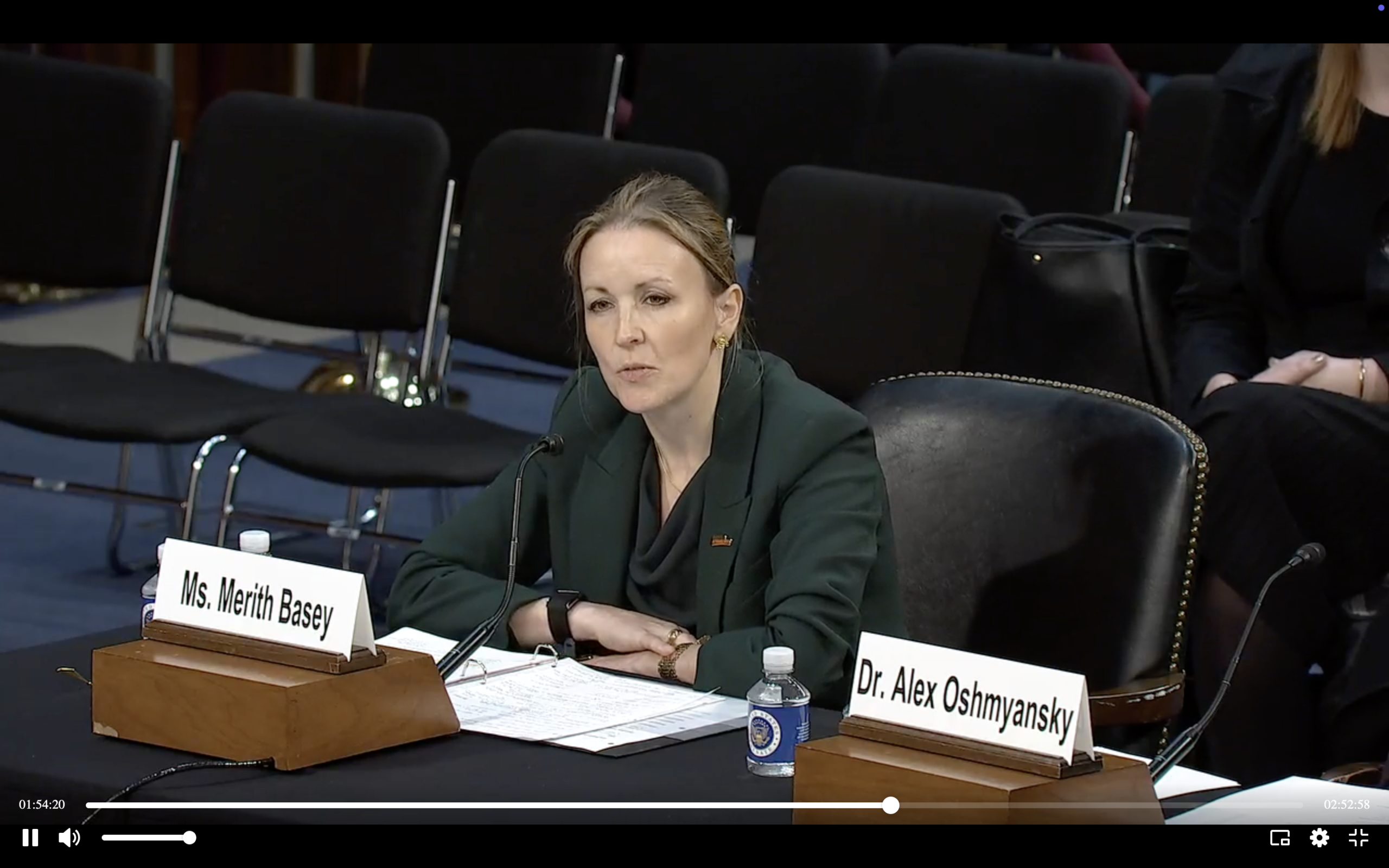
“We need to make sure that all these loopholes are closed. I don’t think we can just remove one measure, we need to remove all of them. This is why all of these bills must be passed together.” – Merith Basey, P4ADNow
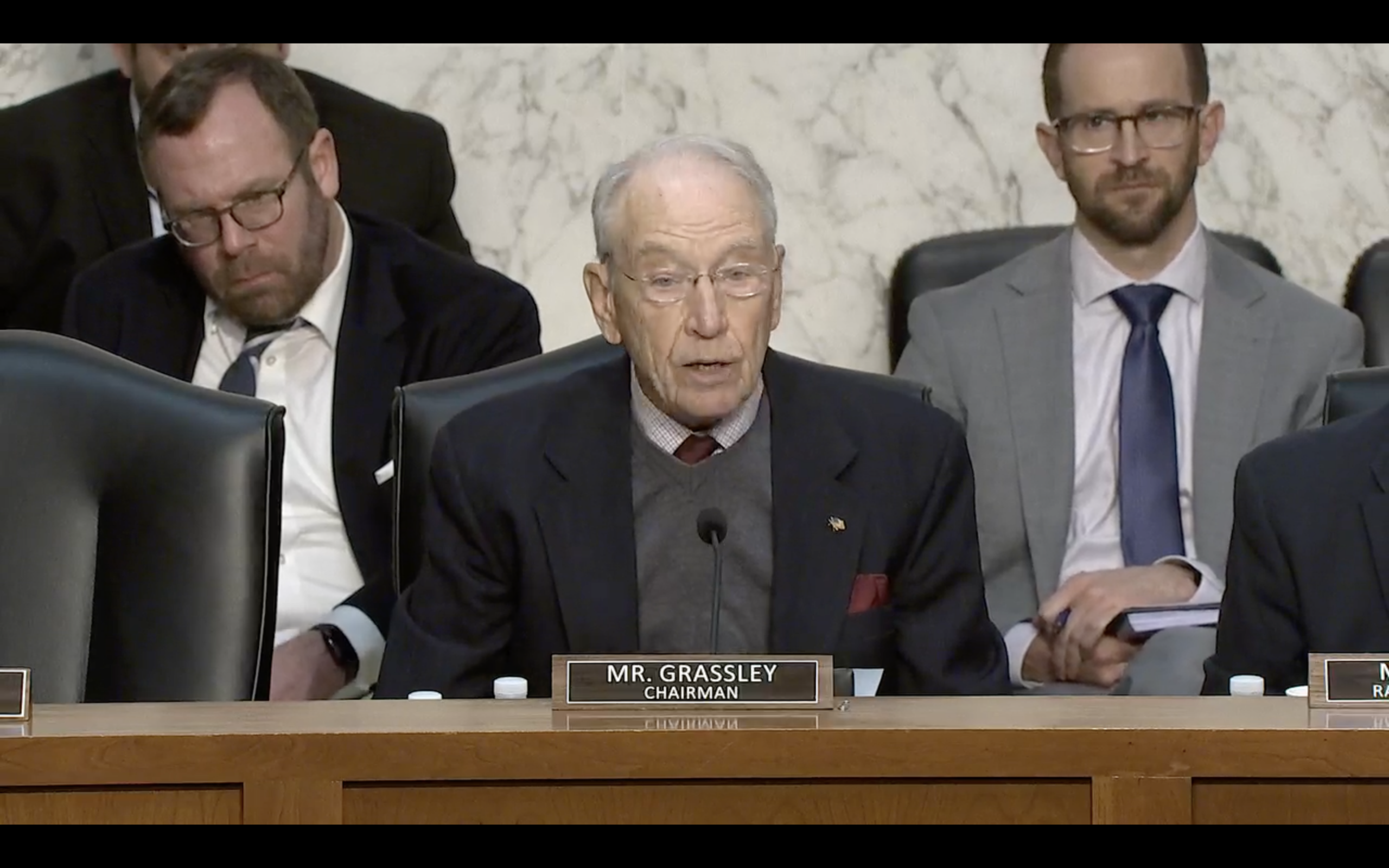 The full Senate Judiciary Committee today heard from five witnesses who urged senators to take action to curb pharmaceutical industry and pharmacy benefit manager (PBM) practices, which they alternately blamed for high U.S. drug costs.
While some senators warned that targeting drug makers could have unintended consequences, most supported moving quickly on legislation they claim would lower prices for U.S. consumers, an assertion some have called a “myth”.
Lawmakers from both parties described “patent thickets” and other alleged examples of “gamesmanship” as barriers to generic and biosimilar competition, even as much of the hearing focused on PBMs, reimbursement and pricing transparency.
The hearing was titled “Prescribing Sunshine: How Competition & Transparency Lowers Prescription Drug Costs,” and featured five witnesses: Patients for Affordable Drugs Now (P4ADNow) CEO Merith Basey; Mark Cuban Cost Plus Drug Company co-founder and CEO Alex Oshmyansky; Iowa Pharmacy Association CEO Matthew Pitlick; USC health economist Neeraj Sood; and UI Health Mile Square Health Center CEO Karriem Watson. No pharmaceutical or patent owner witnesses testified.
Targeting Patents
Basey made the hardest case for targeting patent practices, arguing that Congress needs to pass legislation to mitigate all pharmaceutical industry patent practices at once, rather than attacking them piecemeal.
In response to questions from Senator Mike Lee (R-UT), about barriers to biosimilar competition, she supported legislation aimed at easing biosimilar entry and argued that patent practices can delay competition after an original patent’s term. “The patent system was designed to incentivize genuine innovation,” she said. “Right now, it is not just incentivizing innovation. It is incentivizing manipulation.”
P4ADNow supports the following pending legislation:
- The Preserve Access to Affordable Generics and Biosimilars Act ( 1096), introduced by Senator Amy Klobuchar (D-MN) and supported by eight bipartisan cosponsors, which would curb “pay-for-delay” agreements between generics and brand drug companies;
- the Biosimilar Red Tape Elimination Act (S.1954), introduced by Lee and five bipartisan cosponsors, aimed at eliminating additional requirements for demonstrating interchangeability so that all licensed biosimilars are deemed interchangeable with their reference products;
- the Drug Competition Enhancement Act ( 1040), sponsored by Senator John Cornyn (R-TX) and three bipartisan cosponsors, which targets so-called product-hopping;
- the Stop STALLING Act ( 1095), also introduced by Klobuchar, along with six bipartisan cosponsors, which would limit the use of citizen petitions to the Food and Drug Administration (FDA);
- the Affordable Prescriptions for Patients Act ( 1041), also introduced by Cornyn with three bipartisan cosponsors, aimed at curtailing “patent thicketing” practices; and
- the ETHIC Act ( 2276), introduced by Senator Peter Welch (D-VT) with two bipartisan cosponsors, which would limit the ability of patent owners to assert more than one patent from the same “Patent Group” in a patent infringement action, with the goal of also addressing so-called patent thickets.
 Patent thicketing is a controversial term that is criticized by the pro-patent community as being a misnomer. While the common perception is that patent thickets are a way for pharmaceutical companies to extend the life of a patented drug to the detriment of generic entry, pro-patent groups like the Council for Innovation Promotion (C4IP) have called this narrative “misleading.”
Basey described patent thickets as multiple patents on a single drug that can make it harder for generic or biosimilar competitors to enter. Asked whether one invention should mean one patent, Basey answered, “the simple answer is yes,” while acknowledging that the system should reward genuinely innovative features. “The choice is not between innovation and affordability,” Basey claimed, adding: “patients need both.”
At the same time, Basey said curbing patent thickets alone will not solve the problem. “We need to make sure that all these loopholes are closed,” she replied to Lee’s questioning. “I don’t think we can just remove one [barrier], we need to remove all of them. This is why all of these bills must be passed together,” she urged.
Senator John Kennedy (R-LA) countered most of his colleagues and the witnesses by emphasizing the investment rationale for patent rights. “Those who risk their capital to develop these drugs are entitled to recoup their costs and a fair return on their investment,” he said, warning that otherwise companies would not develop the drugs at all. “We ought to be looking for ways to incent them or at least not to discourage them.”
PBMs Central to Pricing Debate
Kennedy, like most of the witnesses, instead focused on the role of PBMs and other supply-chain participants, in the pricing issue, rather than patents.
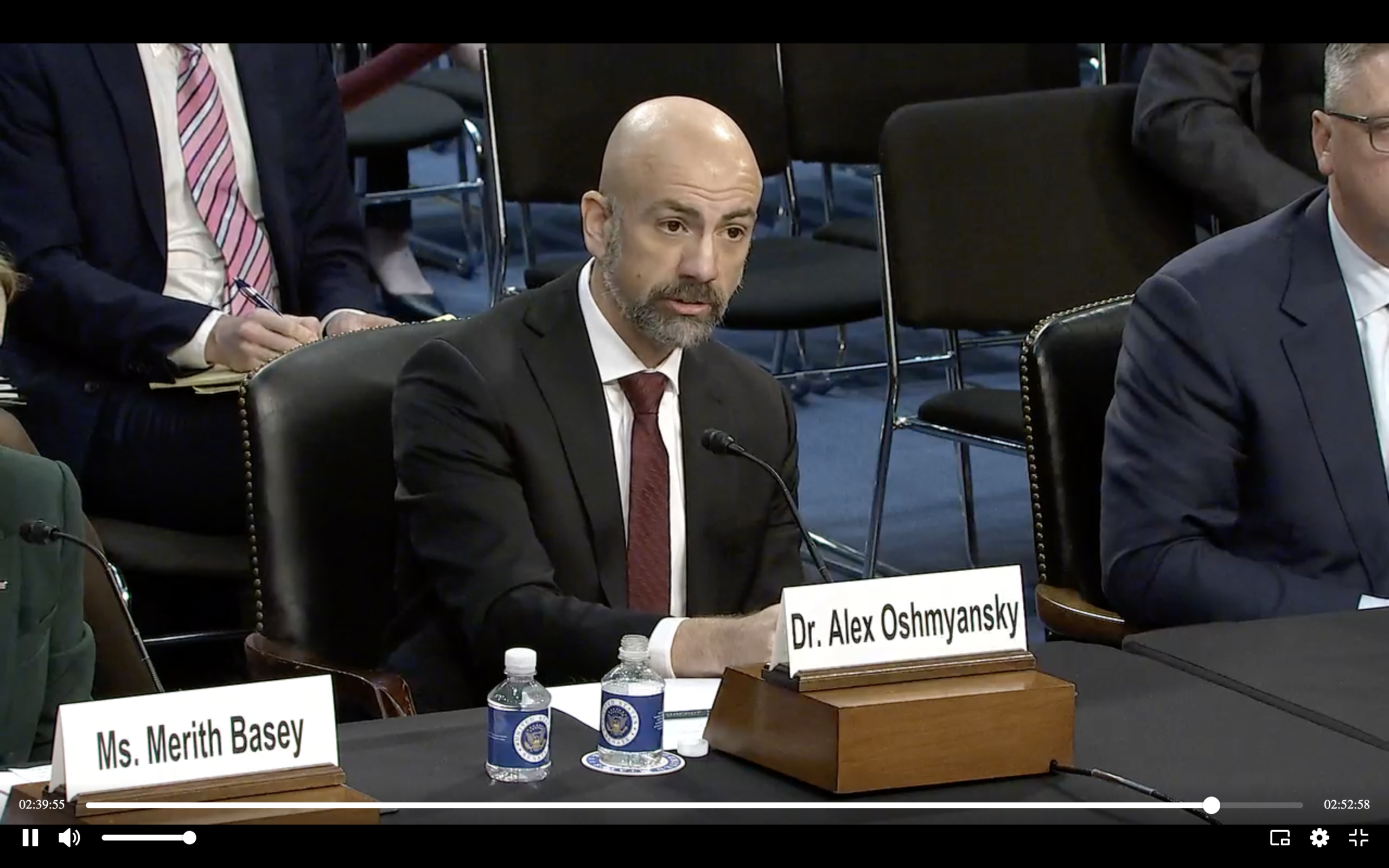 Oshmyansky, whose company sells generic drugs using a transparent “cost-plus” model, also opposed patent thickets, but distinguished them from the pricing dynamics he viewed as the larger driver of high costs. “We are absolutely opposed to patent thickets,” he said. “It is a bad practice all around. We don’t go after that as the core issue driving high drug prices, but it is definitely an issue that should be addressed.”
Oshmyansky argued that the distribution and payment system, particularly the role of PBMs, was central to pricing, and said Cost Plus’s lower prices largely came from reducing intermediary markups. In his written testimony, Oshmyansky explained that “dozens of layers of complicated math and legal machinations are obfuscating a very simple scam: they are hiding the true cost of drugs and marking them up a lot.”
According to his testimony, which urged antitrust action against the “big three PBMs” (CVS Caremark, Optum Rx and Express Scripts) those companies “may control about 80% of the overall PBM market, but through their ‘rebate aggregators’ or ‘GPOs’, they control close to 100% of the commercial plan drug contracting market.”
As a result, Cost Plus has been unable to negotiate pricing directly with patented, brand and specialty drug manufacturers due to fear of retaliation, Oshmyansky said. “They are afraid of retaliation from the PBMs and losing sales.”
Sood also called for PBMs to be accountable to plan members, arguing that transparency alone would not ensure patient-focused behavior. Pitlick described the financial strain on community pharmacies, while Watson discussed access challenges for patients served by community health centers.
In a letter to the Judiciary Committee published today, C4IP urged the Committee “not to mistake weakening patent protections for lowering drug prices.”
“Such measures may offer the appearance of a quick fix, but they risk discouraging investment, reducing innovation, and leaving patients with fewer treatment options without delivering meaningful savings,” the letter said.










Join the Discussion
No comments yet. Add my comment.
Add Comment