


 0
“For companies operating in Brazil, automotive strategy can no longer be separated from patent strategy.”
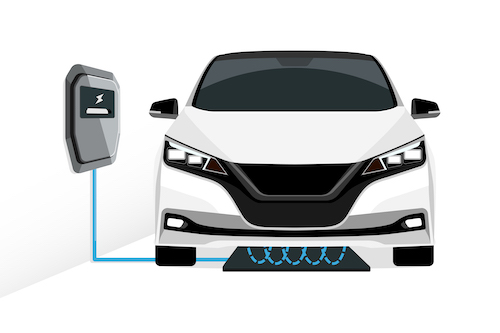 Imports of Chinese electric and hybrid vehicles are transforming Brazil’s automotive market. At the same time, data from the Brazilian Patent and Trademark Office (BPTO) show Chinese companies expanding their patent presence.
Together, these trends suggest a new phase of competition in which electrification, software and artificial intelligence (AI) may matter as much as manufacturing scale and dealer networks.
Brazil Becomes a Strategic Market
Between January and May 2026, Brazil became the world’s largest importer of Chinese cars, buying US$5.2 billion in electrified and conventional vehicles, up 146.9% from US$2.1 billion a year earlier. Electrified models accounted for US$4.5 billion.
This follows a trend beginning in 2024, when Brazil became a leading destination for Chinese electric and plug-in hybrid vehicles. The country is therefore becoming more important to Chinese automakers’ expansion strategies, as patent statistics confirm.
China Leads Foreign Automotive Patent Filings
In 2021,U.S. applicants accounted for 27% of nonresident automotive patent filings in Brazil, against only 3% for China. By 2025, however, China’s share had risen ninefold to 27%, making it the largest foreign country of origin, whereas the U.S. share had fallen to 16%.
This growing presence is accompanied by efforts to secure patent rights in Brazil, and competition will increasingly involve technology, freedom to operate, licensing and enforcement.
Powertrain and Energy Technologies Lead the Shift
At the company level, BYD led the automotive ranking between 2021 and 2025 with 174 applications, including 135 related to powertrain and energy systems, which represents around 78% of BYD’s automotive filings, ahead of Honda, Scania, Toyota, Stellantis and Nissan.
That concentration is consistent with the technological foundations of the current Chinese automotive expansion. Electric and hybrid vehicles rely heavily on batteries, charging, electric motors, power electronics and thermal control. Such patents support product differentiation, restrict competitors’ design options and strengthen licensing or litigation strategies.
In the same period, other players added to the surge of Chinese automotive filings. For example, Chery’s filings rose from 8 applications in 2024 to 50 in 2025, while Changan filed 47 applications, GWM 13, and GAC Motor 6 between 2021 and 2025. Other Chinese groups, such as SAIC and Wuling, are starting their patent presence in Brazil.
These portfolios suggest that Brazil is viewed not merely as an export destination, but as a jurisdiction where technological assets must be protected.
An Active Market with a Changing Profile
Overall volumes, however, have been uneven: filings fell from 1,742 in 2015 to 907 in 2020, recovered to 1,066 in 2024 and reached 853 in 2025. It would be misleading, then, to call this a uniform patent boom: what is changing are the applicants, countries of origin and technological focus.
Artificial Intelligence Adds Another Layer
Within this changing profile, AI-related automotive applications rose from six in 2016 to 52 in 2022, fell to 33 in 2024, and reached 44 in 2025. Recent figures, however, may be understated because applications can remain unpublished in Brazil for up to 18 months.
Automotive AI is not limited to carmakers: telecommunications companies, suppliers, mobility platforms and heavy-equipment manufacturers are present too, since modern vehicles incorporate sensors, processors, communication protocols, software and machine-learning systems.
Companies entering Brazil must therefore consider patents in telecommunications, computer vision, sensor fusion, driver monitoring, assisted driving and vehicle-to-everything communications.
Chinese Automotive AI Filings Have Room to Grow
Despite China’s growth in automotive patent filings generally, the country accounted for only 8% of nonresident AI-related automotive filings in 2024–2025, against 33% for the United States and 16% for Sweden.
Chinese applicants may currently be prioritizing powertrain, battery and vehicle-platform technologies, and publication delays may also affect the figures. Brazil may therefore see a second wave of applications as manufacturers expand local operations, connected services and driver-assistance technologies.
Imports May Be Followed by Localization
As sales grow, automakers may localize production, build supplier relationships and adapt products to local conditions.
Local production, in turn, raises freedom-to-operate questions over components, processes and supply chains. Connected services add software, data and telecommunications, while charging networks and battery ecosystems add further layers of patented infrastructure. Brazilian patents therefore matter more as operations become permanent.
The Real Story Is Transformation
At first glance, record Chinese vehicle imports may suggest pressure on domestic manufacturing, but the patent data reveal a broader transformation, in which Chinese companies grow more prominent, powertrain and energy technologies gain importance, and artificial intelligence draws new participants into the patent landscape.
Brazil is becoming a key arena for Chinese automotive expansion, and the next phase will determine whether this remains import-driven or develops into a deeper ecosystem of local production, research, licensing, technology transfer and enforcement.
For companies operating in Brazil, then, automotive strategy can no longer be separated from patent strategy. The vehicles arriving at Brazilian ports carry not only batteries, motors, sensors and software, but an increasingly complex architecture of intellectual property.
Image Source: Deposit Photos
Author: Scharfsinn
Image ID: 298947948


















Join the Discussion
No comments yet. Add my comment.
Add Comment