


 0
“The complaint may invite targeted motions by Anthropic to dismiss particular theories of liability or, if the allegations are sufficiently unclear, to require a more definite statement.” – Randy McCarthy, Hall Estill
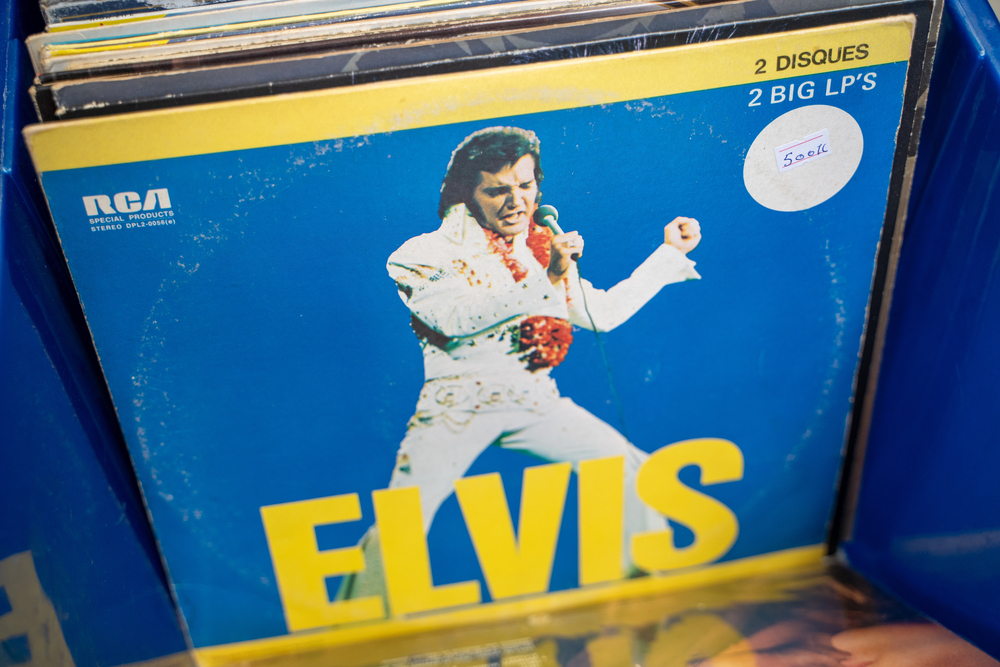 Several owners of Elvis Presley compositions filed a lawsuit against Anthropic on October 23 in the U.S. District Court for the Northern District of California, alleging that the company copied copyrighted lyrics without authorization to train its Claude large language models (LLMs) and that Claude generated infringing versions of the songs. The complaint asserted claims for direct copyright infringement, circumvention of technological protection measures under Section 1201 of Title 17, and removal or alteration of copyright management information (CMI) under Section 1202.
ABG EPE IP LLC (ABG), Raleigh Music Publishing LLC, Abilene Music LLC, Jason Simeon Aberbach, and several family trusts alleged that they own or control exclusive rights in 274 musical compositions recorded by Elvis Presley, which the complaint listed in an exhibit. The titles included “All Shook Up,” “Can’t Help Falling in Love,” “Don’t Be Cruel,” and “Return to Sender.” The complaint accused Anthropic of building its business model on “copyright infringement at a scale never seen before.”
Anthropic allegedly collected large volumes of text from lyrics aggregation sites, streaming-platform metadata, and web-crawl archives such as Common Crawl, Book3, and The Pile. A subset of The Pile known as “YouTube Subtitles,” drawn from 173,536 videos across 48,000 channels, allegedly contained lyrics to “Can’t Help Falling in Love,” “Don’t Be Cruel,” “Farther Along,” “If You Think I Don’t Need You,” and “Run On.” The complaint noted that Anthropic admitted in Bartz v. Anthropic that at least one commercially released Claude model was trained on data derived from YouTube subtitles in a version of The Pile.
The lawsuit further alleged that Anthropic downloaded pirated book libraries through the BitTorrent protocol, including Library Genesis and the Pirate Library Mirror, and that the downloaded copies included the lyrics at issue. The complaint cited a ruling from the same district in Bartz v. Anthropic PBC to support that allegation. According to the complaint, Anthropic kept the acquired works in a permanent, all-purpose library apart from any single training project, and that retention constituted standalone direct infringement independent of training. The complaint also alleged that each new Claude model, including Opus 5, Sonnet 5, Fable 5, and Mythos 5, created another infringing copy within its neural network.
On the Section 1202 claim, ABG and the other rights holders alleged that Anthropic’s data-cleaning process removed song titles, songwriter and composer credits, publisher names, and copyright notices before training. Anthropic allegedly tested three extraction programs, Readability, Newspaper, and jusText, and selected Newspaper since it removed identifying information more effectively. The complaint alleged that the absence of this information prevented Claude from reproducing it in outputs, which concealed the origin of copyrighted material. The Section 1201 claim rested on allegations that the compositions were hosted on licensed lyrics and streaming platforms using measures such as login credentials, paid-subscription paywalls, CAPTCHA challenges, and IP-based rate limiting, and that Anthropic circumvented those measures through automated scraping tools.
Regarding outputs, the lawsuit alleged that Claude reproduced lyrics when users requested songs by title, requested songs in the style of particular artists, or requested “original” compositions. Output filters that Anthropic implemented after music publishers filed an earlier lawsuit allegedly covered only a narrow subset of songs and could be circumvented by rephrasing a prompt. The complaint further alleged that Claude Haiku 4.5 and Sonnet 5 advised that they could not reproduce lyrics because of copyright restrictions yet produced derivative works when asked to rewrite songs for “a modern audience.” In that exchange, Sonnet 5 allegedly stated that the results were “edging past ‘inspired by’ into reproducing the copyrighted song.”
The complaint also identified related actions pending in the same district, including two filed by Concord Music Group, Inc. and one filed by BMG Rights Management (US) LLC. The complaint argued that fair use does not apply, citing Bartz to support the proposition that indefinitely retaining unlicensed copies in a general-purpose archive is not fair use.
ABG and the other rights holders seek declarations that Anthropic willfully infringed the compositions and violated Sections 1201 and 1202, a permanent injunction, and an order directing the impoundment or destruction of unauthorized copies, including those held in training datasets, internal repositories, and model weights. They also seek an accounting of training data, scraping activities, and datasets involving the compositions. On damages, they seek actual damages and Anthropic’s profits or, in the alternative, statutory damages of up to $150,000 per willfully infringed work, which the complaint calculates at $41.1 million for 274 works, along with $685,000 under Section 1201 and $6.85 million under Section 1202. The complaint also seeks attorneys’ fees, costs, and interest.
Reactions
Randy McCarthy of Hall Estill said that the complaint is both “ambitious and ambiguous.” He explained:
“It is ambitious in that the plaintiffs are attempting to build on the existing Anthropic litigation while advancing several distinct theories of liability relating to different stages of the process, including the acquisition and retention of copyrighted works and the alleged removal of copyright management information (CMI) from third party sources, including materials allegedly derived from YouTube transcripts.”
However, McCarthy said the complaint also contains “allegations that, in some instances, appear incomplete or have a questionable nexus to the elements of the asserted causes of action” and therefore may invite “targeted motions by Anthropic to dismiss particular theories of liability or, if the allegations are sufficiently unclear, to require a more definite statement.”
Evan Everist of Dorsey & Whitney LLP noted the timing of the complaint, which was filed three days before Anthropic registered its initial public offering (IPO). Everist said the complaint repeatedly contrasts the $1.5 to 2 trillion valuation against Anthropic’s alleged failure to pay for copyrighted works, referring to the strategy as “infringe now, and hope for a two-trillion-dollar IPO later.”
In light of the relatively small amount of damages being requested against this backdrop, Everist added that another approach might be more effective. “A court order constraining model weights and server infrastructure could have a much broader and lasting impact than monetary damages,” he said.
Image Source: Deposit Photos
Image ID: 669919414egunes_
Author: egunes_















Join the Discussion
No comments yet. Add my comment.
Add Comment