


 0
0 “The system’s in crisis and, really, Congress is the only place where it can be fixed.” – Coke Stewart
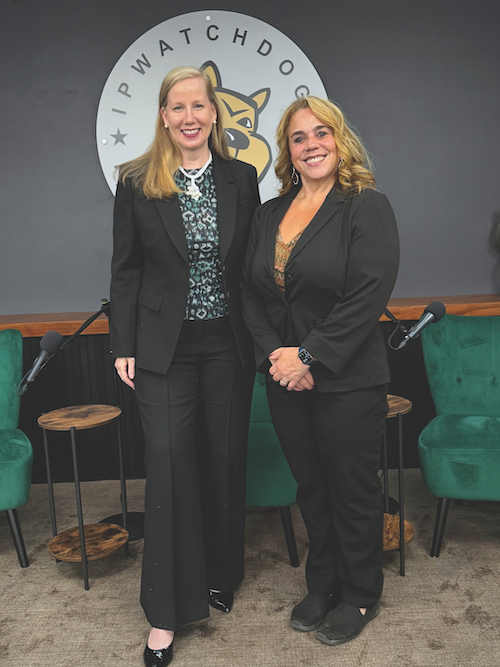
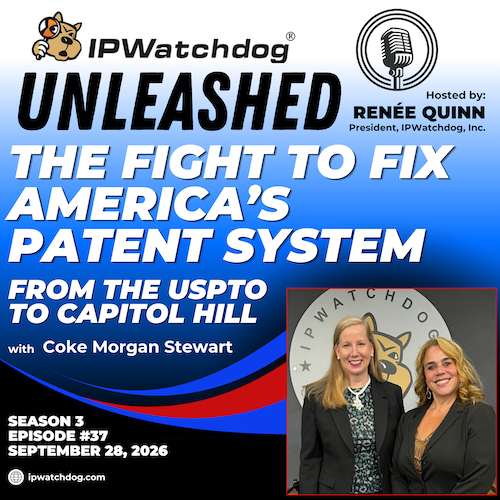
Coke Morgan Stewart (left) with Renée C. Quinn (right).
President and CEO of the Council for Innovation Promotion (C4IP) and former Acting Director and Deputy Director of the U.S. Patent and Trademark Office (USPTO) Coke Morgan Stewart told attendees of IPWatchdog’s Women’s IP Forum today that “we need to get out the paddles and shock the patient” when it comes to the state of the U.S. patent system.
Stewart sat down with IPWatchdog President Renee Quinn for a Fireside Chat this morning to discuss her recent career transition from government to IP advocacy, as well as the challenges facing the patent system and lessons learned from her most recent role with the USPTO.
Stewart resigned from the Office abruptly in late July and was appointed C4IP President and CEO as of August 17. She told Quinn today that “we need to be a little shocking” when it comes to advocating for better patent policies.
While at the USPTO it became clear to her that implementer-side stakeholders are very frustrated with the inconsistency of examiner decisions, while patentees are “equally if not more frustrated that they can’t rely on the patent rights that we’re issuing,” Stewart said. With challenges coming from every direction, from district court to the International Trade Commission (ITC) to multiple proceedings at the USPTO, attacks can be “constant.”
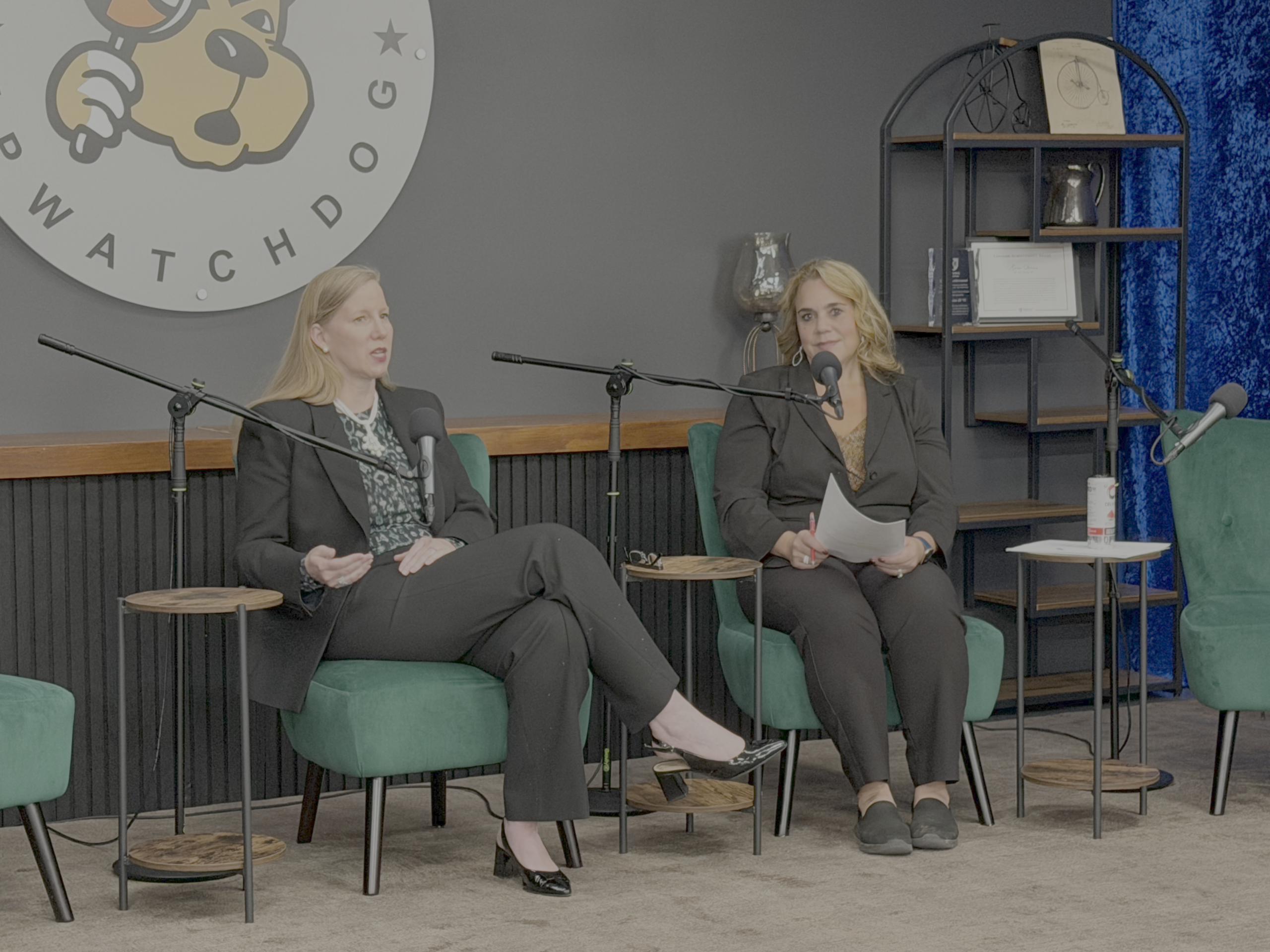 Stewart also refuted the perception that patents being challenged in Patent Trial and Appeal Board (PTAB) proceedings are inherently “bad patents,” alluding to studies that have found that is not the case. “Most of the patents challenged at the PTAB are highly valuable patents that have been very rigorously reviewed,” Stewart said, and about 80% of the challenges at the PTAB had co-pending district court cases.
Stewart also discussed her career path and recent move to C4IP, which she said she’s excited about because she is more able to focus on legislative reform. “That’s one of the reasons I wanted to make a transition and work for C4IP because there is only so much that you can do within the Office,” Stewart explained. “The Office is not really well-equipped to advocate for legislative change” due to competing legislative priorities, she said.
But at C4IP she has been walking the halls of Congress to discuss patent reform bills and to drive home to key members that “the system’s in crisis and, really, Congress is the only place where it can be fixed.”
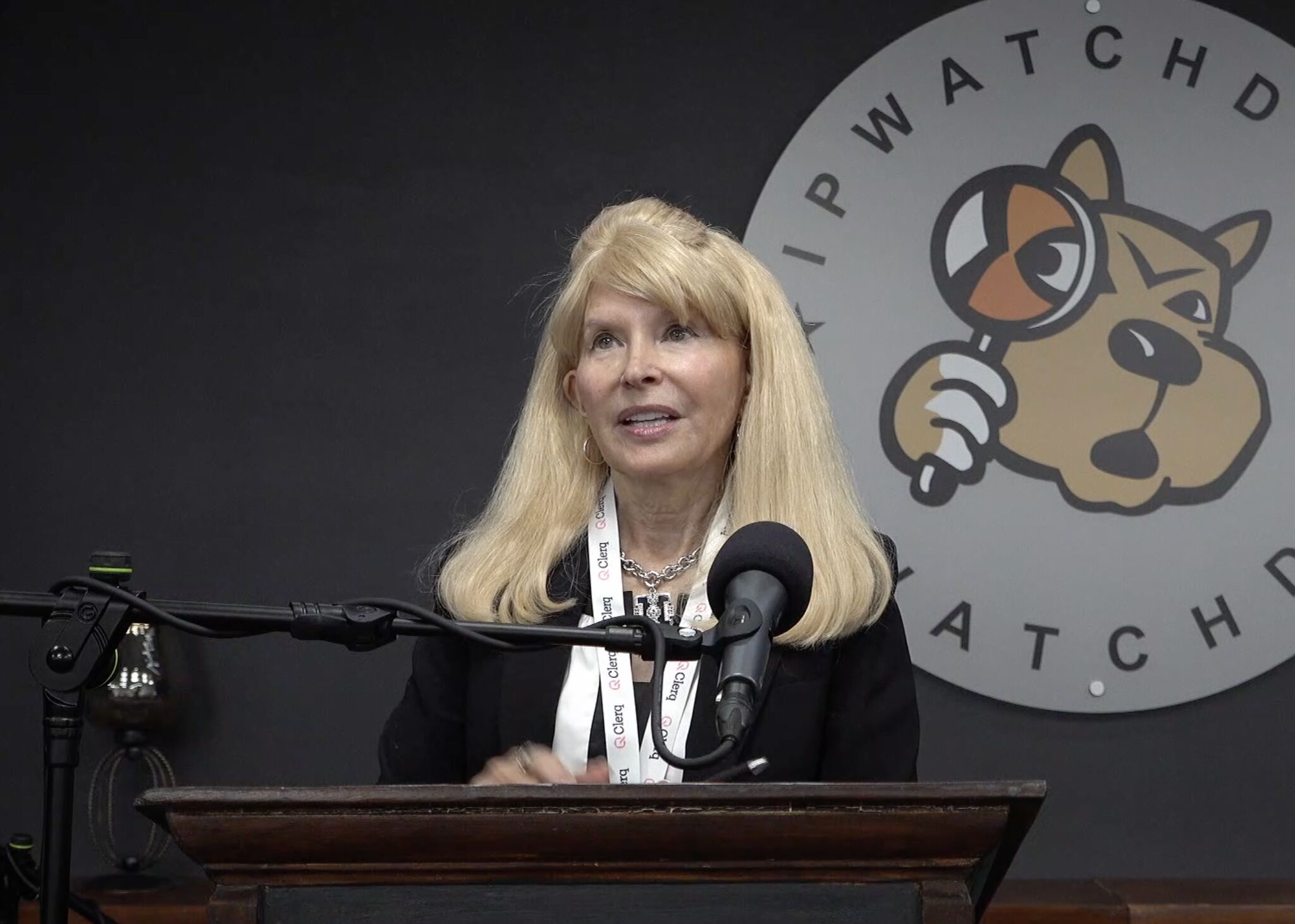
Sherry Knowles
Stewart was also asked to react to the news published by IPWatchdog earlier today about her former boss’s one-year anniversary celebration. While she did not comment directly, Stewart noted that working in government “is an ethical minefield” and it’s good to err on the side of caution for that reason.
Stewart additionally told IPWatchdog that she expects the “settled expectations” doctrine she conceived as Acting Director to survive the various challenges it’s currently facing, for the reasons articulated in the Department of Justice (DOJ) brief filed on September 11 in Google v. VirtaMove, which backed the USPTO’s authority to manage the IPR process.
IPWatchdog’s Women’s IP Forum is taking place this week from Wednesday through Friday and has featured panels spanning topics such as career advice, the economics of patent licensing, the global pharma patent battlefield, and insider insight from in-house counsel. Sherry Knowles of Knowles Intellectual Property Strategy also kicked off the program on day one with advice for attendees from her 40-year career in IP.
![[Advertisement]](https://ipwatchdog.com/wp-content/uploads/2026/10/BlackBox-IP-Oct-20-2026-sidebar-700x500-1.jpg)
![[Advertisement]](https://ipwatchdog.com/wp-content/uploads/2026/10/Questel-Oct-22-2026-sidebar-700x500-1.jpg)
![[Advertisement]](https://ipwatchdog.com/wp-content/uploads/2026/09/Life-Sciences-2026-sidebar-early-bird-ends-Oct-25-700x500-1.jpg)
![[Advertisement]](https://ipwatchdog.com/wp-content/uploads/2026/09/WE-BUY-PATENTS-SIM-IP-Ad-1-revised-on-Sep-28-2026-700x500-1.jpg)
![[Advertisement]](https://ipwatchdog.com/wp-content/uploads/2024/09/Patent-Prosecution-Training-sidebar-700x500-2025-03-27.jpg)






![[Advertisement]](https://ipwatchdog.com/wp-content/uploads/2021/12/WEBINAR-336-x-280-px.png)
![[Advertisement]](https://ipwatchdog.com/wp-content/uploads/2021/12/Ad-4-The-Invent-Patent-System™.png)







Join the Discussion
No comments yet. Add my comment.
Add Comment