
![[IPWatchdog Logo]](https://ipwatchdog.com/wp-content/themes/IPWatchdog%20-%202023/assets/images/temp/logo-small@2x.png)

 0
0 “The success of biosimilar development and commercialization requires careful navigation of a sophisticated regulatory and intellectual property framework.”
 Biological drugs, or biologics, are now a well-established class of therapeutic products worldwide. Unlike conventional small-molecule drugs, which are generally obtained through chemical synthesis and have relatively simple and well-defined structures, biologics are derived from living organisms or produced through biotechnology processes involving living cells. They include, among others, monoclonal antibodies, recombinant proteins, vaccines, hormones, blood-derived products and advanced cell-based therapies.
Due to their large molecular size, structural complexity and sensitivity to manufacturing conditions, biologics cannot be fully characterized or reproduced in the same manner as chemically synthesized drugs. These intrinsic differences have significant regulatory and intellectual property implications. With the emergence of biosimilars, the biologics market has become increasingly dynamic, fostering greater competition while raising complex scientific, legal and regulatory challenges.
Although each jurisdiction has its own regulatory framework for biosimilars, the core definition is remarkably consistent among major regulatory authorities, including the European Medicines Agency (EMA), the U.S. Food and Drug Administration (FDA) and the Brazilian Health Regulatory Agency (ANVISA). In general terms, a biosimilar is a biological medicine that is highly similar to an already approved reference biologic drug, notwithstanding minor differences in clinically inactive components, and with no clinically meaningful differences in safety, purity and potency or efficacy.
Unlike generic versions of chemically synthesized drugs, biosimilars are not approved based on simple identity with the reference product. Because biological medicines are structurally complex and highly dependent on their manufacturing process, exact replication cannot be presumed. Under ANVISA’s regulatory framework, a product may only be recognized as a biosimilar if its similarity to the reference biological product is adequately demonstrated through a comprehensive comparability exercise encompassing quality attributes, biological activity, safety and efficacy.
Multifaceted Intellectual Property and Regulatory Environments
The scientific complexity of biologics not only shapes the regulatory standards applicable to biosimilars but also creates a multifaceted intellectual property landscape. Biological products are commonly protected by patents covering different technological aspects, thereby providing incentives for continued innovation. Indeed, the pharmaceutical industry is more dependent on patent protection than most other industrial sectors to recover the substantial investments required for research and development (R&D).
In Brazil, the Brazilian Patent and Trademark Office (INPI) is responsible for examining and granting patents, whereas ANVISA is responsible for granting marketing authorization and overseeing regulatory matters. Unlike the United States, Brazil does not adopt a patent linkage system connecting regulatory approval to the patent status of the corresponding product. Consequently, marketing authorization and patent protection operate independently, and the granting of regulatory approval does not constitute an assessment of patent rights.
This independence of systems is particularly relevant for biosimilars. Research and development activities, including studies necessary to obtain regulatory approval, may be conducted while relevant patents remain in force pursuant to Article 43(VII) of the Brazilian Industrial Property Law (IP Law No. 9,279/1996), which establishes the Brazilian Bolar exemption. This provision excludes from patent infringement acts performed exclusively for the purpose of generating information, data and test results required for marketing authorization.
Nevertheless, the authorization to perform regulatory studies or obtain marketing approval does not mean that the biosimilar can be commercially launched before relevant patent rights have expired. Accordingly, assessing the scope, validity and enforceability of patents covering the reference biological product isa central element of biosimilar litigation and market-entry strategies in Brazil.
Compared with conventional pharmaceutical products, biologics are typically protected by extensive patent portfolios. It is not uncommon for a single biological medicine to be associated with large patent families worldwide, directed not only to the active molecule itself, but also to variants, pharmaceutical formulations, medical uses, dosing regimens, cell lines, manufacturing processes, purification methods, devices, kits and combination products.
In this context, the biologics sector is highly competitive and requires carefully designed intellectual property strategies. Patent holders frequently engage in opposition proceedings, administrative invalidity actions, judicial nullity lawsuits, infringement litigation and freedom-to-operate disputes. These disputes often extend across multiple jurisdictions, reflecting the global nature of biopharmaceutical industry.
Biosimilars Market Landscape in Brazil
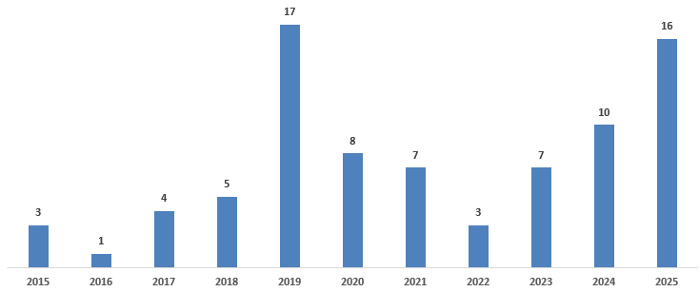
The Brazilian biosimilars market has expanded substantially since the first products were approved. According to the dataset considered in this article, ANVISA’s database included 81 biosimilar approval records up to 2025.
The annual series suggests an initial period of gradual growth between 2015 and 2018, followed by a sharp increase in 2019. Approvals slowed between 2020 and 2023, possibly due to market and development-cycle factors, including the effects of the COVID-19 pandemic. In 2024 and 2025, the number of approvals increased again, with 10 new products in 2024 and 16 in 2025, indicating renewed expansion and greater regulatory and commercial activity in this field.
Figure 1. Biosimilar products approved per year
Main Biosimilar Molecules and Therapeutic Classes in Brazil
The Brazilian biosimilars market is concentrated around a limited number of mature, high-value biological molecules. In the dataset analyzed, adalimumab, linked to the reference product Humira, appears as the leading molecule, with 10 approved biosimilar products. The remaining top five molecules are trastuzumab, bevacizumab, enoxaparin sodium and rituximab.
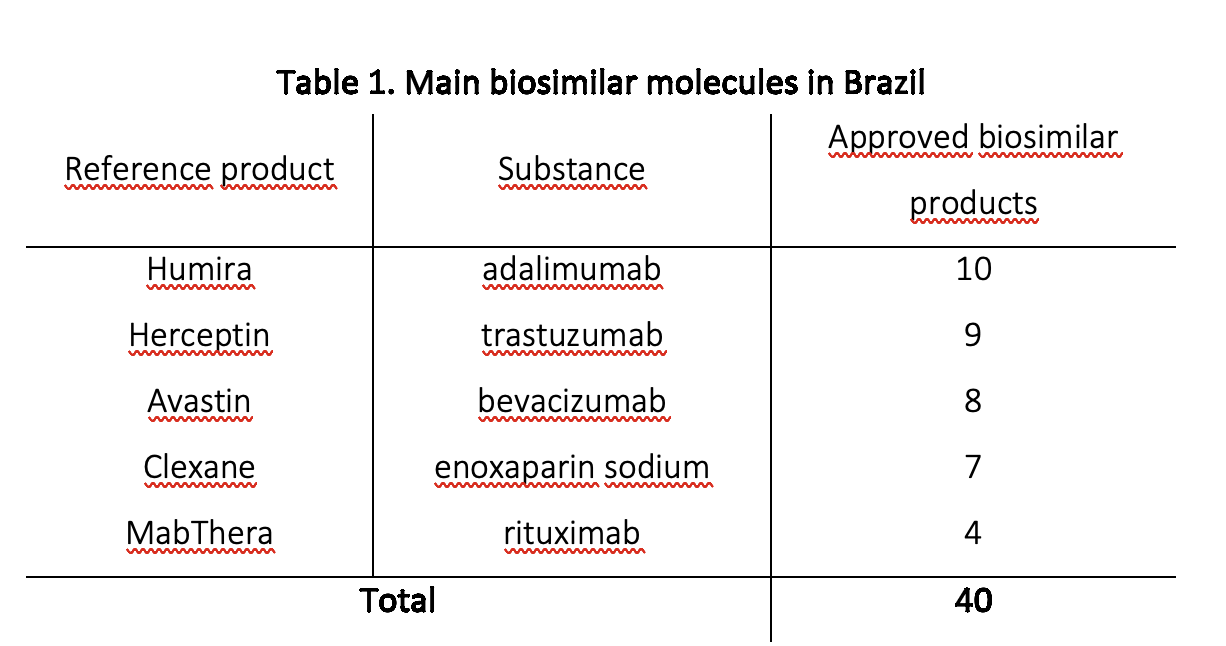
This concentration is coherent since products such as adalimumab, trastuzumab, bevacizumab, enoxaparin sodium and rituximab are associated with large or high-cost therapeutic areas and have generated significant expenditure in both public and private healthcare systems. They therefore provide stronger commercial incentives for multiple biosimilar entrants. At the same time, the concentration of approvals around a limited number of molecules suggests that biosimilar competition in Brazil remains uneven, with some therapeutic areas attracting several competitors while others remain less developed.
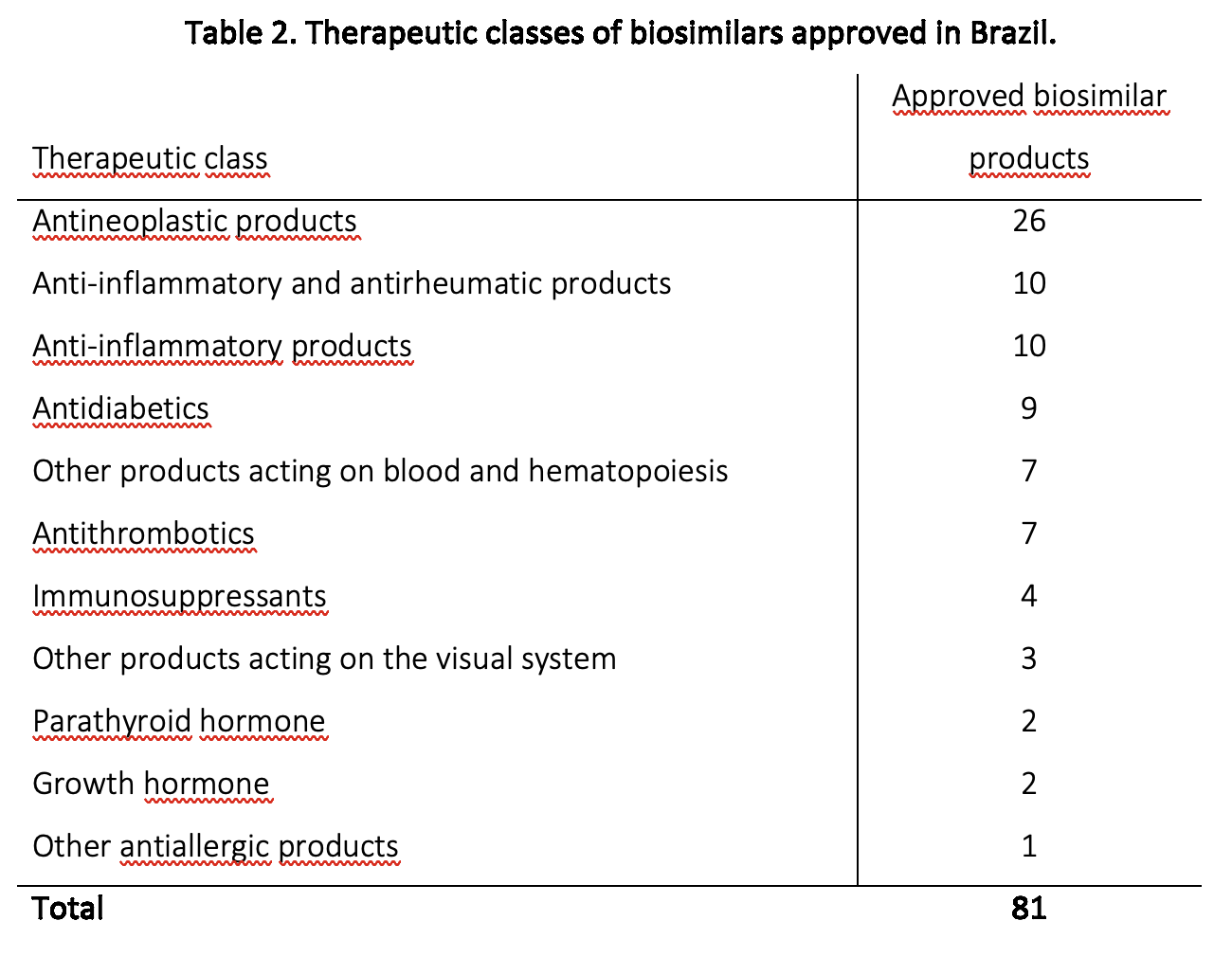
The distribution by therapeutic class further confirms the predominance of oncology, inflammatory and immune-mediated diseases, metabolic disorders and hematological indications in the Brazilian biosimilars landscape. Antineoplastic products represent the largest group, with 26 approvals, followed by anti-inflammatory/antirheumatic products, antidiabetics, antithrombotics and products acting on blood and hematopoiesis.
Main Holders of Biosimilar Approvals in Brazil
The Brazilian biosimilars ecosystem includes global companies, Brazilian private companies and public actors involved in technology-transfer initiatives and supply strategies for the Brazilian Unified Health System, known as SUS.
The data indicate that biosimilar approvals in Brazil are distributed among a diversified group of marketing authorization holders. Samsung Bioepis, Sandoz, Fiocruz, Amgen, Biocon, Celltrion and Pfizer appear among the companies or institutions with the highest number of biosimilar approvals. Brazilian companies and institutions, including Fiocruz, Biomm, Libbs and other local holders, also play an important role in this ecosystem.
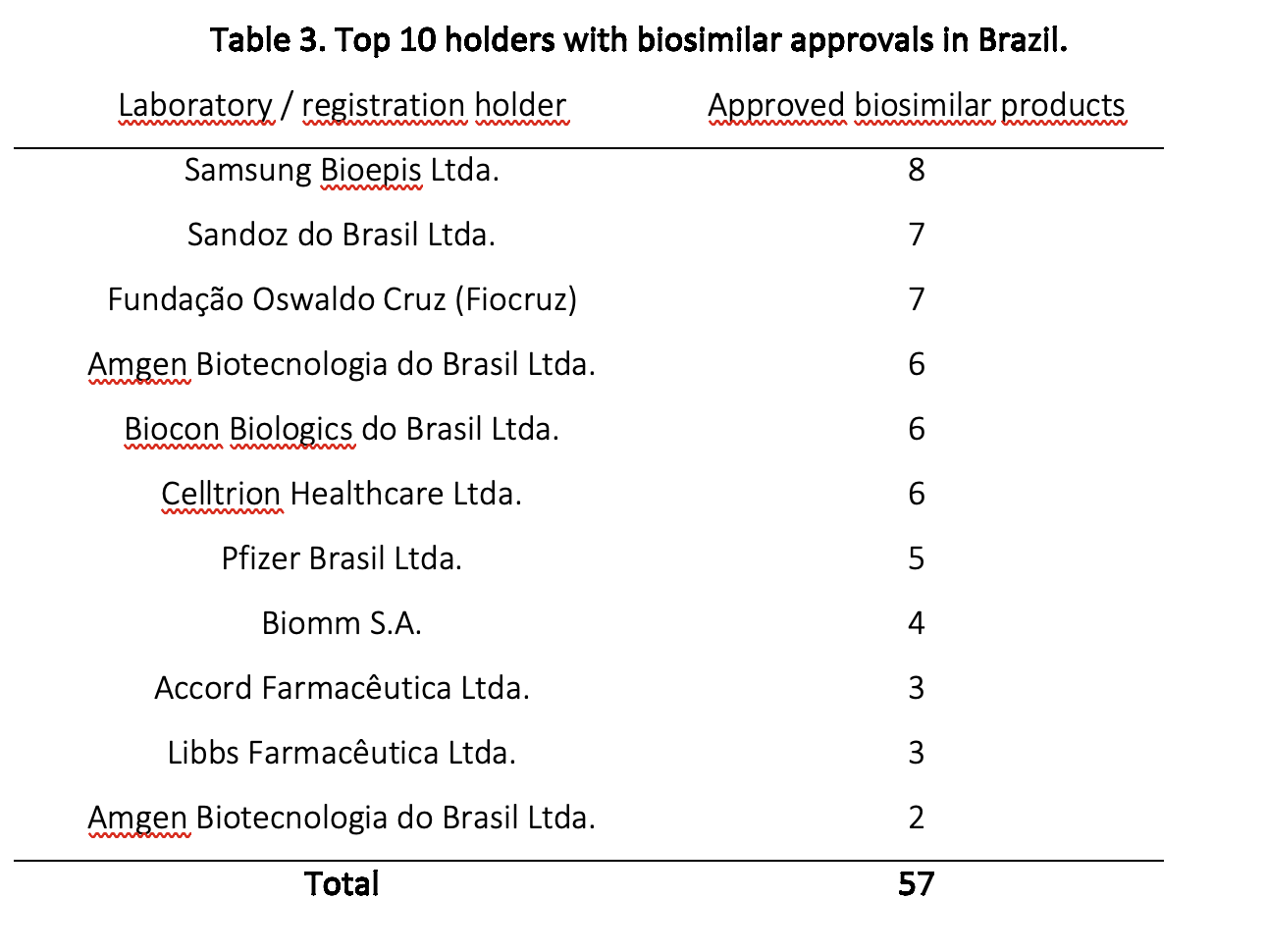
Scientific and technological institutions play an important role in the Brazilian biosimilars ecosystem beyond the number of marketing authorizations they formally hold. Their relevance is also linked to technology transfer, local production capacity, public procurement and supply security within the SUS.
This institutional dimension distinguishes the Brazilian market from systems driven mainly by private commercial strategies, as Brazil’s biosimilar landscape is also shaped by public procurement, technology absorption, industrial policy and the objective of strengthening domestic capacity in biological medicines.
Biosimilars in Brazil Require Careful Balance
The success of biosimilar development and commercialization requires careful navigation of a sophisticated regulatory and intellectual property framework. In Brazil, this complexity is particularly relevant because marketing authorization and patent rights are assessed independently. As a result, obtaining ANVISA approval does not eliminate the need to evaluate patent protection, freedom-to-operate issues and the conditions required for effective market entry.
The Brazilian biosimilars market has expanded significantly in recent years, as reflected by the growth in the number of approval records. However, the market remains concentrated around a limited number of mature, high-value biological molecules, particularly products used in oncology and inflammatory diseases. This concentration demonstrates the commercial attractiveness of certain reference products but also suggests that biosimilar competition in Brazil remains uneven across therapeutic areas.
As biological innovation continues to evolve, the interplay between the regulatory framework and intellectual property law will remain fundamental to maintaining an appropriate balance between encouraging pharmaceutical innovation and ensuring timely access to high-quality biological therapies. This balance will continue to shape the future development of the biosimilar market in Brazil and worldwide.

![[Advertisement]](https://ipwatchdog.com/wp-content/uploads/2026/06/Womens-IP-Forum-2026-sidebar-regular-price-700x500-rev1.jpg)
![[Advertisement]](https://ipwatchdog.com/wp-content/uploads/2026/09/WE-BUY-PATENTS-SIM-IP-Ad-1-700x500-1.jpeg)
![[Advertisement]](https://ipwatchdog.com/wp-content/uploads/2024/09/Patent-Prosecution-Training-sidebar-700x500-2025-03-27.jpg)





![[Advertisement]](https://ipwatchdog.com/wp-content/uploads/2021/12/WEBINAR-336-x-280-px.png)
![[Advertisement]](https://ipwatchdog.com/wp-content/uploads/2021/12/Ad-4-The-Invent-Patent-System™.png)




Join the Discussion
No comments yet. Add my comment.
Add Comment