
![[IPWatchdog Logo]](https://ipwatchdog.com/wp-content/themes/IPWatchdog%20-%202023/assets/images/temp/logo-small@2x.png)
 0
0 “As African tech funding continues its recovery and investors become more selective rather than simply more active, IP diligence is likely to get more rigorous, not less.”
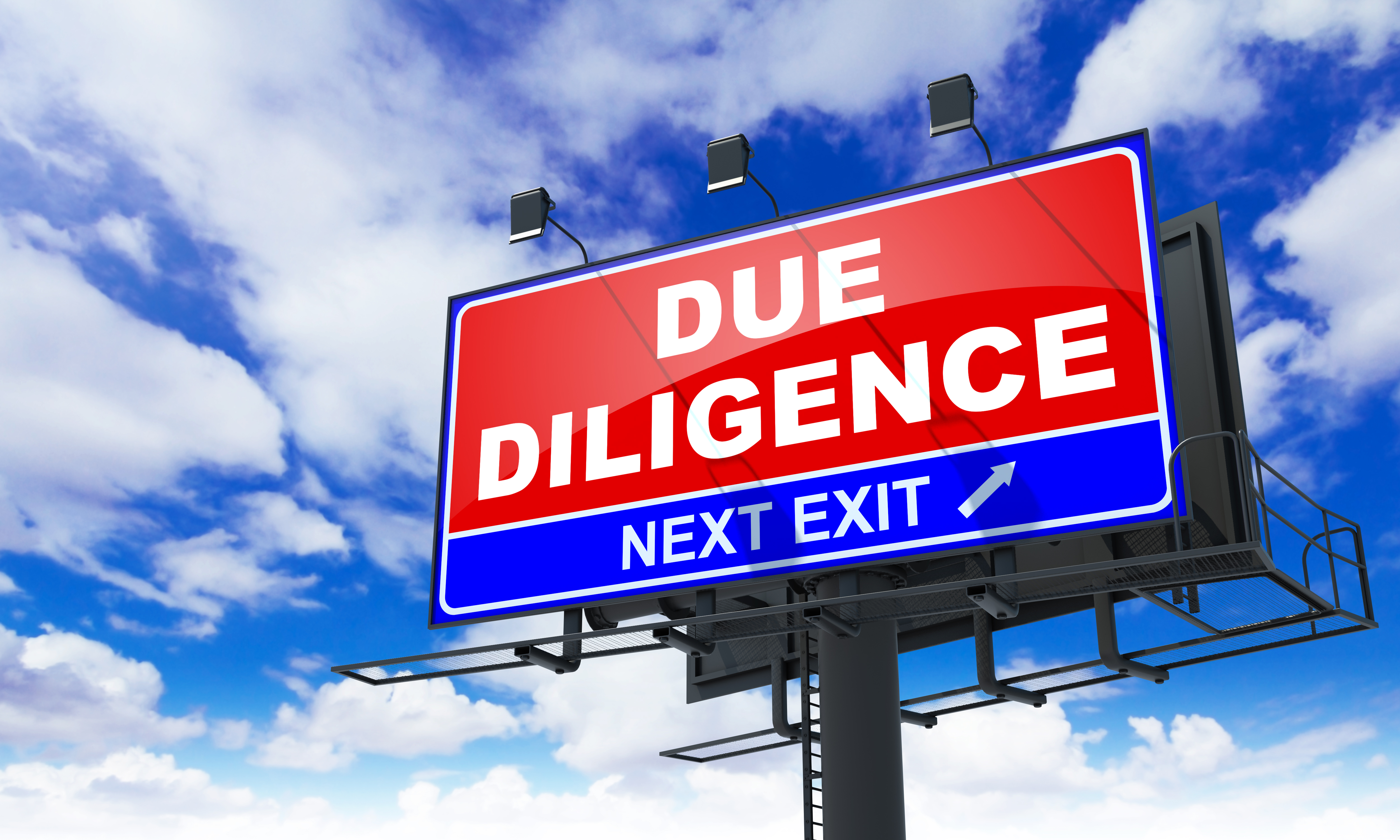 African tech funding just had its strongest year since the 2022 peak. According to Partech Africa’s 2025 Africa Tech Venture Capital Report, startups across the continent raised a combined $4.1 billion in equity and debt (a 25% increase over 2024), with Kenya, South Africa, Egypt, and Nigeria together accounting for roughly seven in ten of those dollars. Debt financing hit a record $1.64 billion, and equity funding stabilized with real recovery at the Series A and B stage, signaling that investors are not just returning to the market but returning with more discipline than during the boom years.
That discipline shows up nowhere more clearly than in due diligence, and increasingly, that due diligence includes a hard look at intellectual property. For African founders raising from U.S. investors, and for U.S. funds evaluating African deals, understanding what actually gets scrutinized is no longer optional. It can determine whether a term sheet survives diligence intact, gets repriced, or falls apart entirely.
Why IP Diligence Has Become Standard Practice
A startup’s valuation increasingly rests on assets that don’t show up on a balance sheet: its brand, its proprietary technology, its data, and its ability to actually stop a competitor from copying what it has built. U.S. investors evaluating African startups, whether writing the first check or leading a Series B, are trained to treat those assets the same way they would in Austin or Boston: as something to verify, not assume.
That verification tends to focus on a consistent set of questions, regardless of sector:
- Does the company actually own its name? This is the most basic question and, surprisingly often, the one with the messiest answer. Investors check whether the trademark is registered, not just whether the company has been operating under the name, and whether that registration covers the markets the company is actually operating in or planning to expand into. A startup that has built genuine brand recognition in Lagos or Nairobi but never formally registered its mark is carrying real, quantifiable risk into a fundraising conversation.
- Is there a confusingly similar mark already registered by someone else? Given how easy it is for a bad-faith filer or an unrelated business to register a similar name first, particularly in markets where trademark registries are not always systematically searched before a founder starts operating, investors will run their own clearance searches. Finding a conflict during diligence is far less costly than finding one after a term sheet is signed.
- Who actually owns the technology? This is where diligence gets more technical, and where African startups, like startups everywhere, most often stumble. If code was written by a contractor, a co-founder who has since left, or an outsourced development shop, investors want to see the assignment agreement that actually transfers ownership to the company. Verbal understandings and informal arrangements, however well-intentioned, do not hold up as cleanly as a signed agreement when a fund’s legal team is doing diligence six months before a term sheet.
- Are there open-source or third-party licensing issues? For software-driven startups, a large share of the African funding landscape, investors increasingly check whether the codebase incorporates open-source components under licenses that could restrict how the company commercializes its product, or whether it uses third-party APIs or data sources under terms that create dependency risk.
- Can the brand and technology actually expand where the company plans to grow? A startup pitching U.S. investors on a pan-African or global growth story needs an IP position that can travel with that story. Investors will ask, directly, whether trademark and technology protection exists, or is realistically obtainable, in the markets the pitch deck describes as next.
Where This Gets Costly
None of these gaps are usually fatal on their own. What they consistently do is slow transactions down, shift leverage toward the investor, and in some cases reduce the price a company can command. A fund that discovers mid-diligence that a startup doesn’t own its own trademark, or that a former contractor still technically holds rights to core product code, will often require those issues resolved as a closing condition, adding weeks or months to a raise, and sometimes reopening negotiated terms.
The founders who avoid this friction are not the ones with the most sophisticated IP portfolios. They are the ones who treated basic IP hygiene (trademark registration, clean assignment agreements with every contractor and co-founder, documented ownership of the codebase) as part of company-building from the start, rather than a task to address once a term sheet appeared.
What African Founders Should Do Before They’re in a Data Room
Register the trademark before it becomes urgent. Waiting until a fundraise is underway to discover the mark isn’t registered, or is already taken, puts a founder in the weakest possible negotiating position, with a deadline pressing and no time to fix it cleanly.
Get assignment agreements signed with everyone who touched the product. Every contractor, every early engineer, every co-founder, even ones who have since left the company, should have a clear, written agreement assigning IP rights to the company. This is inexpensive to do early and expensive to reconstruct later.
Keep a simple IP record. Investors respond well to founders who can produce, without scrambling, a clear list of what’s registered, where, and under whose name. It signals operational maturity well beyond the IP question itself.
Think about the U.S. market before the U.S. round. A startup that will eventually need U.S. trademark protection, because it plans to raise from U.S. investors, sell into the U.S. market, or pursue U.S. partnerships, is better served filing early than treating it as a later-stage problem once the company has already built visible traction under an unprotected name.
The Bigger Point for Both Sides of the Table
As African tech funding continues its recovery and investors become more selective rather than simply more active, IP diligence is likely to get more rigorous, not less. For founders, that is an argument for treating intellectual property as infrastructure to build early. For U.S. investors, it is a reminder that the fundamentals of good diligence (ownership, registration, freedom to operate) apply with exactly the same force in Lagos or Nairobi as they do anywhere else in the world. The market has matured. The diligence should match it.
Image Source: Deposit Photos
Author: tashatuvango
ID: 58503825
![[Advertisement]](https://ipwatchdog.com/wp-content/uploads/2026/06/Womens-IP-Forum-2026-sidebar-regular-price-700x500-rev1.jpg)
![[Advertisement]](https://ipwatchdog.com/wp-content/uploads/2026/09/WE-BUY-PATENTS-SIM-IP-Ad-1-700x500-1.jpeg)
![[Advertisement]](https://ipwatchdog.com/wp-content/uploads/2026/08/OneTransform_700x500_v1-REVISED.jpg)
![[Advertisement]](https://ipwatchdog.com/wp-content/uploads/2024/09/Patent-Prosecution-Training-sidebar-700x500-2025-03-27.jpg)





![[Advertisement]](https://ipwatchdog.com/wp-content/uploads/2021/12/WEBINAR-336-x-280-px.png)
![[Advertisement]](https://ipwatchdog.com/wp-content/uploads/2021/12/Ad-4-The-Invent-Patent-System™.png)



Join the Discussion
No comments yet. Add my comment.
Add Comment