


 0
0 “The CAFC found that Medtronic Ireland’s situation was materially the same as the patent owner in A.L.M.”
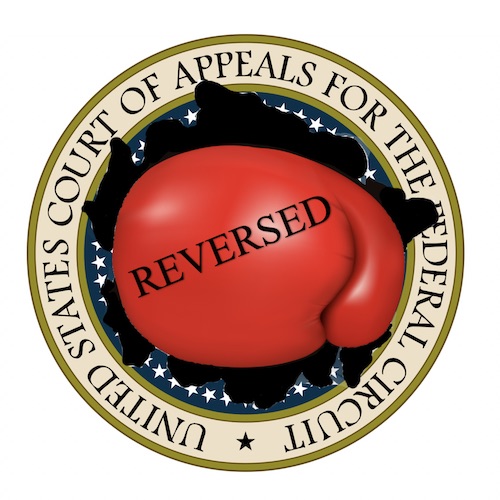 The U.S. Court of Appeals for the Federal Circuit (CAFC) issued a decision today in Recor Medical, Inc. v. Medtronic Ireland Manufacturing Unlimited Co., reversing a ruling from the United States District Court for the Northern District of California and holding that Medtronic Ireland Manufacturing Unlimited Co. retained sufficient exclusionary rights to satisfy Article III constitutional standing, even after licensing certain patent rights to an affiliated entity. The ruling came after a precedential opinion issued today on the same topic.
Medtronic Ireland owns U.S. Patent Nos. 8,845,629 and 11,801,085, which cover systems and methods for renal neuromodulation, a technique that applies thermal energy to nerve fibers connected to the kidneys to treat hypertension. Medtronic Ireland’s Symplicity Spyral renal denervation (RDN) system competes directly with Recor Medical’s Paradise System, which also uses renal neuromodulation.
In May 2022, Recor Medical filed a lawsuit against Medtronic Ireland, and sought a declaration that its Paradise System did not infringe and that the claims of the ‘629 patent were invalid. Medtronic Ireland answered and asserted counterclaims of infringement as to both patents. During discovery, Medtronic Ireland produced a 2023 Exclusive License Agreement (ELA) under which it had granted Medtronic Vascular Galway Unlimited Company an exclusive license to use, make, import, offer for sale, and sell designated “Products” covered by the patents. Recor Medical then moved to dismiss Medtronic Ireland’s counterclaims, arguing that the transfer of rights to Medtronic Galway stripped Medtronic Ireland of the exclusionary rights necessary for constitutional standing.
The district court agreed with Recor Medical and dismissed Medtronic Ireland’s counterclaims without prejudice. While relying on CAFC’s prior decision in Morrow v. Microsoft Corp., the district court concluded that Medtronic Ireland’s retained right to sue, without more, was insufficient to confer constitutional standing. It further determined that Medtronic Ireland’s veto authority over sublicenses, its ability to restrict assignments, and its reversionary rights upon expiration of the ELA were likewise inadequate. The district court then dismissed all related declaratory judgment claims for lack of subject matter jurisdiction and denied as moot Medtronic Ireland’s pending motion to join Medtronic Galway.
On appeal, Circuit Judge Chen first addressed whether the case had been rendered moot by the parties’ subsequent actions, including amendments to the ELA and a new related suit filed as Medtronic Ireland Manufacturing Unlimited Co. v. Recor Medical, Inc. The court found the “case was not moot because legal consequences continued to flow from the district court’s dismissal.” More specifically, the viability of Recor Medical’s affirmative defense of unclean hands, which depended in part on the premise that Medtronic Ireland lacked the right to sue in the first place. The CAFC reversed and explained it would undercut that premise and thereby weaken Recor Medical’s defense.
The CAFC then looked to its separately issued precedential opinion in A.L.M. Holding Co. v. Zydex Industries Private Ltd. The court established that a patent owner retains constitutional standing when it retains the right to sue for infringement that is not rendered illusory by rights it has granted to a licensee. Applying that framework, the CAFC found that Medtronic Ireland’s situation was materially the same as the patent owner in A.L.M.
The court identified three retained rights that, considered together, preserved Medtronic Ireland’s exclusionary interest. First, Medtronic Ireland held a secondary right to initiate infringement suits if Medtronic Galway declined or failed to act within a reasonable time. Second, Medtronic Ireland retained royalty interests that attached to any sublicenses granted by Medtronic Galway. Lastly, Medtronic Ireland had veto authority over any sublicenses Medtronic Galway sought to grant, preventing Medtronic Galway from unilaterally authorizing an accused infringer to practice the patents without Medtronic Ireland’s approval.
The CAFC distinguished Morrow as the plaintiff’s right to sue had been illusory since the patent owner could grant a royalty-free sublicense to any accused infringer and thereby moot any enforcement action. Medtronic Galway could not grant a sublicense to a party such as Recor Medical without Medtronic Ireland’s written consent, and any sublicense would be subject to Medtronic Ireland’s retained royalty interests. The court also rejected Recor Medical’s argument that Medtronic Ireland’s inability to independently grant a license to settle a suit defeated its standing, noting that the ELA provided for the allocation of settlement proceeds between the parties, which indicated that Medtronic Ireland retained meaningful settlement authority over suits it initiated.
The court further noted that the ELA’s grant of exclusive rights to Medtronic Galway was not unlimited. The license extended only to specifically designated “Products,” and Medtronic Ireland retained all rights over any products not yet designated, as well as over unfinished medical devices, reinforcing that it had not transferred away all of its exclusionary interests.
Accordingly, the CAFC held that Medtronic Ireland retained an exclusionary right after its license grant, satisfying the constitutional minimum for standing. Since the district court had not reached the joinder question under Federal Rule of Civil Procedure 19, the court remanded for the district court to determine whether all necessary parties had been or could be joined to satisfy statutory standing.
Image Source: Deposit Photos
Image ID: 0042948
Author: almoond
![[Advertisement]](https://ipwatchdog.com/wp-content/uploads/2026/10/ClaimHit-Oct-28-2026-sidebar-700x500-1.jpg)
![[Advertisement]](https://ipwatchdog.com/wp-content/uploads/2026/10/Patsnap-Oct-29-2026-sidebar-700x500-1.jpg)
![[Advertisement]](https://ipwatchdog.com/wp-content/uploads/2026/09/Life-Sciences-2026-sidebar-regular-price-700x500-1.jpg)
![[Advertisement]](https://ipwatchdog.com/wp-content/uploads/2024/09/Patent-Prosecution-Training-sidebar-700x500-2025-03-27.jpg)




![[Advertisement]](https://ipwatchdog.com/wp-content/uploads/2021/12/WEBINAR-336-x-280-px.png)
![[Advertisement]](https://ipwatchdog.com/wp-content/uploads/2021/12/Ad-4-The-Invent-Patent-System™.png)





Join the Discussion
No comments yet.