
![[IPWatchdog Logo]](https://ipwatchdog.com/wp-content/themes/IPWatchdog%20-%202023/assets/images/temp/logo-small@2x.png)

 2
2 “It looks to me like, over the years, there’s been a creeping reliance…on experts to substitute for something really findable on the face of the prior art.” – Judge Paul Michel
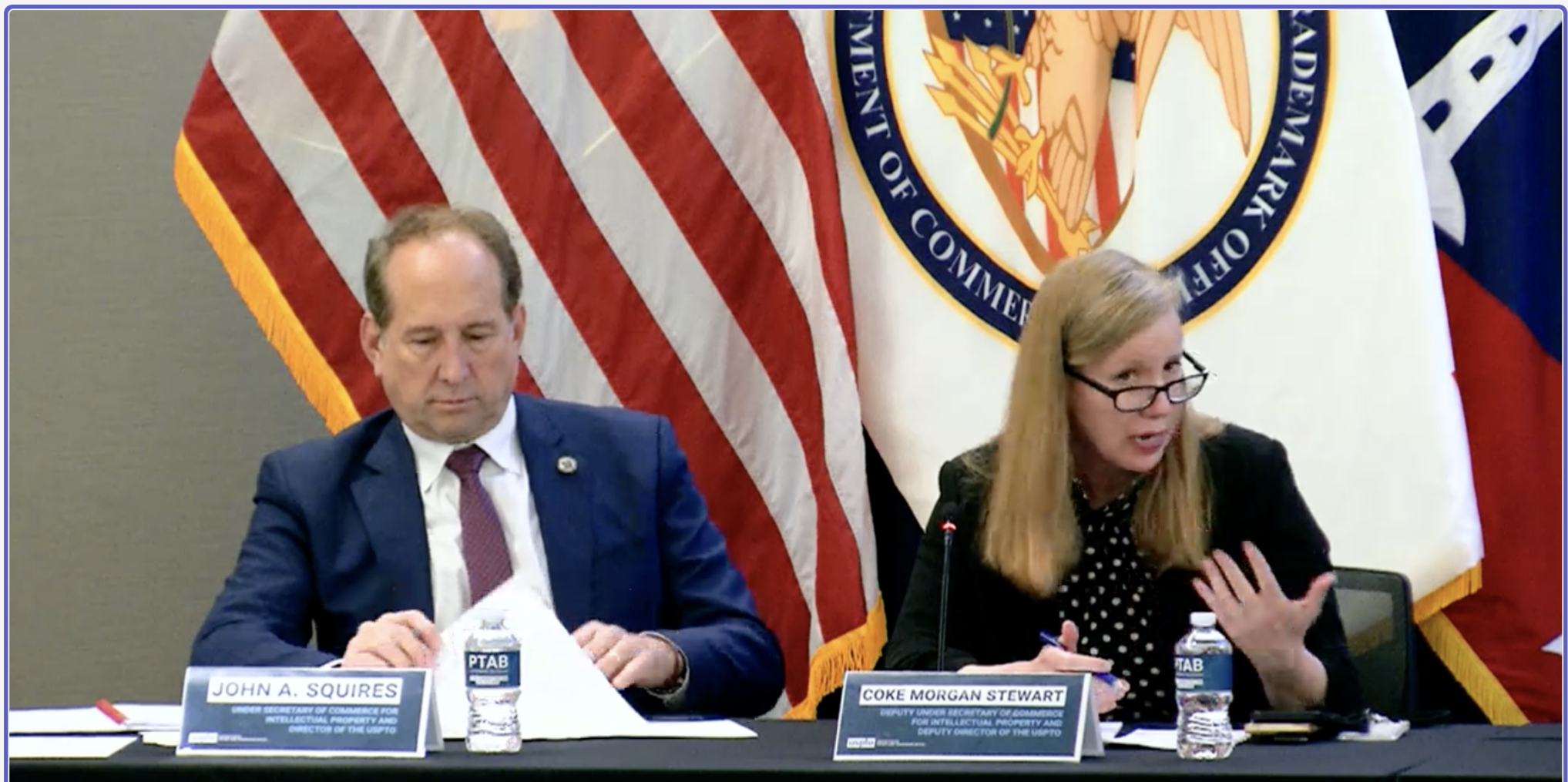 The U.S. Patent and Trademark Office (USPTO) today held its third PTAB Listening Session, this one focused on Patent Trial and Appeal Board (PTAB) Administration and Reform. Panelists on both the petitioner and patent owner sides, as well as academics, IP policy experts and judges, weighed in on what changes need to be made to the PTAB to strike the balance that will most benefit the U.S. IP system. While the suggestions varied, most of the panelists agreed that greater clarity and consistency is what’s urgently needed at the moment.
Petitioners and Business Stakeholders Want Clarity and Consistency
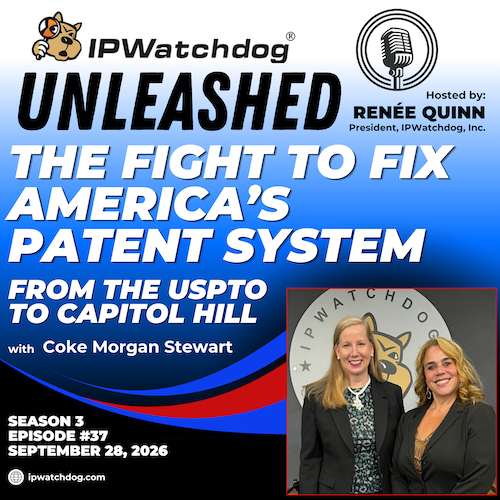
USPTO Deputy Director Coke Morgan Stewart moderated the first session, which included Ben Haber, Partner at O’Melveny & Myers; Jason Hoffman, Partner at Baker Hostetler; Ceyda Maisami, Chief IP Counsel at HP; and Amy Semet, Associate Professor of Law, University at Buffalo School of Law, The State University of New York.
Stewart pushed the panelists on the question of whether the PTAB’s preponderance of the evidence standard for proving unpatentability in AIA trials should be changed to the clear and convincing evidence standard used by district courts. Haber said that the clear and convincing standard is important in litigation, where the issues are being presented to a jury that isn’t technically trained, whereas at the PTAB parties are arguing to technically trained judges and therefore a preponderance standard is appropriate.
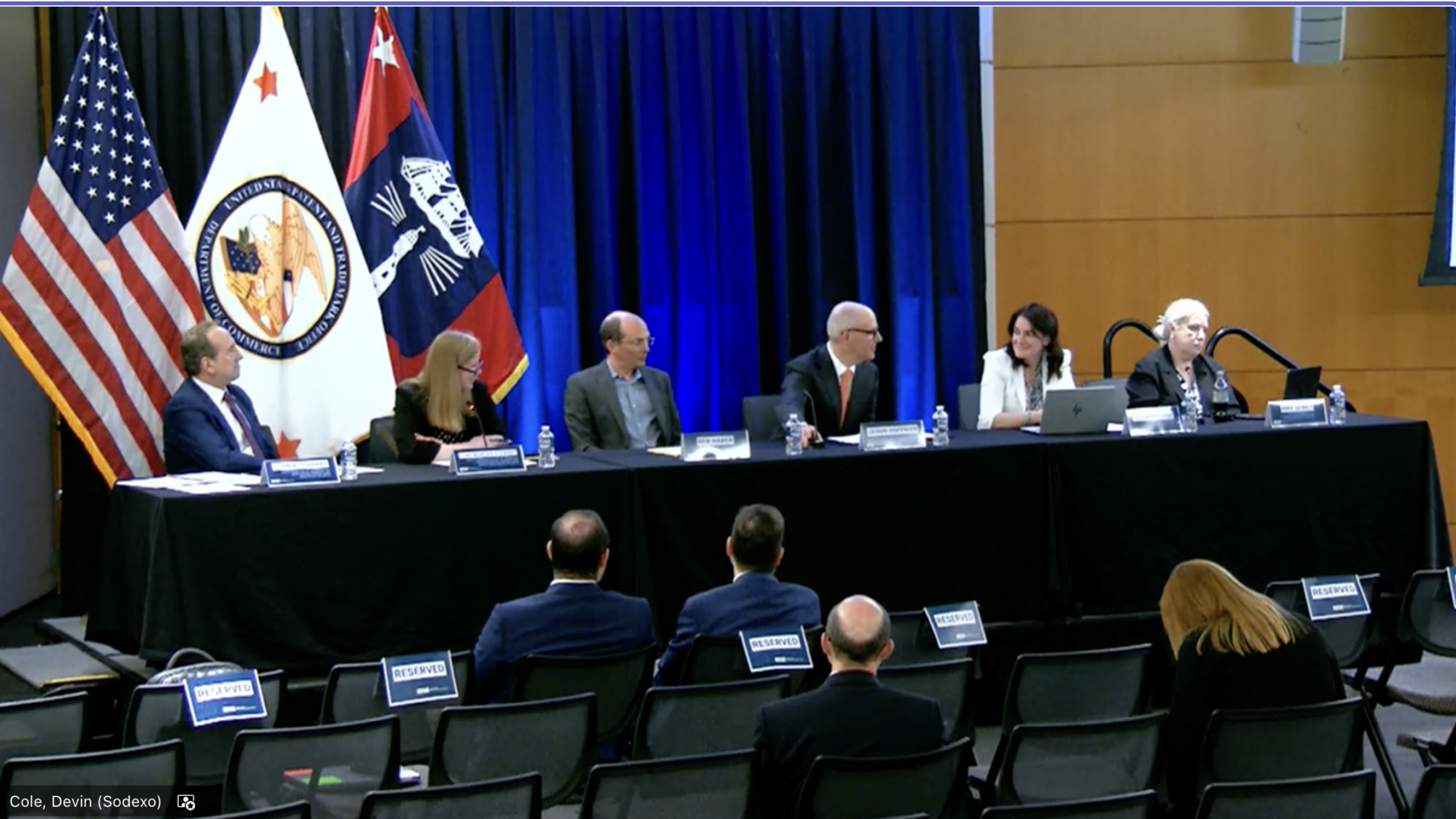 Maisami declined to answer Stewart’s question directly, explaining that her primary concern is the business impact. “What I want is consistency, transparency, stability, so I’ll be neutral on this one. What serves the business is having that stable, consistent, transparent path that we are able to justify and plan for.”
Stewart also pressed the participants on whether multiple and serial challenges should be allowed under the existing standard. Most said a “blunt instrument” that would bar repeat challenges across the board would not serve the goal of offering an alternative to litigation, and Maisami noted that the rapid development of technology that helps to identify prior art and otherwise analyze patents means that such a limitation would be a loss for companies.
Semet noted that, while multiple petitions pose a problem, they have come a long way from the early days of the PTAB. Jamie Simpson of C4IP, a panelist in the second session, noted that the 2017 General Plastic Decision reduced the rate of multiple petitions from roughly 61% to approximately 50%, but that nearly half of all petitions still involve repeat challenges, and 16% are third or later petitions against the same patent. Stewart added that, despite the reduction in serial petitions, her administration was surprised to come across a patent that had been challenged seven times in the early days of her tenure.
Stewart also questioned the panelists on whether the USPTO Director should have some level of discretion in deciding whether to institute AIA cases. The panelists agreed that the U.S. Court of Appeals for the Federal Circuit (CAFC) has made it clear that the Director does have discretion, having now denied mandamus relief in 12 out of 12 appeals from Director discretionary denial decisions, so the question is now what amount of discretion is appropriate and how is it implemented. “There are almost too many factors at this point,” said Hoffman, who noted that there were only 15 IPRs filed in April, “which is sort of mind blowing.” While he said the Magnolia Medical decision from Friday is helpful, there is still “such uncertainty.”
Haber added that the level of Director discretion should be dictated by the statute, and he does not see a statutory basis for the settled expectations doctrine, for example.
While Stewart refrained from responding fully, she commented that the push to set forth factors the Office will consider was in part determined by the lack of arguments presented by lawyers in PTAB cases, who “don’t always surface issues.” She added: “I think sometimes we feel like if we don’t lay out and invite the considerations, we don’t always see them, which definitely motivates some of the guidance we’ve been giving.”
Michel Urges Office to Enact Rules Rather Than Leading By Memo
The second panel of the session was moderated by Director Squires and included Judge Paul Michel, Retired CAFC Chief Judge; Adam Mossoff, Professor of Law, Antonin Scalia Law School, George Mason University; Corey Salsberg, Vice President and Global Head IP Affairs, Novartis; and Jamie Simpson, Chief Policy Officer and Counsel, C4IP.
Michel began by suggesting that the USPTO focus more on “intellectual rigor, and by that I mean adherence to the developed case law on validity.”
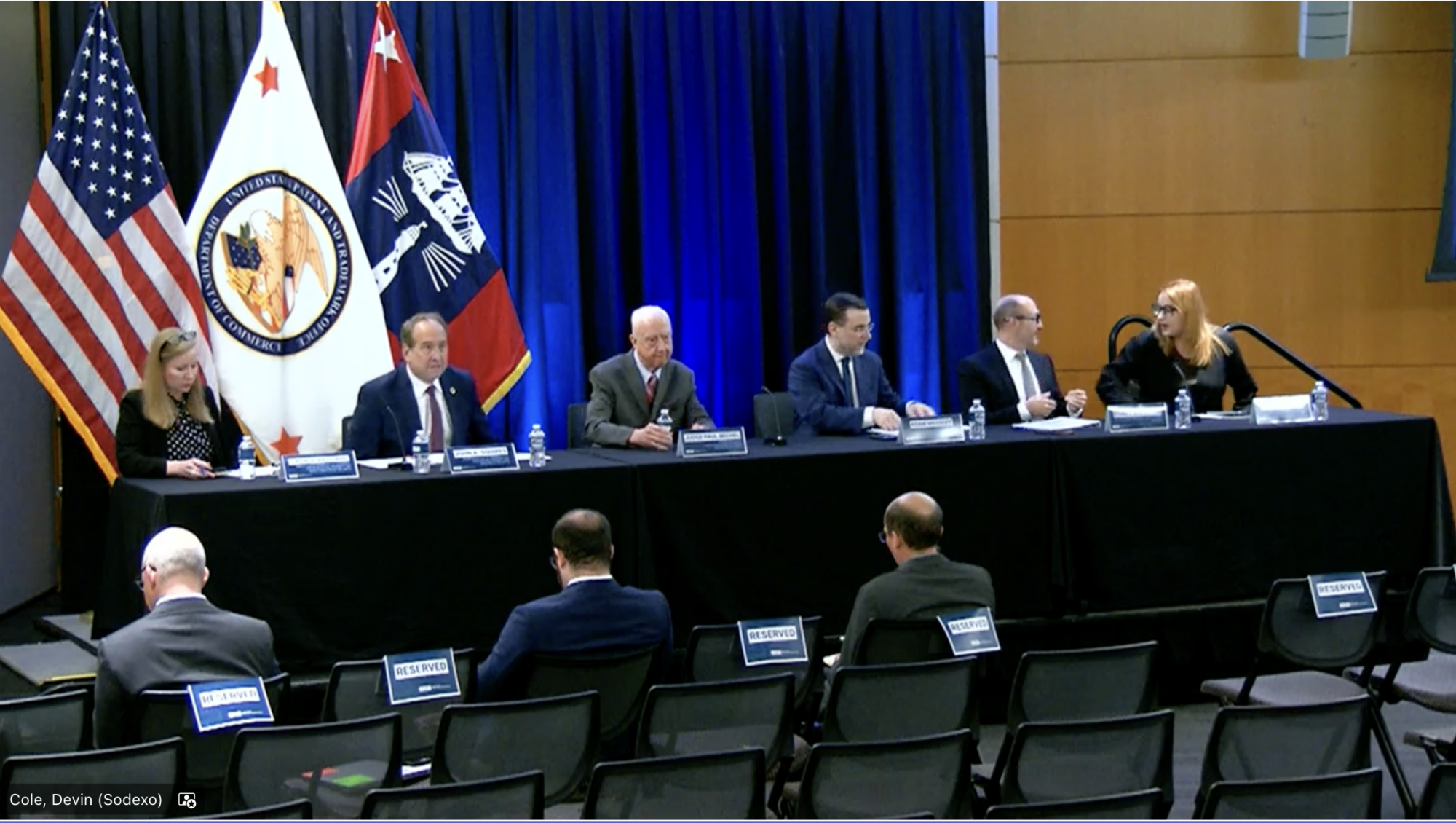 “I think the examination core needs to have much more training emphasis on defining claim scope,” Michel said. “Because, really, under any ground of validity, you’re pretty much comparing the scope of the claim against some other evidence—prior art, or 101 considerations, and so on…. The disjunction between what the [CAFC] says the case law is and what happens in this building is greater than undesirable.”
Secondly, said Michel, the Office should implement more “procedural regularity,” ensuring governance by regulations rather than memos and guidance. Part of the motivation for that would be to encourage the CAFC to show more respect for the Office’s rules, said Michel, since they have made it clear before that they are not bound by USPTO standards. If there was greater clarity on what the Office’s positions are, it might promote a more open minded attitude on the part of the CAFC. “Respect could be built and then there would be more consistency,” said Michel.
Mossoff referred to the PTAB as something of “an institutional platypus,” with “duck like law features” of a court that holds adversarial proceedings, but the beaver features of an administrative agency or tribunal, with discretion, expertise, and that is “supposed to use speed and efficiency to achieve the results.” This has caused problems for the PTAB through the years, with a series of vacillations back and forth to strike the right balance, ultimately becoming largely resolved in the Arthrex decision, which deemed the PTAB an administrative agency, despite continuing focus on policy debates.
Squires asked the panelists how they can approach this problem of the PTAB’s “platypus” nature, and Michel suggested that one thing is for the Office to guide PTAB judges that they should avoid relying too heavily on expert assertions over documented prior art. While the statute limits the basis for invalidation under Section 103 to prior art patents and publications, “it looks to me like, over the years, there’s been a creeping reliance…on experts to substitute for something really findable on the face of the prior art,” Michel said.
Furthermore, in cases where legitimate expert testimony is relied upon, the experts should be called to take the stand, because that is really the only way to determine which is more credible, Michel added.
Salsberg shared the experience of his company, Novartis, with the PTAB, as an example of how it has fallen short of its intended purpose in some cases, harking back to the 2017 CAFC case in Novartis v. Noven Pharmaceuticals, which Salsberg explained involved a loss for Novartis after three previous wins—twice in district court and once at the CAFC. “It was a fourth bite at the apple that occurred because the PTAB was able to ignore three prior court rulings and [decided] the case based on new expert declarations that said the same thing as before in a slightly different way.”
Salsberg said Squires’ Magnolia decision has important implications for the pharmaceutical industry, given that USPTO data indicates that around 91% of AIA- challenged Orange Book listed patents are also challenged in court, and a full 95% of Orange Book related petitions are filed after parallel litigation begins. “Parallel PTAB challenges almost invariably end up increasing litigation costs and burdens in contravention of the point of the IPR system, but excess burdens and costs are also not the only harmful consequence, as the Magnolia case further highlights,” Salsberg said. Congress was also concerned that misuses of IPR would divert resources from R&D and undermine the quiet title that patent owners rely on, “and that concern is particularly acute in our field, where it takes billions of dollars and 10 to 15 years on average to develop a single drug.” Thus, “discretionary denial authority is often all that stands between a reasonably secured R&D investment, and the death by a thousand IPRs that Congress rightly feared,” Salsberg added.
![[Advertisement]](https://ipwatchdog.com/wp-content/uploads/2026/09/MarqVision-Oct-8-2026-sidebar-700x500-rev.jpg)
![[Advertisement]](https://ipwatchdog.com/wp-content/uploads/2026/10/IP-Copilot-Oct-13-2026-sidebar-700x500-1.jpg)
![[Advertisement]](https://ipwatchdog.com/wp-content/uploads/2026/10/Junior-Oct-15-2026-sidebar-700x500-1.jpg)
![[Advertisement]](https://ipwatchdog.com/wp-content/uploads/2026/09/WE-BUY-PATENTS-SIM-IP-Ad-1-revised-on-Sep-28-2026-700x500-1.jpg)
![[Advertisement]](https://ipwatchdog.com/wp-content/uploads/2026/09/Life-Sciences-2026-sidebar-early-bird-date-corrected-700x500-1.jpg)
![[Advertisement]](https://ipwatchdog.com/wp-content/uploads/2024/09/Patent-Prosecution-Training-sidebar-700x500-2025-03-27.jpg)





![[Advertisement]](https://ipwatchdog.com/wp-content/uploads/2021/12/WEBINAR-336-x-280-px.png)
![[Advertisement]](https://ipwatchdog.com/wp-content/uploads/2021/12/Ad-4-The-Invent-Patent-System™.png)






Join the Discussion
2 comments so far.
Pro Say
May 19, 2026 11:03 amHow many experts can dance on the head of a pin?
Director Squires and PTO leadership: We 1,000’s of Independent Inventors thank you for continuing to reform the PTAB into the entity Congress intended.
F22strike
May 19, 2026 10:18 am“Stewart added that, despite the reduction in serial petitions, her administration was surprised to come across a patent that had been challenged seven times in the early days of her tenure.”
She is USPTO Deputy Director yet she apparently doesn’t know that Caltech’s WiFi patents were challenged with 17 serial IPRs. There are probably many other egregious examples of the PTAB tolerating glaring misue of the IPR statute.
It is clear from the statistics that big-tech uses IPRs to blugeon competitors repeatedly until the asserted claims of their patents are found to be unpatenable by a receptive panel at the PTAB.
The supposed estoppel provisions of the IPR statute are a farce.