
![[IPWatchdog Logo]](https://ipwatchdog.com/wp-content/themes/IPWatchdog%20-%202023/assets/images/temp/logo-small@2x.png)

 5
5 “All in all, inducement cannot be based only on ‘vague’ language ‘combined with speculation about how [others] may act.'” – SCOTUS opinion
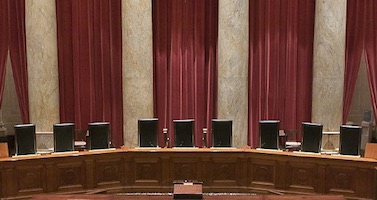 The U.S. Supreme Court today issued its decision in Hikma Pharmaceuticals USA v. Amarin Pharma, Inc., holding that Amarin failed to “plausibly allege” that Hikma actively induced infringement of its “icosapent ethyl” product, marketed as Vascepa.
The decision, which was originally seen as a so-called skinny label case applying narrowly to the pharmaceutical industry and Hatch-Waxman litigation, scolded the U.S. Court of Appeals for the Federal Circuit (CAFC) for its recent approach and has potentially far-reaching implications for the induced infringement standard across sectors.
CAFC Decision
The ruling stems from the June 2024 precedential decision of the U.S. Court of Appeals for the Federal Circuit (CAFC) reversing a district court’s grant of Hikma’s motion to dismiss Amarin’s complaint against it for induced infringement.
Amarin claimed Hikma induced infringement of Vascepa, but the U.S. District Court for the District of Delaware ultimately agreed with Hikma and granted its motion to dismiss, finding that Amarin failed to plead inducement based on either Hikma’s “skinny label” or its public press release/ statements.
Vascepa was approved by the Food and Drug Administration (FDA) in 2012 for the treatment of severe hypertriglyceridemia (“the SH indication”). Then, in 2019, it was approved by the FDA for a second indication, as “a treatment to reduce cardiovascular risk (i.e., myocardial infarction, stroke, coronary revascularization, and unstable angina requiring hospitalization) in patients having blood triglyceride levels of at least 150 mg/dL (‘the CV indication’)”. Hikma was granted an abbreviated new drug application (ANDA) in 2020 for a “skinny label” that did not include the CV indication.
On review at the CAFC, the court noted that the case had reached it “at its most nascent stage… where we are tasked with reviewing allegations, not findings, for plausibility, not probability,” and thus, none of its prior cases in the space were dispositive, said the opinion. Then, turning to the facts of the case, the CAFC said that Amarin’s allegations concerning Hikma’s label, in combination with Hikma’s public statements and marketing materials, “at least plausibly state a claim for induced infringement.”
While the CAFC noted that “it is undisputed that the ‘Indications & Usage’ section of Hikma’s label does not provide an implied or express instruction to prescribe the drug for the CV indication,” Amarin nonetheless argued that other portions of the label would be read by physicians to indicate that the drug could be prescribed for CV risk. Hikma also removed a CV Limitation of Use from its label despite not being approved for the CV indication as well as its warning of potential side effects for patients with cardiovascular disease, which could also be interpreted by physicians to mean it could be used for off-label CV indication.
The CAFC gave credit to Hikma’s argument that this silence on the CV indication cannot plausibly support the elements of active inducement, explaining that, if considered alone, the court might agree with the district court and Hikma that the label does not encourage infringing use as a matter of law. However, it was in combination with certain public statements and marketing materials that the court considered the label, and those statements further convinced the CAFC that there was a plausible claim for induced infringement.
Specifically, Hikma’s press releases prior to November 2020 “consistently referred to Hikma’s product as a ‘generic equivalent to Vascepa®,’ ‘generic Vascepa®,’ or ‘Hikma’s generic version of Vascepa®,’” without indicating that it was “AB-rated,” or therapeutically equivalent only for the indications on the label. The press releases also referred to Vascepa as indicated “in part” for the SH indication. Amarin argued these statements suggested Vascepa was indicated for more than one use and that its Hikma’s product was a generic version of Vascepa. Amarin also said that Hikma referred to sales figures for Vascepa “that Hikma knew were largely attributable to the off-label CV indication.”
Ultimately, said the CAFC, “many of the allegations depend on what Hikma’s label and public statements would communicate to physicians and the marketplace….As we observed in GSK, that is a question of fact—not law—and is therefore not proper for resolution on a motion to dismiss.”
The court rejected Hikma’s argument that a reversal would “effectively eviscerate section viii carve-outs,” explaining that its holding “is limited to the allegations before us and guided by the standard of review appropriate for this stage of proceedings.”
However, added the court:
“What we can also say is that clarity and consistency in a generic manufacturer’s communications regarding a drug marketed under a skinny label may be essential in avoiding liability for induced infringement.”
SCOTUS Disagrees
The Supreme Court granted Hikma’s petition for certiorari in January of this year.
During oral arguments in April, the Justices seemed concerned about the potential impact of the CAFC’s decision for the generic pharmaceutical industry, and today, in an opinion delivered by Justice Ketanji Brown Jackson, applying the Court’s pleading standard established in Bell Atlantic Corp. v. Twombly, 550 U. S. 544, 570 (2007), the unanimous Court explained that “the central question is whether Amarin plausibly alleged that Hikma actively encouraged infringing uses, not merely whether doctors could plausibly read the alleged statements as instructions to infringe.”
The Court continued:
“‘[I]nducement must involve the taking of affirmative,’ as opposed to passive, ‘steps to bring about the desired result’ of patent infringement.”
Thus, Amarin’s argument that doctors could interpret the statements made by Hikma to warrant prescribing Hikma’s generic to reduce cardiovascular risk “misses the mark,” said the opinion.
Amarin relied on the Court’s copyright decision in MGM v. Grokster (2005), which described “[t]he classic instance of inducement” as an “advertisement or solicitation that broadcasts a message designed to stimulate others to commit violations.” But the Hikma Court distinguished Grokster from the present case. The opinion said:
“[S]tatements designed to stimulate others form a narrower category than statements that could stimulate others. And in Grokster, the defendants’ statements fit into that narrower Class.”
For instance, said the Court, Grokster actively sent newsletters promoting its ability to provide specific copyrighted materials and responded affirmatively to request for helping locating such materials, said the Court.
“All in all, inducement cannot be based only on ‘vague’ language ‘combined with speculation about how [others] may act,’” explained the opinion.
In a footnote, Justice Jackson acknowledged that Amarin was basing its arguments on “the recent approach of the Federal Circuit, which has increasingly trained its focus on whether the relevant statements could be read by medical providers as instructions to infringe,” citing GlaxoSmithKline LLC v. Teva Pharmaceuticals USA, Inc., 7 F. 4th 1320, 1336–1337 (2021). The footnote went on to definitively reject this trend of the CAFC.
Reactions
Patients For Affordable Drugs CEO Merith Basey said in a statement today that the decision “protects an important pathway for bringing lower-cost generic medicines to patients. Had the Court ruled the other way, generic manufacturers could have faced increased legal risk when following the rules established by Congress and the FDA.”
Deepro Mukerjee, and Lance Soderstrom of Katten called the decision “an obvious win for generic companies” that allows generics “‘breathing room’ to make broad brush statements about offering a generic product without the risk of a plaintiff drawing together multiple potential readings to find induced infringement when those do not amount to clear affirmative statements.”
Joe Micallef of Axinn said “it will be interesting to see how this case affects other cases outside of the pharmaceutical world,” since the ruling has broad application.
“This was not an ANDA case,” Micallef said. “It was straight-up induced infringement, which obviously applies to patents covering any technology. And the Court’s opinion quite explicitly tells the Federal Circuit that it needs to change its view of what is necessary to prove inducement.”
IPWatchdog will have more reactions to the ruling in a subsequent article.
![[Advertisement]](https://ipwatchdog.com/wp-content/uploads/2026/07/IP-Author-Aug-6-2026-sidebar-700x500-1.jpg)
![[Advertisement]](https://ipwatchdog.com/wp-content/uploads/2026/07/Juristat-Aug-11-2026-sidebar-700x500-1.jpg)
![[Advertisement]](https://ipwatchdog.com/wp-content/uploads/2026/07/Womens-IP-Forum-2026-sidebar-register-early-bird-now-700x500-1.jpg)
![[Advertisement]](https://ipwatchdog.com/wp-content/uploads/2026/07/ClearstoneIP-Varsity-Ad-2026-Ad-3.jpg)
![[Advertisement]](https://ipwatchdog.com/wp-content/uploads/2026/07/Juristat-Varsity-Ad-2026-IPW-ad-FreeTrial_1-UPDATED-on-Jul-15-2026.png)
![[Advertisement]](https://ipwatchdog.com/wp-content/uploads/2024/09/Patent-Prosecution-Training-sidebar-700x500-2025-03-27.jpg)



![[Advertisement]](https://ipwatchdog.com/wp-content/uploads/2021/12/WEBINAR-336-x-280-px.png)
![[Advertisement]](https://ipwatchdog.com/wp-content/uploads/2021/12/Ad-4-The-Invent-Patent-System™.png)


Join the Discussion
5 comments so far. Add my comment.
Anon
June 11, 2026 07:48 amPro Say – that advice does not impact my point.
My point stands.
(think of the difference between objective counseling and strategic advocacy – that advice is of the latter variety, not the former)
Pro Say
June 10, 2026 08:49 pmNot so quick, Anon, my friend. This just in from the highly-respected Wolf, Greenfield:
“Brands would be well-advised to strategically re-evaluate pursuing a second indication approval for a previously approved drug with differential patent or regulatory exclusivity term.”
“Doing so may invite loss of market share and potential inability to recoup development costs, due in part to generics with skinny label approvals and off-label uses.”
Anon
June 8, 2026 10:38 amPro Say,
As reinforced By Doctor Noonan (of PatentDocs fame – expect the story there shortly), this is not the case you are stating (no theft here – this is a patent merely on a new use of an existing item (content from LinkedIn, my emphasis added):
“The decision has been hailed as a victory for the generic drug industry and patients/heathcare consumers with some justification. It needs to be remembered, however, that it is one of limited scope. First, skinny labels arise ONLY where a drug FDA approved for a first indication is later approved for a second indication having some distinction over the first. It also is limited to indications where the approval parameters – dosage form, amounts, etc. – are the same, i.e. are contained in the same FDA-approved label and differing solely by the second indication (although off-label used by physicians may involve such changes without approval).“
Anon
June 5, 2026 08:00 amPro Say – I do not and cannot reach your conclusion.
This is NOT about “stealing.”
The patent protection HERE is already thin – this was specifically on a different use of a known item (there was no million or billion dollar raw research here). The generic use was on a use explicitly not covered by the patent related to the known item.
Pro Say
June 4, 2026 05:46 pmMake no mistake; this major “generic” win will in the long term be a major loss for the millions of current and future Americans who will never have access to life-saving and life-changing medicines that were never invented . . .
. . . because it’s now materially easier for copyists to steal the innovations of others.
Would you invest a $1,000,000,000 or more on R&D when others can take your innovation for nothing?
Add Comment