
![[IPWatchdog Logo]](https://ipwatchdog.com/wp-content/themes/IPWatchdog%20-%202023/assets/images/temp/logo-small@2x.png)

 1
1 “[The Hatch-Waxman limitation on generic marketing of patented products] is ‘the only thing that makes it economically rational for a branded company like Amarin to spend the $300 million that [it] spent…to discover that an existing drug, Vascepa, actually had life changing implications to treat cardiovascular risk.” – Michael Robert Huston, Perkins Coie LLP
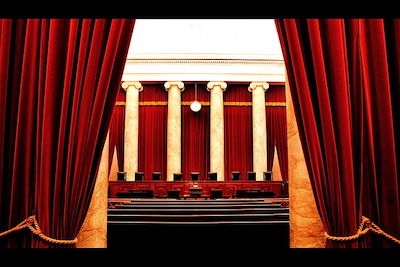 The U.S. Supreme Court heard oral arguments today in Hikma Pharmaceuticals USA v. Amarin Pharma, Inc., a closely-watched case that in part asks the Justices to weigh in on whether a drugmaker calling its product a “generic version” while citing public sales information about the branded drug induces infringement of a patented use fully carved out by the generic’s label.
Hikma’s petition also asks whether a complaint states an induced infringement claim if it fails to allege any instruction or statement by the defendant mentioning the patented use.
While some Justices today questioned why the case was even before them, others seemed concerned about the potential impact of the case for the generic pharmaceutical industry.
Case Recap
In June of 2024, the U.S. Court of Appeals for the Federal Circuit (CAFC) issued a precedential decision reversing a district court’s grant of Hikma’s motion to dismiss Amarin’s complaint against it for induced infringement.
Amarin claimed Hikma induced infringement of its “icosapent ethyl” product, an ethyl ester of an omega-3 fatty acid commonly found in fish oils and marketed as Vascepa. U.S. District Court for the Western District of Texas Judge Alan Albright—who recently announced his departure from the bench—was sitting by designation on the CAFC panel, which also included CAFC Chief Judge Moore and the opinion’s author, Judge Lourie.
The U.S. District Court for the District of Delaware initially declined to adopt a magistrate judge’s recommendation to deny Hikma’s motion to dismiss under Federal Rule of Civil Procedure 12(b)(6). Hikma argued that Amarin “had failed, as a matter of law, to allege facts that Hikma had taken active steps to specifically encourage infringement.” The district court ultimately agreed with Hikma and granted the motion to dismiss, finding that Amarin failed to plead inducement based on either Hikma’s skinny label or its public press release/ statements.
On review at the CAFC, however, the court noted that the case had reached it “at its most nascent stage… where we are tasked with reviewing allegations, not findings, for plausibility, not probability,” and thus, none of its prior cases in the space were dispositive, said the opinion. Then, turning to the facts of the case, the CAFC said that Amarin’s allegations concerning Hikma’s label, in combination with Hikma’s public statements and marketing materials, “at least plausibly state a claim for induced infringement.”
Vascepa was approved by the Food and Drug Administration (FDA) in 2012 for the treatment of severe hypertriglyceridemia (“the SH indication”). Then, in 2019, it was approved by the FDA for a second indication, as “a treatment to reduce cardiovascular risk (i.e., myocardial infarction, stroke, coronary revascularization, and unstable angina requiring hospitalization) in patients having blood triglyceride levels of at least 150 mg/dL (‘the CV indication’)”. Hikma was granted an abbreviated new drug application (ANDA) in 2020 for a “skinny label” that did not include the CV indication.
While the CAFC noted that “it is undisputed that the ‘Indications & Usage’ section of Hikma’s label does not provide an implied or express instruction to prescribe the drug for the CV indication,” Amarin nonetheless argued that other portions of the label would be read by physicians to indicate that the drug could be prescribed for CV risk. Hikma also removed a CV Limitation of Use from its label despite not being approved for the CV indication as well as its warning of potential side effects for patients with cardiovascular disease, which could also be interpreted by physicians to mean it could be used for off-label CV indication.
The CAFC gave credit to Hikma’s argument that this silence on the CV indication cannot plausibly support the elements of active inducement, explaining that, if considered alone, the court might agree with the district court and Hikma that the label does not encourage infringing use as a matter of law. However, it was in combination with certain public statements and marketing materials that the court considered the label, and those statements further convinced the CAFC that there was a plausible claim for induced infringement.
Specifically, Hikma’s press releases prior to November 2020 “consistently referred to Hikma’s product as a ‘generic equivalent to Vascepa®,’ ‘generic Vascepa®,’ or ‘Hikma’s generic version of Vascepa®,’” without indicating that it was “AB-rated,” or therapeutically equivalent only for the indications on the label. The press releases also referred to Vascepa as indicated “in part” for the SH indication. Amarin argued these statements suggested Vascepa was indicated for more than one use and that its Hikma’s product was a generic version of Vascepa. Amarin also said that Hikma referred to sales figures for Vascepa “that Hikma knew were largely attributable to the off-label CV indication.”
Ultimately, said the CAFC, “many of the allegations depend on what Hikma’s label and public statements would communicate to physicians and the marketplace….As we observed in GSK, that is a question of fact—not law—and is therefore not proper for resolution on a motion to dismiss.”
The court rejected Hikma’s argument that a reversal would “effectively eviscerate section viii carve-outs,” explaining that its holding “is limited to the allegations before us and guided by the standard of review appropriate for this stage of proceedings.”
However, added the court:
“What we can also say is that clarity and consistency in a generic manufacturer’s communications regarding a drug marketed under a skinny label may be essential in avoiding liability for induced infringement.”
The Supreme Court granted Hikma’s petition for certiorari in January of this year.
SCOTUS Chimes In
At oral argument today, Charles Bennett Klein of Winston & Strawn LLP, arguing for Hikma, rejected the CAFC’s and Amarin’s assertion that the induced infringement standard depends on the doctors’ perception of the messaging. “Active inducement cannot depend on whether doctors might read infringing instructions into product descriptions that on their face are entirely consistent with non infringing use,” Klein said.
Instead, active inducement requires a clear message that necessarily promotes infringement. Short of that standard, “generic companies won’t choose [the skinny label] pathway if, at best, it means paying millions in legal fees, and at worst, a massive damages award reversal is needed to harmonize Section VIII with [35 U.S.C. § 271(b)] and to encourage legitimate competition that reduces drug prices,” Klein added.
Under 21 U.S.C. § 355(j)(2)(A)(viii), or the “Section viii carve-out,” a generic can seek approval for a non-patented use of a branded drug by omitting from its label the patented indication.
Klein argued that none of Hikma’s statements rose to the level of induced infringement and were in fact so “anodyne” that the Court would not be required to change its existing standards for induced infringement were Hikma to win—a question both Justices Thomas and Sotomayor seemed concerned with.
Arguing for the U.S. government, Deputy Solicitor General Malcom Stewart warned the Court against adopting Amarin’s views lest it deter generic manufacturers from making use of the Section VIII compromise of the Hatch-Waxman Act. In its brief, the government argued that the Federal Circuit “departed from” the Hatch-Waxman balance in holding that Amarin had adequately alleged induced infringement.
“None of the statements that petitioners are alleged to have made about their generic drug had any meaningful likelihood of causing infringing off-label uses, particularly given the critical role of state generic-substitution laws in governing the prescribing and dispensing practices of healthcare providers,” wrote the government.
Justice Samuel Alito challenged Stewart on the government’s interpretation of induced infringement, noting that requiring the generic “clearly reveal a purpose of infringement” to meet induced infringement seems like “a pretty broad safe harbor.” But Stewart said “it is supposed to be a difficult standard for the pleader to satisfy, but I think that’s for design. The Court has said when a product is capable of both infringing and non-infringing uses, it’s important that a patent on one method of use not become a de facto monopoly on the product as a whole.”
Arguing for Amarin was Michael Robert Huston of Perkins Coie LLP, who warned the Justices that the implications of the ruling in this case go “far beyond the pharmaceutical industry” and that the Hatch-Waxman-imposed limitation on generic marketing of patented products is “absolutely vital.” In fact, added Huston, it is “the only thing that makes it economically rational for a branded company like Amarin to spend the $300 million that [it] spent in the RE-DUCE-IT trial to discover that an existing drug, Vascepa, actually had life changing implications to treat cardiovascular risk. And that rule of induced infringement liability is not unique to pharmaceuticals.”
The Justices seemed skeptical of Huston’s argument that the relevant statements Hikma made that Amarin alleged induced infringement were used as marketing materials to physicians, noting that they seemed to be more geared to investors. But Huston said there is evidence they are prepared to present on remand to show that Hikma took active steps to induce in its statements, and how a listener understands those statements is a fact question that’s typically not suitable for resolution on summary judgment.
Justice Kavanaugh also pointed to Former Congressman Henry Waxman’s amicus brief in the case, in which he said the Federal Circuit’s decision threatens to decimate the compromise at the heart of the Hatch Waxman Act, which, in turn, threatens to undermine the generic pharmaceutical industry.
While Kavanaugh said he was hesitant “to put too much faith in a former Congressman’s brief about his own statute,” he noted that the brief points out generics have saved the United States $3.4 trillion over the past 10 years, and that the Federal Circuit’s decision leaves generic drug companies in the dark about what might expose them to liability. “I think the question is, if this is good enough [to meet the induced infringement standard], then that’s going to have some serious implications market wide,” Kavanaugh said.
Huston explained that “when we say it’s good enough, all we mean is good enough to get out of the starting gate, to get into discovery, where we’re going to have the…burden to prove everything that we allege.” Huston urged the Justices to, at the very least, remand the case rather than ending it. He added:
“The reason it’s named Hatch-Waxman, of course, is that it was a fundamental compromise, and on the other side of that compromise was…protecting the need to encourage branded drugs to take existing products and invest massive resources to discover how those drugs can be used for new cures.”
IPWatchdog will run readers’ reactions to the arguments in a follow-up article. To submit your reaction, email editors@ipwatchdog.com.
![[Advertisement]](https://ipwatchdog.com/wp-content/uploads/2026/07/Juristat-Aug-11-2026-sidebar-700x500-1.jpg)
![[Advertisement]](https://ipwatchdog.com/wp-content/uploads/2026/07/IP-Author-Aug-13-2026-sidebar-700x500-1.jpg)
![[Advertisement]](https://ipwatchdog.com/wp-content/uploads/2026/07/Womens-IP-Forum-2026-sidebar-register-early-bird-now-700x500-1.jpg)
![[Advertisement]](https://ipwatchdog.com/wp-content/uploads/2026/07/Juristat-Varsity-Ad-2026-IPW-ad-Solo_1.png)
![[Advertisement]](https://ipwatchdog.com/wp-content/uploads/2026/07/ClearstoneIP-Varsity-Ad-2026-Ad-3.jpg)
![[Advertisement]](https://ipwatchdog.com/wp-content/uploads/2024/09/Patent-Prosecution-Training-sidebar-700x500-2025-03-27.jpg)



![[Advertisement]](https://ipwatchdog.com/wp-content/uploads/2021/12/WEBINAR-336-x-280-px.png)
![[Advertisement]](https://ipwatchdog.com/wp-content/uploads/2021/12/Ad-4-The-Invent-Patent-System™.png)





Join the Discussion
One comment so far.
Anon
April 29, 2026 06:48 pm“But Stewart said ‘it is supposed to be a difficult standard for the pleader to satisfy, but I think that’s for design. The Court has said when a product is capable of both infringing and non-infringing uses, it’s important that a patent on one method of use not become a de facto monopoly on the product as a whole.'”
Sounds in what I posted just the other day…