
![[IPWatchdog Logo]](https://ipwatchdog.com/wp-content/themes/IPWatchdog%20-%202023/assets/images/temp/logo-small@2x.png)

 2
2 “[U]nbranded generics make up 90% of total U.S. prescription volume, far greater than the 41% of generics among total prescription volume in other OECD countries.”
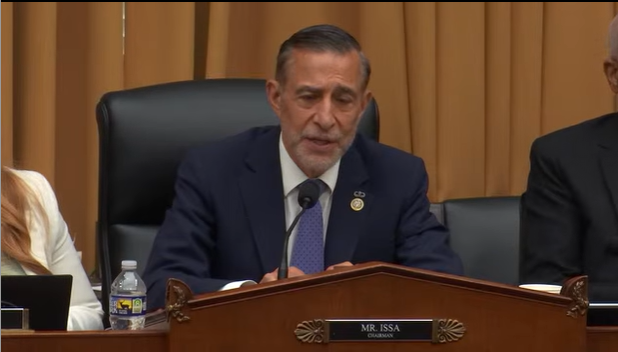 At approximately the same moment that the U.S. Supreme Court handed down today’s landmark ruling in Hikma v. Amarin, the House Judiciary’s Subcommittee on Courts, Intellectual Property, Artificial Intelligence, and the Internet began a hearing on balancing medical innovation and access to generic drugs. Much of the hearing’s discussion was focused on proposed patent bills that favor generic drug makers–though whether they would ensure that Americans actually pay less for any drug, branded or otherwise, remains unclear.
While each member of the Subcommittee shared the goal of ensuring Americans can afford drugs, House IP Subcommittee Chair Darrell Issa (R-CA) noted during his opening statement that the Subcommittee’s jurisdiction was limited to achieving that goal through patent law reforms. However, Ranking Member Hank Johnson (D-GA) spoke at length about the role of market approval processes at the U.S. Food and Drug Administration (FDA) and other aspects of the pharmaceutical industry that make the issue of generics very complex. These and other complexities in patent law were discussed by Jamie Raskin (D-MD), Ranking Member of the full House Judiciary Committee who gave an opening statement quoting Federalist Paper #43 in noting that the public good fully coincides with the grants of exclusive rights in innovations to their inventors.
Terminally Disclaimed Patents Impact Economic Prospects of Generic Drugmakers
The day’s discussion was heavily influenced by Hikma, a case on induced infringement liability through so-called skinny labeling practices that was very familiar to Michael Carrier, Board of Governors at Rutgers Law and co-author of amicus briefing representing the views of law professors in Hikma. Unlike the computer software and electronic device industries, where patents are often cross-licensed among competitors, Carrier said such cross-licensing doesn’t occur in pharmaceuticals, where concerns about “patent thickets” and “evergreening” have been heavily voiced. According to Carrier, Congressional passage of H.R. 3269, the Eliminating Thickets to Increase Competition (ETHIC) Act is required to ensure the balance of generic drug access and medical innovation intended by passage of the Hatch-Waxman Act of 1984.
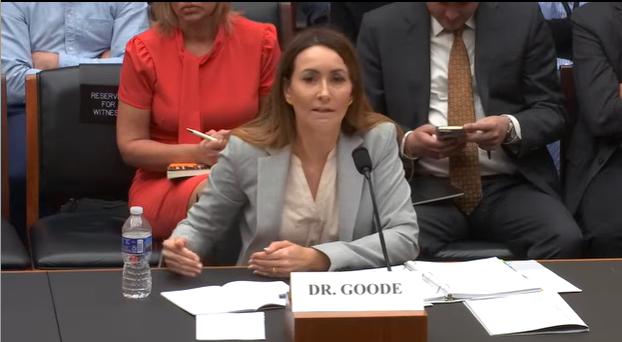 The bureaucracy delaying market access to generic drugs was a major focus of panel witness Rachel Goode, Senior VP and Head of Legal and Intellectual Property for German-based drugmaker Fresenius Kabi, a leader of generic IV drugs sold into the United States and across the EU, as noted in the company’s 2024 annual report. Goode highlighted that the American economy benefits from salaries paid to American employees and investments made in American manufacturing by foreign companies like Fresenius Kabi. One major issue for these companies are terminally-disclaimed continuation patents, which Goode repeatedly called “duplicate” patents and which would be addressed both by the ETHIC Act and the Skinny Labels, Big Savings Act, a bill that would establish a safe harbor for generic manufacturers seeking market approval based on skinny labels carving out patented uses. As was pointed out by one Subcommittee member, that bill would essentially codify the Court’s ruling in Hikma today.
Recent history has shown major successes in improved U.S. sales for generic drugmakers, as highlighted by Krista Carver, Partner at Covington & Burling, which has a practice group dedicated to FDA and other regulatory matters for major pharmaceutical brands. Carver cited a 2024 study published by the U.S. Department of Health & Human Services (HHS) which concluded not only do U.S. consumers pay less for generic drugs than counterparts in Organization for Economic Co-operation and Development (OECD) countries, but unbranded generics make up 90% of total U.S. prescription volume, far greater than the 41% of generics among total prescription volume in other OECD countries.
Proposed Bills Have Little Basis in Fact and Threaten Competition
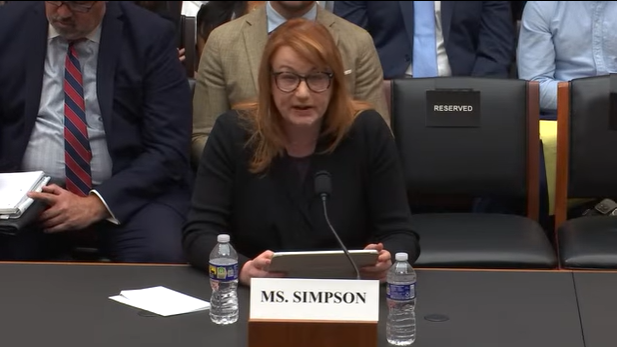 Jamie Simpson, Chief Policy Officer and Counsel for the Council for Innovation Promotion, explained that a 2024 joint study conducted by the FDA and the U.S. Patent and Trademark Office (USPTO) concluded that raw numbers on patent volume are imprecise and cannot properly measure the overall intellectual property landscape of a single drug product. Simpson added that those with issues about terminal disclaimers often overlook that the patent owners themselves agree to the disclaimer, which is often requested by the USPTO so that prosecution of the patents that ultimately issue can occur in bite-size packages, resulting in patent rights that help the original inventor recoup their investment on a highly risky and expensive drug development process from other patentable uses of the same invention, such as an oncology drug found to treat additional forms of cancer after the original patent has been filed. Simpson said:
“I urge the [Sub]committee to keep the global competitive landscape in mind. Forty years ago, the United States was not the leader in biopharmaceutical innovation… At a moment when global competitors are racing to surpass us in medical innovation, Congress should be especially cautious in weakening the framework that made America the leader in the first place.”
Speaking from the other side of the debate, Goode repeatedly referenced data from a 2022 study on patent thickets delaying biosimilars that she co-authored along with Bernard Chao, both affiliated with the University of Denver Sturm College of Law. That study found that Abbvie’s Humira drug “was made up of roughly 80% non-patentably distinct (duplicative) patents linked together by terminal disclaimers,” while “there were far less non-duplicative European patents that covered Humira.”
The issues broached in this hearing overlap with several other areas of patent law that have impacted more than the pharmaceutical industry, including expanding subject matter eligibility concerns under 35 U.S.C. § 101 impacting medical diagnostics and computer software industries alike. Loss of capital investment in those industries within the United States were a major reason why Representative Kevin Kiley (R-CA), who noted the significant overlap with other rapidly evolving areas of patent law during the hearing, signed on to reintroduce the Patent Eligibility Restoration Act (PERA) last May.
The hearing concluded with Ranking Member Johnson submitting for the record a series of letters from a wide range of organizations that Johnson called “as bipartisan as this hearing and this panel.” Attempting to find middle ground, Chairman Issa ended the day’s hearing with a very pointed question regarding whether the Subcommittee should find some patent law-related carveout to induce U.S. manufacturing from overseas drug developers in some form of bonded manufacturing facility. That’s a question and perspective on patent law well-shaped by Issa’s own background as an inventor.
Andrew Powaleny, DVP of Public Affairs at PhRMA, offered the following quote on today’s hearing:
“Today’s hearing reinforced that Hatch-Waxman is working: low-cost generics now fill 90% of prescriptions, have generated $3.4 trillion in savings and help sustain U.S. leadership in medical innovation. Efforts to weaken patent protections based on claims of ‘patent thickets’ and ‘evergreening’ are not supported by the evidence and risk undermining the framework that drives innovation and keeps America competitive with China.”
![[Advertisement]](https://ipwatchdog.com/wp-content/uploads/2026/09/MarqVision-Oct-8-2026-sidebar-700x500-rev.jpg)
![[Advertisement]](https://ipwatchdog.com/wp-content/uploads/2026/10/IP-Copilot-Oct-13-2026-sidebar-700x500-1.jpg)
![[Advertisement]](https://ipwatchdog.com/wp-content/uploads/2026/10/Junior-Oct-15-2026-sidebar-700x500-1.jpg)
![[Advertisement]](https://ipwatchdog.com/wp-content/uploads/2026/09/WE-BUY-PATENTS-SIM-IP-Ad-1-revised-on-Sep-28-2026-700x500-1.jpg)
![[Advertisement]](https://ipwatchdog.com/wp-content/uploads/2026/09/Life-Sciences-2026-sidebar-early-bird-date-corrected-700x500-1.jpg)
![[Advertisement]](https://ipwatchdog.com/wp-content/uploads/2024/09/Patent-Prosecution-Training-sidebar-700x500-2025-03-27.jpg)




![[Advertisement]](https://ipwatchdog.com/wp-content/uploads/2021/12/WEBINAR-336-x-280-px.png)
![[Advertisement]](https://ipwatchdog.com/wp-content/uploads/2021/12/Ad-4-The-Invent-Patent-System™.png)





Join the Discussion
2 comments so far.
Anon
June 5, 2026 08:21 amUnfortunately Pro Say, the lack of sunlight throughout the Pharma ecosystem is driving the public and congress to extreme measures.
Much better would be my suggestions – some more than a decade old now (after serving litigation matters on Established Pharma versus a Generic, so I am bound not to disclose details), I have seen inside the belly of the beast.
We need full sunlight on all aspects – every penny traced through every channel (including insurance, pharmacies, advertising, and especially “speech to Congress critters”).
Pro Say
June 5, 2026 12:05 amEasier Generics = Dead Americans
Simple. As. That.
(What’s the generic version of a life-saving medicine which was never created?)