
![[IPWatchdog Logo]](https://ipwatchdog.com/wp-content/themes/IPWatchdog%20-%202023/assets/images/temp/logo-small@2x.png)

 2
2 “The court emphasized that this does not mean, however, that courts are required to attempt to discern the unexpressed intent of the plaintiff nor explore exhaustively all potential claims of a pro se plaintiff that are not readily apparent from the allegations.”
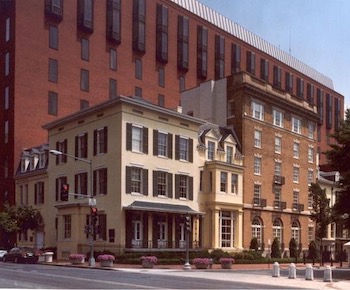 The U.S. Court of Appeals for the Federal Circuit (CAFC) issued a decision today in Sansone v. United States Patent and Trademark Office, affirming the U.S. District Court for the Eastern District of Virginia’s dismissal of a pro se inventor’s lawsuit and denial of his motion for summary judgment.
Stanley Sansone filed U.S. Patent Application No. 16/255,511 on January 23, 2019, seeking a patent for a wearable thermal device, but a patent examiner rejected all claims. The Patent Trial and Appeal Board (PTAB) affirmed the rejection, after which Sansone sought continued examination. During continued examination, the examiner issued a second non-final rejection of all claims. Sansone amended the ‘511 application on January 3, 2022, but the examiner issued a second final rejection, and the PTAB again affirmed on July 19, 2023.
Sansone then filed suit against the U.S. Patent and Trademark Office (USPTO) and its Director in the Eastern District of Virginia and subsequently filed two amended pleadings without seeking leave to amend. The district court accepted both filings, given his pro se status, treating them collectively as the operative complaints. On June 17, 2024, the USPTO moved to dismiss under Federal Rules of Civil Procedure 12(b)(1) and 12(b)(6). Sansone opposed and shortly after moved for summary judgment.
The court later granted the motion to dismiss on March 4, 2025. The court construed the complaints as asserting civil rights claims under 42 U.S.C. Sections 1983 and 1985, as well as claims under various criminal statutes and the Federal Tort Claims Act (FTCA). It also interpreted the complaints to raise constitutional claims and a claim for contractual damages. The district court concluded the complaints failed to adequately state a claim for relief, denied the motion for summary judgment as premature, and dismissed the complaints without leave to amend.
On appeal, Sansone argued the USPTO’s motion to dismiss was untimely and that he was entitled to summary judgment. He claimed the Department of Justice was served on April 11, 2024, but moved to dismiss on June 1, 2024, and the CAFC rejected the argument as inconsistent with the record. Under Federal Rule of Civil Procedure 4(i)(1), service in the United States requires the Attorney General and the local U.S. Attorney’s office. While the Attorney General was served on April 11, 2024, the U.S. Attorney for the Eastern District of Virginia was not served until April 17. The 60-day deadline therefore ran from April 17 to June 16, 2024, and was extended to June 17 because June 16 was on a Sunday. The USPTO’s motion was thus timely. Since Sansone’s summary judgment motion relied solely on timeliness, the CAFC also affirmed the denial.
Sansone also argued that his references to various statutes were not meant to assert independent causes of action, but were included as “evidence that the agency’s actions were ultra vires, void, or taken without statutory authority.” His complaints, he argued, alleged “ultra vires administrative acts, violations of non-discretionary duties, and constitutional deprivations,” and the district court’s alleged mischaracterization caused it to apply incorrect legal frameworks to dismiss his allegations.
The CAFC found no reversible error in the district court’s interpretation. While courts must liberally construe pro se filings, “this does not mean, however, that courts are required to attempt to discern the unexpressed intent of the plaintiff nor explore exhaustively all potential claims of a pro se plaintiff that are not readily apparent from the allegations.” Since Sansone’s intent to use the cited statutes only as evidence of ultra vires conduct was not apparent from the face of the complaints, the district court’s reading was reasonable.
Moreover, the court held that any error in framing the allegations was harmless because the claims failed under any interpretation. It agreed that the cited federal criminal statutes provided no private right of action and no waiver of sovereign immunity, and it affirmed dismissal of the civil rights, FTCA, constitutional, and contractual claims.
Sansone further alleged that USPTO examiners unlawfully conspired to falsify the administrative record to reject his application. The CAFC rejected that claim, concluding that the alleged falsification consisted solely of examiners’ factual findings concerning prior art that Sansone disputed. His allegations, grounded in 35 U.S.C. Section 103, were found to rest on an “indisputably meritless legal theory” based on misunderstandings of Section 103 and patent law.
Furthermore, Sansone requested a writ of certiorari and argued that portions of the Patent Act of 1836 and the Leahy-Smith America Invents Act of 2011 were unconstitutional. The CAFC declined to address those arguments because Sansone had not raised them in his complaints below. Sansone also sought a writ of mandamus directing the USPTO Director to allow the ‘511 application and grant a patent with a 5.5-year extension. The court denied that request, finding Sansone “has not made the showing required to qualify for mandamus relief, which is a drastic remedy that must be reserved for extraordinary situations.”
The CAFC affirmed the district court’s dismissal of Sansone’s complaints and denial of summary judgment in full, with no costs awarded.
![[Advertisement]](https://ipwatchdog.com/wp-content/uploads/2026/10/IP-Copilot-Oct-13-2026-sidebar-700x500-1.jpg)
![[Advertisement]](https://ipwatchdog.com/wp-content/uploads/2026/10/Junior-Oct-15-2026-sidebar-700x500-1.jpg)
![[Advertisement]](https://ipwatchdog.com/wp-content/uploads/2026/10/BlackBox-IP-Oct-20-2026-sidebar-700x500-1.jpg)
![[Advertisement]](https://ipwatchdog.com/wp-content/uploads/2026/09/WE-BUY-PATENTS-SIM-IP-Ad-1-revised-on-Sep-28-2026-700x500-1.jpg)
![[Advertisement]](https://ipwatchdog.com/wp-content/uploads/2026/09/Life-Sciences-2026-sidebar-early-bird-date-corrected-700x500-1.jpg)
![[Advertisement]](https://ipwatchdog.com/wp-content/uploads/2024/09/Patent-Prosecution-Training-sidebar-700x500-2025-03-27.jpg)





![[Advertisement]](https://ipwatchdog.com/wp-content/uploads/2021/12/WEBINAR-336-x-280-px.png)
![[Advertisement]](https://ipwatchdog.com/wp-content/uploads/2021/12/Ad-4-The-Invent-Patent-System™.png)







Join the Discussion
2 comments so far.
George
July 29, 2026 10:10 pmWhat do you think about this, Rose Esfandiari?
George
July 29, 2026 10:09 pmThis proves our justice system is now totally corrupt, especially against those who lack millions of dollars with which to pursue even the most valid of cases!!! What will they do when AI ‘expert law advocates’ take on the courts, with knowledge of all the laws and how they are supposed to be ‘consistently applied’, not just applied in an ad hoc, corrupt, or convenient manner, in order to quickly dismiss cases that should not be so treated, simply to clear out dockets and protect the government from accountability.
He should also take this matter to members of Congress who should FINALLY look into what’s going on at the PTO, to discourage and further diminish independent invention in this country and doing so with the clear intent of ‘protecting’ existing companies and large corporations!
Does Congress even KNOW how and why the USPTO is greatly abusing its authority to just ‘concoct’ reasons to deny patents they think could threaten companies, or that they know impacted companies WOULD NOT LIKE?! Is the PTO now intentionally PROTECTING companies in America from competition or having to pay royalties that they don’t want to pay? Is the PTO essentially in the business of protecting big corporations and monopolies, like Apple, Microsoft, Google, etc.?
We are facing the same problems now, on multiple inventions the PTO simply refuses to allow (because we suspect they are too broad, too valuable and too powerful), despite overcoming all objections FOR YEARS, all prior art (desperately searched for MANY TIMES) and despite clearly fabricated, unnecessary and totally unreasonable reasons to do so (that just ignore the MPEP – which examiners and their supervisors no longer care about at all). We’re talking about the PTO and its examiners doing so for over 15 YEARS now!!! 15 YEARS that our invention cannot be disclosed to the public or other companies! 15 YEARS that they cannot contribute to the U.S. economy and help us compete with other countries and beat them in technology development, even worth BILLIONS OF DOLLARS and 10000’s of new American jobs!
That means we, and probably all other independent inventors in America, should NEVER allow early publication of their inventions and applications, since even if they could represent ‘breakthroughs’ (or especially if they do), UNLESS they can get a legally valid, legally enforceable, valuable and ‘bulletproof’ patent protections that can be enforced against even the biggest corporations in the world, they can and will just be stolen in WEEKS!
The U.S. no longer allows ‘powerful’, ‘broad’ and ‘extremely valuable’ patents to be issued anymore (like we did 100 years ago). They must now be numerous and very ‘narrowly’ claimed, meaning what once only need one patent, not requires at least 5-10 patents, which of course takes much longer to get and costs much more to get – making the PTO much more money!!! By the time 5-10 patents are awarded, most inventions become obsolete, so the whole concept of patent protections become absurd and relegated to the 19th century and useless in the 21st! That’s a HUGE MISTAKE, that we can’t believe Congress didn’t correct decades ago, instead of passing the AIA which just makes things MUCH worse and just helps large corporations even more!!!
The AIA will completely destroy the incentive to invent anything anymore in the U.S., if it can just be easily and ‘legally’ stolen – with actual HELP from the USPTO who can just kick out any and all lawsuits against it, with the blessing of Congress it seems.
The PTO can NEVER be held accountable for that or anything else! This can never happen with ‘sovereign immunity’. No agency of government should therefore be allowed that anymore! It totally negates even the concept of justice in America! It’s a get-out-of-jail card for any employee of the PTO, no matter what they do (except maybe commit murder).
Therefore no inventor should allow early publication of their invention disclosures, so that the government will become aware of these huge problems with the PTO. It will also prevent the manufacture of new products and the many jobs that could be created as a result of new inventions. If they’re not disclosed (without getting ‘good’ patents rather than worthless ‘junk’), then America will be finished and China will dominate the world!
We refuse to disclose our ‘valuable inventions’, without getting the strong and broad patents we demand (although we may keep them as FREE trade secrets for much longer than patents, that we can just use internally as new production methods and manufacturing technologies)!
So much for helping the U.S. economy and job creation … ‘brain-dead’ Congress and now CORRUPT USPTO! The U.S. can go to hell, if this is how it treats it’s innovators and inventors now, while protecting special interests!
Indeed independent inventors should organize a massive strike and refuse to file anymore patent applications for at least a year, until Congress restores our once great patent system (that rewarded even ex-slave inventors with good and enforceable patents, that lifted them out of poverty). If we could do that then, we can do it again! Repeal the AIA and start all over again, treating everyone equally again! Including pro se applicants and litigants! No one should be ‘special’ or ‘specially protected’ in America. The laws of this country apply to everyone, including public employees!