
![[IPWatchdog Logo]](https://ipwatchdog.com/wp-content/themes/IPWatchdog%20-%202023/assets/images/temp/logo-small@2x.png)

 0
0 “Given the Church’s express, public, and definitive statements of abandonment of ‘Mormon’ in its branding, the Church has relinquished all trademark rights in or connected to ‘Mormon’-styled names.” – Mormon Stories Podcast Answer and Counterclaim
Image Source: Complaint
A trademark dispute between The Church of Jesus Christ of Latter-day Saints (“the Church”) and the Mormon Stories Podcast (“the Podcast”) has this week become a broader fight over the Church’s Mormon-related trademark portfolio.
The Church’s complaint, filed on April 17, 2026, alleged that the Podcast’s name, branding, and use of Church imagery create a likelihood of confusion regarding whether the Podcast is actually affiliated with the Church. Meanwhile, the Podcast’s answer to the complaint and counterclaim goes further. Rather than merely denying infringement, the Podcast is now seeking cancellation of multiple Mormon-related trademarks owned by the Church..
The Church’s Confusion Theory
The Church’s complaint alleged Mormon Stories Podcast’s use of the “Mormon Stories” name, along with a blue logo incorporating a light-ray design and various Church-associated images without a disclaimer creates a likelihood of confusion among audience members as to whether the Podcast is affiliated with, sponsored by, or endorsed by the Church. In its complaint, the Church recounted its longstanding use of “Mormon” marks, including registered marks such as MORMON, BOOK OF MORMON, and BOOK OF MORMON STORIES.
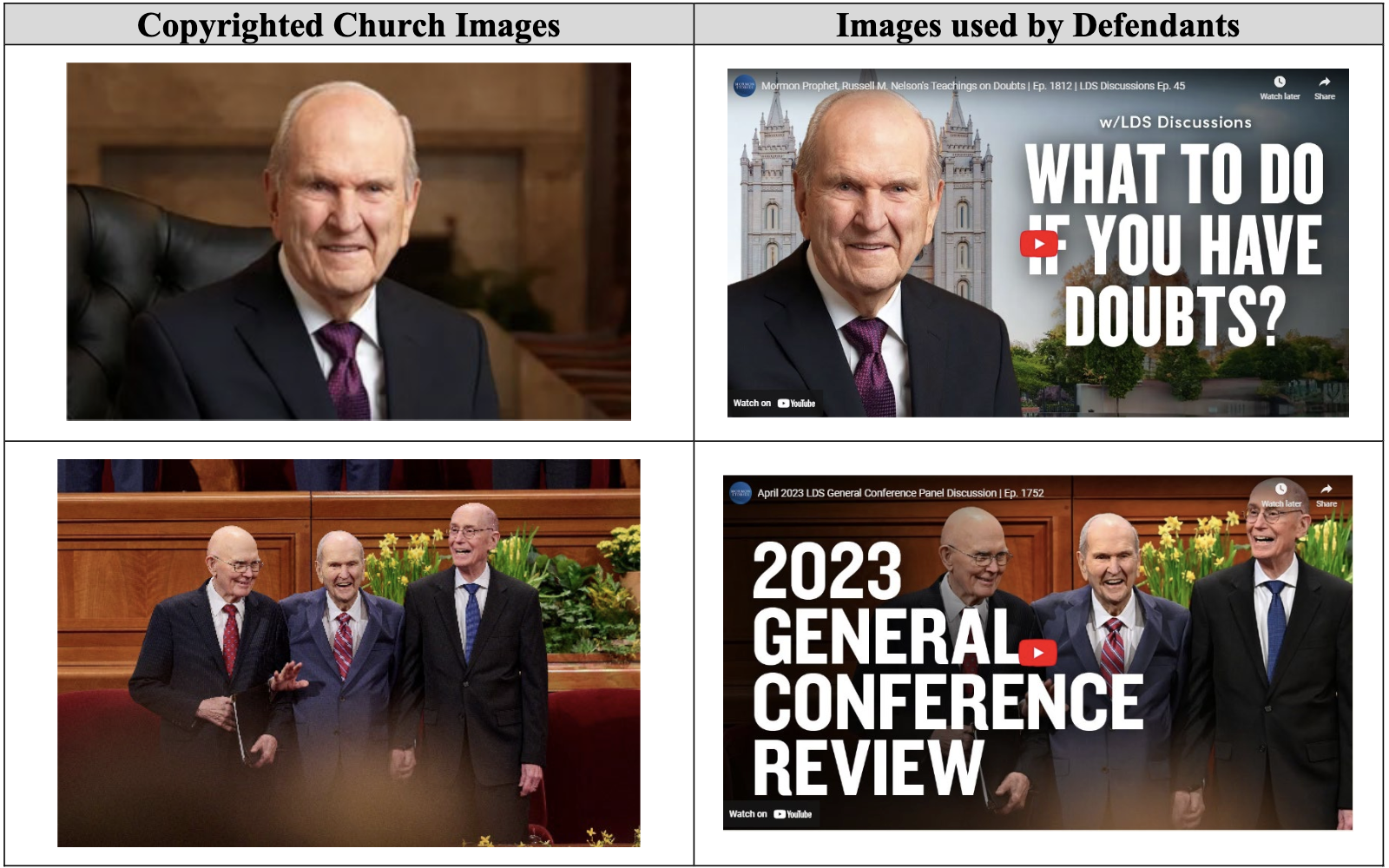
Image Source: Complaint
To show examples of actual consumer confusion, the Church included social media comments from users who wrote that they initially believed the Mormon Stories Podcast was affiliated with the Church, before realizing that it is Church-independent, and in some cases, anti-Church content. Additionally, the Church explains that it previously asked the defendants to adopt various measures to reduce confusion, including the use of a disclaimer, but the parties did not reach a satisfactory resolution.
Mormon Stories Podcast’s Counterclaims
Rather than simply denying the Church’s infringement allegations, the Podcast’s Answer and Counterclaims, filed June 22 in the U.S. District Court for the District of Utah, Central Division, seeks declaratory judgment of non-infringement and asks the court to cancel several Mormon-related trademark registrations on grounds such as abandonment, fraud on the United States Patent and Trademark Office (USPTO) and genericness.
The counterclaims also highlight the parties’ longstanding coexistence. Mormon Stories Podcast has operated since 2005, and the Answer claims that Church leaders were aware of the podcast for years before raising trademark concerns in 2025. Additionally, the answer alleges that Mormon Stories Podcast voluntarily modified aspects of its branding, removed identified copyrighted images, and adopted the disclaimer that “Mormon Stories is not affiliated with, endorsed or sponsored by The Church of Jesus Christ of Latter-day Saints.”
Mormon is Out
At the center of the counterclaims is the Podcast’s allegation that the Church publicly abandoned the term “Mormon” beginning in 2018. The Podcast’s Answer points to a years-long rebranding effort led by then-president Russell M. Nelson, who publicly announced “‘Mormon’ is Out” and instructed the Church and its members to no longer use the term as a primary identifier. According to the counterclaims, the Church’s official style guide also told media outlets to refrain from using “Mormon Church” and even requested that the media not call members “Mormons.” The Answer additionally points out that the Church described “Mormon” as being proper only in limited circumstances, such as “Book of Mormon” or historical references.
The Answer argues that the Church’s public statements were accompanied by large scale changes to its branding. For example, the Podcast alleges that the Church renamed the Mormon Tabernacle Choir to the Tabernacle Choir at Temple Square, rebranded Mormon Channel as Latter-day Saints (LDS) Channel, changed Mormon Messages to Inspirational Messages, retired Mormon.org, and renamed over 1,000 of Mormon and LDS-branded products.
This portion of the Answer highlights the stark contrast between the Church’s earlier mission to publicly discourage use of “Mormon” and systematically remove it from its branding versus its current attempt to claim exclusive trademark rights in Mormon-related marks. The Podcast ends this section with a strong statement:
“Given the Church’s express, public, and definitive statements of abandonment of ‘Mormon’ in its branding, the Church has relinquished all trademark rights in or connected to ‘Mormon’-styled names. By its own admissions and express directives, any residual token use of ‘Mormon’ by the Church is purely descriptive in nature, or de minimis, and cannot overcome or reverse the Church’s explicit abandonment of the name and the public’s recognition of the same.”
Fraudulent Filings
Next, the Podcast argues that the Church’s rebranding campaign is significant for another reason: it forms the basis of allegations that the Church made false statements to the USPTO while maintaining its Mormon-related trademark registrations. According to the Podcast’s counterclaim discussion, the Church publicly renounced Mormon-branded identifiers while filing sworn declarations representing continued trademark use of those same marks.
The Answer focuses on registrations including MORMON TABERNACLE CHOIR, MORMON CHANNEL, and MORMON MESSAGES. The Podcast details that after the Church publicly renamed those services and discontinued the use of Mormon-branded names, the Church submitted declarations and specimens to the USPTO to demonstrate continued use in commerce. As one example, the counterclaims allege that the Church renewed registrations for MORMON CHANNEL and MORMON MESSAGES years after those brands had been replaced by “Latter-Day Saints Channel” and “Inspirational Messages”.
The counterclaims further challenge the Church’s registration of BOOK OF MORMON STORIES for podcast services. The Answer states that the Church represented to the USPTO that no other party had superior rights likely to cause confusion, despite being aware of Mormon Stories’ longstanding use of its podcast name and branding. Based on these allegations, in addition to the rest of the Answer, the Podcast again seeks cancellation of several registrations, this time on fraud grounds in addition to abandonment.
In a statement emailed to IPWatchdog, the Podcast’s Founder, John Dehlin, said Mormon Stories made many “substantial” compromises with the Church and was “surprised to learn” that the case would proceed. Dehlin added:
“The LDS Church does not own the word ‘Mormon,’ and it should not be allowed to use intellectual property law to control how people discuss Mormon culture, history, doctrine, or lived experience. This case raises important questions that extend well beyond Mormon Stories Podcast.”
![[Advertisement]](https://ipwatchdog.com/wp-content/uploads/2026/09/Lighthouse-IP-Sep-15-2026-sidebar-DOW-700x500-1.jpg)
![[Advertisement]](https://ipwatchdog.com/wp-content/uploads/2026/09/Clerq-RPX-Sep-16-2026-sidebar-700x500-1.jpg)
![[Advertisement]](https://ipwatchdog.com/wp-content/uploads/2026/09/Patently-Sep-17-2026-sidebar-700x500-1.jpg)
![[Advertisement]](https://ipwatchdog.com/wp-content/uploads/2026/06/Womens-IP-Forum-2026-sidebar-regular-price-700x500-rev1.jpg)
![[Advertisement]](https://ipwatchdog.com/wp-content/uploads/2026/08/OneTransform_700x500_v1-REVISED.jpg)
![[Advertisement]](https://ipwatchdog.com/wp-content/uploads/2024/09/Patent-Prosecution-Training-sidebar-700x500-2025-03-27.jpg)






![[Advertisement]](https://ipwatchdog.com/wp-content/uploads/2021/12/WEBINAR-336-x-280-px.png)
![[Advertisement]](https://ipwatchdog.com/wp-content/uploads/2021/12/Ad-4-The-Invent-Patent-System™.png)





Join the Discussion
No comments yet. Add my comment.
Add Comment