
![[IPWatchdog Logo]](https://ipwatchdog.com/wp-content/themes/IPWatchdog%20-%202023/assets/images/temp/logo-small@2x.png)

 0
0 “While the CAFC acknowledged the prior art did not include immunogenicity data for all of the serotypes, it emphasized that ‘a finding of obviousness does not require a guarantee of success’ and that ‘an expectation of success need only be reasonable, not absolute.’”
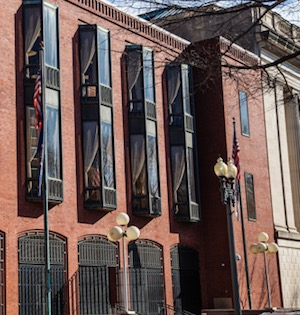 The U.S. Court of Appeals for the Federal Circuit (CAFC) on Friday affirmed a Patent Trial and Appeal Board (PTAB) decision denying Pfizer’s motions to amend two patent claims. This is Pfizer’s a second appeal following a March 2024 precedential CAFC ruling that partially vacated and remanded a previous PTAB decision in favor of Sanofi Pasteur, Inc.
Pfizer originally appealed to the Federal Circuit following rulings from five inter partes review (IPR) proceedings petitioned by Sanofi, the vaccine division of French pharmaceutical company Sanofi. Those IPR proceedings challenged all claims of Pfizer’s U.S. Patent No. 9492559, Immunogenic Compositions Comprising Conjugated Capsular Saccharide Antigens and Uses Thereof, which claims compositions provoking an immune system response for use in pneumococcal vaccines like Pfizer’s Prevnar.
The PTAB’s final written decisions in those IPR proceedings invalidated all challenged claims of the ‘559 patent for obviousness. The PTAB also denied Pfizer’s motions to amend after finding that Sanofi and fellow petitioner Merck had shown obviousness for Pfizer’s proposed substitute claims. On appeal, the Federal Circuit invalidated all of the claims and denied Pfizer’s motion to amend on one claim but vacated and remanded the decision on claims 48 and 49, holding that the Board’s decision was “‘silent as to why proposed substitute claims 48 and 49 would have been obvious over the references,’ offering no analysis and only ‘a conclusory statement’ for those claims.”
Specifically, the CAFC said the PTAB’s ruling included no analysis specific to the “glycoconjugate limitations” in the proposed claims and whether it would have achieved the claimed 2-log increase result with those claimed glycoconjugates. Thus, this portion of the PTAB’s ruling was remanded with directions to address the issue.
On remand, the PTAB found proposed substitute claims 48 and 49 would also have been obvious and therefore denied the motions to amend a second time. Pfizer again appealed.
Pfizer argued the Board’s decision lacked substantial evidence and that it therefore abused its discretion in denying the motions to amend. Specifically, Pfizer argued that “there was no substantial evidence supporting the Board’s conclusion that a skilled artisan would have had a reasonable expectation of success in achieving ‘more than a 2-log increase above baseline in serum IgG levels in New Zealand White Rabbits across” serotypes 15B and 33F in claim 48 and serotypes 12F, 10A, 11A and 8 in claim 49.”
The CAFC disagreed, explaining that the Board pointed to a table “showing a more than 2-log increase above baseline serum IgG levels for 13 of the 14 serotypes required by proposed substitute claim 46,” as well as expert testimony supporting its position, and that this sufficed as substantial evidence for the Board’s conclusion that “a skilled artisan would have had a reasonable expectation of success in achieving the 2-log increase for all serotypes in proposed substitute claims 48 and 49.” While the court acknowledged the prior art did not include immunogenicity data for all of the serotypes, it emphasized that “a finding of obviousness does not require a guarantee of success.”
and that “an expectation of success need only be reasonable, not absolute.”
Ultimately, said the CAFC:
“Although the prior art references do not show every serotype recited in claims 48 and 49 achieving the 2-log increase, the Board relied on substantial evidence showing that a skilled artisan would have had a reasonable expectation of success in achieving the 2-log increase for all the claimed serotypes.”
![[Advertisement]](https://ipwatchdog.com/wp-content/uploads/2026/08/Anaqua-Aug-25-2026-sidebar-700x500-1.jpg)
![[Advertisement]](https://ipwatchdog.com/wp-content/uploads/2026/08/Solve-Intelligence-Aug-27-2026-sidebar-700x500-rev1.jpg)
![[Advertisement]](https://ipwatchdog.com/wp-content/uploads/2026/07/Womens-IP-Forum-2026-sidebar-register-early-bird-now-700x500-1.jpg)
![[Advertisement]](https://ipwatchdog.com/wp-content/uploads/2026/07/ClearstoneIP-Varsity-Ad-2026-Ad-2.jpg)
![[Advertisement]](https://ipwatchdog.com/wp-content/uploads/2026/07/Juristat-Varsity-Ad-2026-IPW-ad-Solo_1.png)
![[Advertisement]](https://ipwatchdog.com/wp-content/uploads/2026/08/OneTransform_700x500_v1.png)
![[Advertisement]](https://ipwatchdog.com/wp-content/uploads/2024/09/Patent-Prosecution-Training-sidebar-700x500-2025-03-27.jpg)




![[Advertisement]](https://ipwatchdog.com/wp-content/uploads/2021/12/WEBINAR-336-x-280-px.png)
![[Advertisement]](https://ipwatchdog.com/wp-content/uploads/2021/12/Ad-4-The-Invent-Patent-System™.png)






Join the Discussion
No comments yet. Add my comment.
Add Comment