
![[IPWatchdog Logo]](https://ipwatchdog.com/wp-content/themes/IPWatchdog%20-%202023/assets/images/temp/logo-small@2x.png)

 0
0 Bites (noun): more meaty news to sink your teeth into.
Barks (noun): peripheral noise worth your attention.
Want to have your doggie(s) featured in one of our future Barks & Bites Columns? Send your dogs photo(s) along with their name, breed (if you know it) and their age to dogwall@ipwatchdog.com. All photos will be added to the IPWatchdog Dog Wall at IPWatchdog Studios and will be added to the queue of images we select from each week.
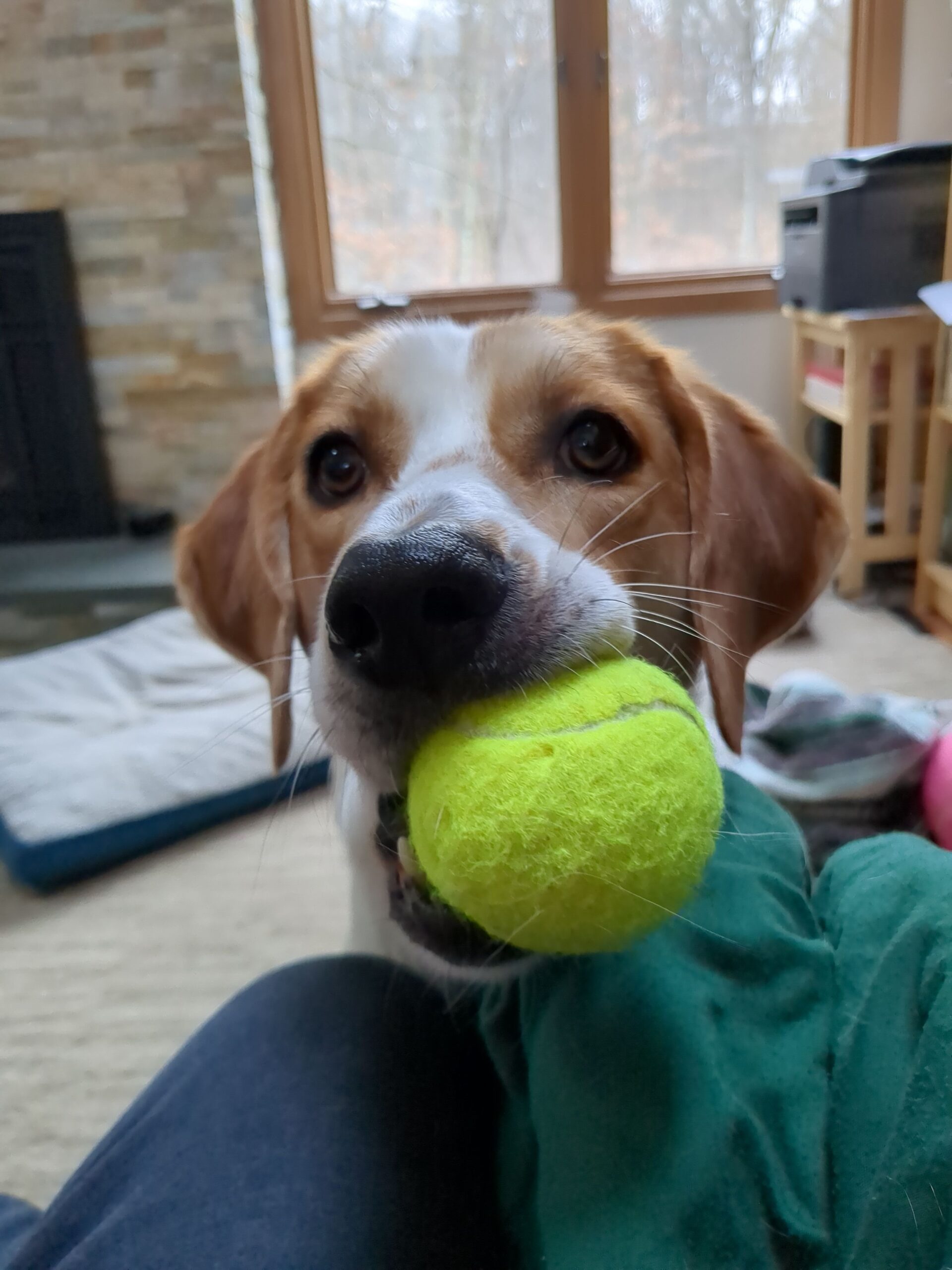
IPWatchdog reader Matt Wars’ six-year-old Red Tick Coonhound, Sprite.
This week in Other Barks & Bites: the Fourth Circuit affirms an injunction against a scheme to divert Turkish-label versions of Biktarvy into the U.S. for sale; the Federal Circuit nixes US Inventor’s challenge to the “right to exclude others” language printed on issued U.S. patents; SK Biopharmaceutical agrees to allow generic Xcopri to enter the U.S. market by 2032; Alibaba reports a major hit to corporate profits driven by increased AI expenditures; Netflix and producers of the film KPop Demon Hunters face a trademark infringement suit filed by a Christian metal band; a divided Ninth Panel majority finds that attorney’s fees are available under the Lanham Act for previously dismissed litigation when that case involved the same claim as the case deemed exceptional; and the D.C. Circuit dismisses Teva’s challenge to the Centers for Medicare & Medicaid Services’ definition of a single-source drug but revives its challenge to the “bona fide marketing” requirement for generics.
Bites
US Inventor Challenge to Allegedly Misleading Post-eBay Patent Language Nixed Over Standing – On Friday, August 21, the U.S. Court of Appeals for the Federal Circuit issued a precedential ruling in US Inventor, Inc. v. Squires affirming the Eastern District of Virginia’s dismissal for lack of standing of a complaint filed by inventor advocacy organization US Inventor alleging violations of the Administrative Procedures Act (APA) by the U.S. Patent and Trademark Office for printing language on issued U.S. patents regarding the “right to exclude others,” which is misleading since the U.S. Supreme Court removed the presumption of injunctive relief for patent owners proving infringement in eBay v. MercExchange (2006). The Federal Circuit found that US Inventor lacked both organizational and associational standing to bring their APA claims against the agency due mainly to the lack of plausible allegations of an imminent threat of future injury to any of the plaintiffs’ members.
CAFC Tells NPE That Licensees Must Comply With Patent Marking Statute – On Wednesday, August 19, the Federal Circuit issued a precedential ruling in VDPP, LLC v. Volkswagen Group of America, Inc. affirming the Southern District of Texas’ dismissal of a patent infringement suit filed by non-practicing entity (NPE) VDPP for failing to make reasonable efforts to ensure that licensees who had entered into agreements settling patent litigation complied with the patent marking statute codified at 35 U.S.C. § 287(a). The Federal Circuit also affirmed the district court’s award of attorney’s fees for Volkswagen and dismissed VDPP’s appeal to the lower court’s entry of attorney sanctions, finding that it was ultimately not clear enough that the attorney was appealing on his own behalf instead of VDPP, who benefitted from the sanctions and thus had no standing to challenge.
D.C. Circuit Dismisses Teva’s Challenge to CMS Single Source Drug Determinations – On Tuesday, August 18, the U.S. Court of Appeals for the D.C. Circuit issued a ruling in Teva Pharmaceuticals USA, Inc. v. Kennedy affirming the D.C. District Court’s grant of summary judgment against Teva’s challenge to the Medicare negotiation program established by the Inflation Reduction Act (IRA), holding that 42 U.S.C. § 1320f-7(2) prevents judicial review of the Centers for Medicare & Medicaid Services’ (CMS) determination that Teva’s tardive dyskinesia treatments Austedo and Austedo XR qualify as a single source drug subject to the negotiation program. However, the D.C. Circuit reversed as to the district court’s dismissal of Teva’s challenge to CMS’ bona fide marketing requirement for generic drugs, finding that Teva’s question as to whether the requirement exceeded CMS’ statutory authority was ripe for judicial review.
Fourth Circuit Affirms Gilead Injunction, Says FDCA Doesn’t Preclude Trademark Claims – On Tuesday, August 18, the U.S. Court of Appeals for the Fourth Circuit issued a ruling in Gilead Sciences, Inc. v. Meritain Health, Inc. affirming the District of Maryland’s grant of preliminary injunction against several parties involved in a scheme to import and distribute internationally sourced units of Gilead’s HIV treatment Biktarvy, finding that the imported drugs directly infringed Gilead’s trademarks because the imported units were materially different due to the Turkish language labelling of the Biktarvy packaging and because the medication itself was not subject to the same quality control measures of medication produced by Gilead and intended for U.S. sale. In so ruling, the Ninth Circuit found that Gilead’s Lanham Act claims were not precluded by the Federal Food, Drug, and Cosmetic Act because the material differences analysis did not require interpretation of U.S. Food & Drug Administration (FDA) regulations.
Divided Ninth Circuit Panel Underscores Circuit Split on Attorney’s Fees Under Lanham Act – On Tuesday, August 18, the U.S. Court of Appeals for the Ninth Circuit issued a ruling in ThermoLife International, LLC v. BPI Sports, LLC affirming the District of Arizona’s grant of attorney’s fees to defendant BPI due to ThermoLife’s persistence in litigating the same trademark claims against BPI through multiple dismissals, acknowledging a circuit split on the issue of whether the Lanham Act permits the recovery of attorney’s fees for previous cases involving the same claims that reached a voluntary dismissal. While the panel majority found that BPI could recover attorney’s fees for the dismissed litigation if the underlying statute provides for such an award, which the Lanham Act does, over the dissent of Circuit Judge Eric Miller who argued that no statute provides for the recovery of attorney’s fees related to litigation that is not currently before the court.
D.C. Circuit Dismisses Challenge to CRB’s “Gross Proceeds” Regulatory Interpretation – On Tuesday, August 18, the D.C. Circuit issued a ruling in Music Choice v. Copyright Royalty Board dismissing a petition for review filed by Music Choice challenging a ruling on regulatory interpretation by the Copyright Royalty Board (CRB) that “gross proceeds” calculable to identify statutory licensing rates for ephemeral recordings includes all revenues collected from music transmissions to business service customers count along with subscription services. Finding that the CRB’s regulatory ruling, which followed referral of the regulatory interpretation of “gross proceeds” to the CRB from district court, was not itself a determination that could be directly appealed to the D.C. Circuit and further that Music Choice did not qualify as a participant to a proceeding bound by its determination in large part because the regulatory ruling did not occur within the context of a ratemaking proceeding.
Barks
SK Biopharmaceutical Agrees to Settlement Allowing Generic Xcopri In 2032 – On Wednesday, August 19, South Korean news outlet The Korean Herald reported that SK Biopharmaceuticals had reached an agreement to settle litigation related to a generic version of the seizure medication Xcopri marketed by Indian drugmaker MSN Laboratories that will enable generic Xcopri to enter the U.S. market when SK’s patent rights to the active ingredient in Xcopri expire in 2032.
Big Tech Giants Targeted in Section 337 Complaint Over Infringing Electronic Devices – On Tuesday, August 18, the U.S. International Trade Commission (USITC) announced that it had received a complaint from BoomCloud 360 alleging violations of Section 337 committed by Apple, Google and Samsung through the importation of certain electronic devices with certain audio technologies into the U.S. for sale.
Christian Metal Band Files Trademark Infringement Suit Against KPop Demon Hunters – On Tuesday, August 18, Christian metal band Demon Hunter filed a lawsuit in the Central District of California alleging claims of trademark infringement against Netflix and other producers of the 2025 film KPop Demon Hunters following the recent announcement of a global tour featuring music from the animated movie.
North Carolina’s Research Triangle Selected for USPTO’s Newest Community Engagement Office – On Tuesday, August 18, the U.S. Patent and Trademark Office (USPTO) announced that North Carolina State University (NCSU) has been selected as the location for the agency’s newest community engagement office, with the USPTO’s announcement noting the university’s strategic location within North Carolina’s Research Triangle Park and adjacency to other Tier 1 research universities including Duke University and the University of North Carolina at Chapel Hill.
Indie Music Publisher Files Copyright Lawsuit Against Suno, Anthropic – On Monday, August 17, independent music publishing label Round Hill filed a lawsuit in the Northern District of California alleging claims of copyright infringement against artificial intelligence companies Suno and Anthropic over their unauthorized use of songs from Round Hill’s catalog, including “Iris” by the Goo Goo Dolls and “Lola” by the Kinks, to create new AI-generated song recordings.
Motion Picture Association Signs Copyright Safeguard Agreement With ByteDance – On Monday, August 17, the Motion Picture Association announced that it had entered into an agreement with Chinese artificial intelligence company ByteDance addressing copyright safeguards on ByteDance’s Seedance and Seedream generative platforms months after the Hollywood trade organization sent a cease-and-desist letter over copyright infringement concerns.
This Week on Wall Street
AI Spending Hits Profits, Drops Alibaba Shares Despite Revenue Beat – On Thursday, August 20, Chinese e-commerce giant Alibaba reported earnings for its most recent fiscal quarter showing that company revenues beat analyst expectations but that increased AI spending led to a 75% drop in profits on the quarter due to higher CPU-compute capacity and higher chip prices.
Quarterly Earnings – The following firms identified among the IPO’s Top 300 Patent Recipients for 2025 are announcing quarterly earnings next week (2025 rank in parentheses):
- Monday: None
- Tuesday: Zoom Communications, Inc. (171st)
- Wednesday: HP Inc. (142nd); Nvidia Corp. (58th); Salesforce, Inc. (112th)
- Thursday: Marvell Technology Group Ltd. (t-223rd)
- Friday: None
![[Advertisement]](https://ipwatchdog.com/wp-content/uploads/2026/08/Anaqua-Aug-25-2026-sidebar-700x500-1.jpg)
![[Advertisement]](https://ipwatchdog.com/wp-content/uploads/2026/08/Solve-Intelligence-Aug-27-2026-sidebar-700x500-rev1.jpg)
![[Advertisement]](https://ipwatchdog.com/wp-content/uploads/2026/07/Womens-IP-Forum-2026-sidebar-register-early-bird-now-700x500-1.jpg)
![[Advertisement]](https://ipwatchdog.com/wp-content/uploads/2026/07/ClearstoneIP-Varsity-Ad-2026-Ad-2.jpg)
![[Advertisement]](https://ipwatchdog.com/wp-content/uploads/2026/07/Juristat-Varsity-Ad-2026-IPW-ad-Solo_1.png)
![[Advertisement]](https://ipwatchdog.com/wp-content/uploads/2026/08/OneTransform_700x500_v1.png)
![[Advertisement]](https://ipwatchdog.com/wp-content/uploads/2024/09/Patent-Prosecution-Training-sidebar-700x500-2025-03-27.jpg)



![[Advertisement]](https://ipwatchdog.com/wp-content/uploads/2021/12/WEBINAR-336-x-280-px.png)
![[Advertisement]](https://ipwatchdog.com/wp-content/uploads/2021/12/Ad-4-The-Invent-Patent-System™.png)




Join the Discussion
No comments yet. Add my comment.
Add Comment