
![[IPWatchdog Logo]](https://ipwatchdog.com/wp-content/themes/IPWatchdog%20-%202023/assets/images/temp/logo-small@2x.png)

 1
1 “The lack of a jury verdict as to anticipation or obviousness in the now-completed jury trial does not entitle Petitioner to re-litigate the same issues at the Office.” – USPTO Director John Squires
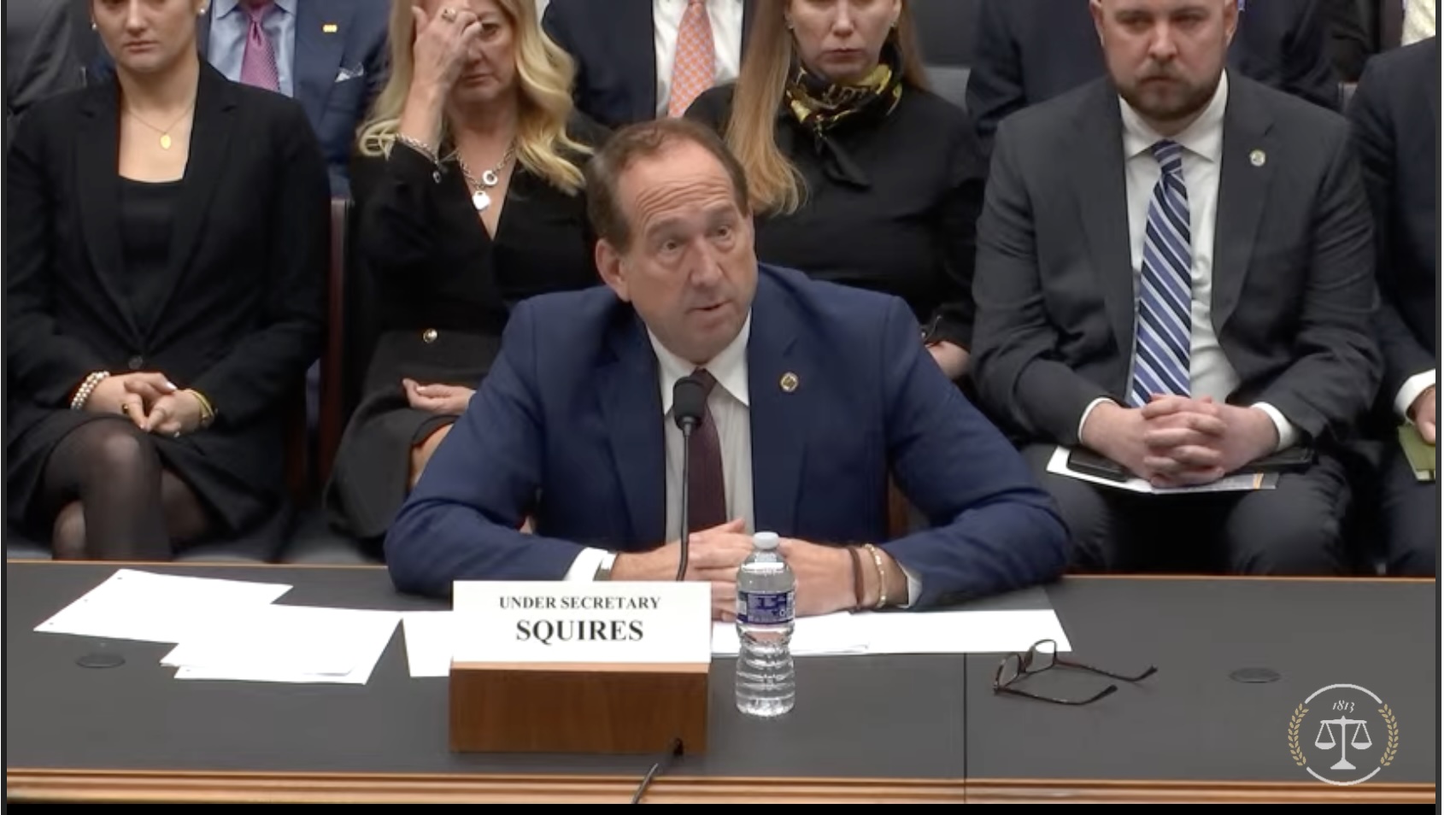 On Thursday, May 14, U.S. Patent and Trademark Office (USPTO) Director John Squires issued a Director Discretionary Decision in which he denied institution of an inter partes review (IPR) petition and marked the opinion precedential, underscoring six key principles that should guide whether the Office institutes America invents Act (AIA) proceedings.
Squires initially issued a Notice of Denial on March 23 in the case, but last week published a detailed opinion explaining his reasoning for denying institution to IPRs in general as well as in the instant case. The opinion emphasized that AIA proceedings were intended by Congress to be used as an alternative to litigation, not as a tool for harassment of patent owners, but that Patent Trial and Appeal Boar (PTAB) statistics over the last 15 years demonstrate that “many petitioners seek AIA review in parallel with litigation to gain litigation leverage,” and that petitioner practices such as serial petitions, subsequent petitions following a loss in other forums, and inconsistent positions between forums reveal misuse of the system.
Furthermore, who is using the system most indicates a problem, said the opinion. While Squires has emphasized that the extent of U.S.-based operations and small business status are important factors in determining whether to institute AIA trials, the precedential opinion noted that 15 years of data shows that “a handful of market dominant companies have filed most petitions for AIA review.” One study shows that “the top ten petitioners—most, if not all, of whom are market dominant companies—filed roughly 1,900 petitions, while the next 70 petitioners combined filed roughly the same number.”
Finally, AIA reviews are more focused on the public interest than the private dispute between parties, which is the proper purview of district court litigation. “The breadth of a court’s scrutiny over patent validity is greater than the Office’s in an AIA review and courts are, and always have been, the primary forum for adjudicating private disputes,” said the decision. And with respect to Director Discretion, the public interest factor is key and should be discussed in all petitions and responses to assist the Office in its decision making.
Squires also listed several illustrative decisions to help determine whether discretionary denial will be exercised. These include Padagis US LLC v. Neurelis, Inc., IPR2025-00464, Paper 12 (Director July 16, 2025) (informative), which dealt with examiner error; Revvo Techs., Inc. v. Cerebrum Sensor Techs., Inc., IPR2025-00632, Paper 20 (Director Nov. 3, 2025) (precedential), which dealt with different claim constructions in different forums; Tianma Microelectronics Co. v. LG Display Co., IPR2025-01579, Paper 12, which dealt with foreign sovereigns; and both Home Depot U.S.A., Inc. v. H2 Intellect LLC, IPR2025-00480, Paper 11 (Director Sept. 4, 2025) (informative) and Dabico Airport Sols. Inc. v. AXA Power ApS, IPR2025-00408 (Director June 18, 2025) (informative), which dealt with settled expectations.
Turning to the case at hand, then, Squires explained that the petitioner, Magnolia Medical Technologies, Inc., was attempting to use the IPR process “to obtain a second bite at the apple after losing in district court.”
Prior to the IPR petition, a jury found Kurin, Inc.’s patent not invalid, and Magnolia’s expert’s testimony on anticipation and obviousness grounds was precluded from being presented to the jury. Kurin argued this weighed against institution as the grounds were similar to those presented in the petition, while Magnolia argued the exclusion of the testimony should weigh in favor of institution.
But Squires disagreed with Magnolia, explaining that granting institution would “fly in the face of the Congress’s stated goals for the AIA to be used as a litigation alternative.”
“The lack of a jury verdict as to anticipation or obviousness in the now-completed jury trial does not entitle Petitioner to re-litigate the same issues at the Office,” Squires added.
The expert’s testimony was precluded due to his failure to disclose the claim construction on which he relied, “something that was in Petitioner’s control.” To grant institution would be to allow for a repeat challenge or second bite at the apple and would be contrary to the goals of the AIA, concluded the decision.
![[Advertisement]](https://ipwatchdog.com/wp-content/uploads/2026/07/IP-Author-Aug-13-2026-sidebar-700x500-1.jpg)
![[Advertisement]](https://ipwatchdog.com/wp-content/uploads/2026/08/LexisNexis-Aug-18-2026-banner-1500x500-1.jpg)
![[Advertisement]](https://ipwatchdog.com/wp-content/uploads/2026/08/Junior-Aug-20-2026-sidebar-700x500-1.jpg)
![[Advertisement]](https://ipwatchdog.com/wp-content/uploads/2026/07/Womens-IP-Forum-2026-sidebar-register-early-bird-now-700x500-1.jpg)
![[Advertisement]](https://ipwatchdog.com/wp-content/uploads/2026/07/ClearstoneIP-Varsity-Ad-2026-Ad-1.jpg)
![[Advertisement]](https://ipwatchdog.com/wp-content/uploads/2026/07/Juristat-Varsity-Ad-2026-IPW-ad-FreeTrial_2-UPDATED-on-Jul-15-2026.png)
![[Advertisement]](https://ipwatchdog.com/wp-content/uploads/2024/09/Patent-Prosecution-Training-sidebar-700x500-2025-03-27.jpg)







![[Advertisement]](https://ipwatchdog.com/wp-content/uploads/2021/12/WEBINAR-336-x-280-px.png)
![[Advertisement]](https://ipwatchdog.com/wp-content/uploads/2021/12/Ad-4-The-Invent-Patent-System™.png)





Join the Discussion
One comment so far. Add my comment.
Pro Say
May 18, 2026 11:20 amBravo Director Squires!
We 1,000’s of Independent American Inventors thank you from the bottom of our hearts for — against the pressure you’re receiving from the biggest innovation-stealing infringers the world has ever known — continuing to quickly make the PTAB into the entity our Congress always intended.
No more shenanigans on your watch!
Add Comment