
![[IPWatchdog Logo]](https://ipwatchdog.com/wp-content/themes/IPWatchdog%20-%202023/assets/images/temp/logo-small@2x.png)

 0
0 “If solution providers achieve their objectives, available AI tools may markedly shift the corporate decision-making calculus in favor of insourcing more IP work.”
“Law firms face cliff edge as clients prepare to insource with AI, survey finds,” EIN Presswire, Feb. 10, 2026
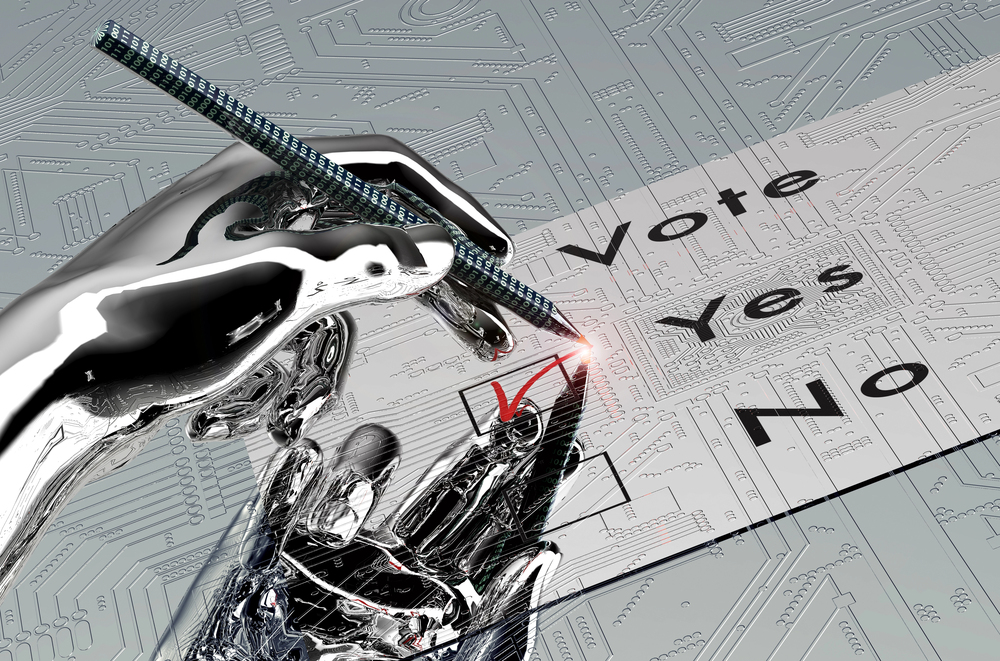 “Should we insource IP work?” This perennial question is posed by in-house professionals and organizational leaders in corporations, universities, and other institutions—and dreaded by outside IP counsel, who fear loss of insourced client business.
Deceptively binary and straightforward, the insourcing question often can’t be answered without in-house teams first exploring a host of underlying considerations. Their decision-making calculus may confront grey areas and vexing tradeoffs, ultimately coming down to rough cost-benefit analyses and gut instincts.
Practitioners increasingly believe that AI will dramatically alter the insourcing landscape as we’ve come to know it. To help validate this belief, it’s instructive to deconstruct how corporate IP functions think about insourcing and highlight how AI may erode traditional impediments to bringing work in house. Likewise, with greater insight, outside IP counsel can proactively partner with corporate teams to devise hybrid insourcing models for mutual benefit.
Reasons to Insource IP Work
IP insourcing involves a corporate IP, legal, or business team performing tasks that otherwise would or could be delegated to outside counsel or other service providers. The insourced work may be performed by in-house personnel by brute force or automatically or semi-automatically with the aid of technology. Notably, insourcing may necessitate large expenditures in the form of employee salaries and/or payments to solutions or service providers that supply application software, technology infrastructure, or other services.
A corporate IP team’s decision to insource IP work commonly is based on one or more of these drivers:
- Cost Savings. The opportunity to substantially reduce outside IP spend often is touted as a primary driver for insourcing. Organizations may differ in how they define “substantially,” but ongoing savings of at least 20% to 25% may get the attention of decision-makers, especially if the anticipated collective benefits of intended insourcing are not materially offset by perceived impediments such as discussed below.
- Efficiency Improvements and Time Savings. In many enterprises, group resources and individual team member bandwidths are constantly stretched thin. Insourcing avenues promising greater efficiencies and saved personnel time may weigh in favor of a positive insourcing decision.
- Client Centricity. The North Star of a high-performing in-house team is to zealously and effectively serve the organization and its internal clients. Outsourcing of client-facing IP needs inherently creates disconnects between internal clients and their supporting in-house teams. While individual disconnects may have limited effect—particularly, where in-house teams have extensive touchpoints independent of outsourced matters—other disconnects may cumulatively constrain the potential of internal collaboration. Accordingly, enterprises sometimes insource work to get, and stay, closer to the business.
- Institutional Knowledge. Over time, extensive outsourcing, or limited outsourcing of key matters, may impair the building of a storehouse of institutional knowledge within in-house teams. This can slow teams down, lead to suboptimal decision-making, and create unhealthy and at times costly dependencies on external providers. Conversely, by deploying internal team members on the front lines of matters, insourcing can help enterprises acquire and exercise greater self-sufficiency and self-determination.
- Philosophical or Political Drivers. Sometimes positive insourcing decisions are motivated by more intangible drivers, such as the belief that bringing work inside is intrinsically beneficial, or that doing so builds political capital within an organization. If philosophical or political concerns have outsize importance, an organization may elect to insource even when an objective assessment would weigh against insourcing.
Reasons Not to Insource IP Work
Corporate teams that choose not to insource IP work, whether entirely or selectively (e.g., tied to categories or types of matters), often base their negative decision upon one or more of these impediments:
- Limited Cost Savings, Time Savings, or Efficiency Gains. When enterprises run the numbers, they may determine that a prospective insourcing structure, though operationally feasible, is not likely to deliver meaningful net improvements in expenditures, recapturing of employee time, and service speed. Therefore, they may decide that the proverbial juice is not worth the squeeze; paying more to external providers to avoid associated insourcing headaches may be the sounder approach.
- Distraction from Core Functions. Business-aligned in-house teams strive to devote each team member predominantly to high-value tasks suited to their respective role. Additionally, they continuously prioritize and re-prioritize among tasks depending on business demands. Insourcing options that are likely to disrupt and distract teams from collectively delivering maximal value often are rejected. These include options for which:
- The work to be potentially insourced is valuable but too time-intensive given team members’ other duties.
- The work to be potentially insourced is commoditized and of low value relative to what the team can and needs to deliver to the business.
- Insourcing will place onerous administrative burdens on the organization.
- The volume of contemplated insourcing is deemed too low to realize material benefits.
- Outside Provider Capabilities. Teams may decline to insource work that outside IP counsel or other service providers clearly are better positioned to undertake. This may include court or administrative IP litigation, patent application preparation and prosecution, IP clearance or freedom-to-operate analyses, and other matters requiring strategic inputs or special technical or legal expertise. It also may include maintenance fee and annuity payment management, international patent filings, and the like. For such matters, external providers may offer finely tuned substantive or operational expertise, deep benches of talent, and the ability to scale up or down to meet client demands.
- Risks and Rewards. Corporate IP or legal departments and executive leaders may prefer to delegate to outside providers matters presenting high or potentially high risks or rewards. By outsourcing such matters, businesses may benefit from more independent, fulsome assessments, as well as more intensive attention and representation. In the end, such outsourcing may provide greater legal protection and increase a business’s chances of mitigating risks and enjoying advantageous outcomes. Employees also may gain a measure of cover if something goes wrong, being less vulnerable to termination by the C-suite every time bad news arises or mistakes occur.
- Inertia or Management Philosophy. Some in-house teams don’t insource, let alone explore the possibility of insourcing, for reasons unrelated to its potential advantages or disadvantages. Some may have never insourced and are happy with the status quo. Others may feel so inundated and overwhelmed by internal client demands that they can’t imagine clawing back even a portion of the types of work they historically have sent outside. Still others believe in structuring their internal IP function as leanly as possible; they trust in their or their designees’ ability to strategically and cost-effectively marshal and manage external resources.
How AI Makes Insourcing More Viable
Although still maturing, specific- and general-purpose assistive AI solutions target or are adaptable to a dizzying multitude of needs, pain points, and opportunities in the IP ecosystem.
Available solutions address aspects such as invention mining and capture, brand selection, application drafting, prosecution, patentability, registrability, clearance, validity, landscape, whitespace, and infringement analyses, competitive intelligence, IP asset management, docketing, pruning, and analytics, brand enforcement, litigation analytics and outcome prediction, capture of trade secrets and other proprietary information, licensing and transaction diligence, and patent valuation and monetization. Increasingly, solutions also include collaboration and automation workflow functionalities spanning individuals, groups, and organizations.
Though tools may differ widely in focus, common threads have emerged. AI providers aim to commercialize solutions that save significant time, raise quality, promote frictionless collaboration, and empower their users to operate with a higher degree of sophistication and independence.
If solution providers achieve their objectives, available AI tools may markedly shift the corporate decision-making calculus in favor of insourcing more IP work. Indeed, powerful, user-aligned tools likely will support all or most of the positive drivers above, with fewer associated impediments compared to present day.
Such tools may enable in-house teams to take on functions formerly solely performed by outside providers at substantially lower cost, with improved efficiency and acceptable consumption of team bandwidth, and with fewer distractions. Further, by enabling expanded engagement with internal clients, AI tools may allow corporate teams to achieve higher levels of client centricity. More hands-on, direct involvement of internal personnel also may increase teams’ possession and retention of institutional knowledge. AI tools also may capture institutional knowledge of enterprise personnel in unprecedented ways.
As the AI-native future emerges, stories of successful AI-enabled insourcing and practice transformation may increasingly abound. Influenced by these and other shifts within and outside the IP and legal ecosystem, AI-forward mindsets and expectations may become normalized amongst corporate decision-makers. As adoption of AI and insourcing becomes the gold standard in enterprises, organizational inertia or objections may abate.
Hybrid Models Are the IP Ecosystem’s Silver Bullet
Early corporate adopters of AI tools to support IP task insourcing, and law firms and other providers asked to ingest AI content supplied by their clients, can attest to mixed results. AI can and often does provide value, but it also can generate extraneous and erroneous content that must be sifted through at the expense of strategic speed and focus. Yet, many can envision a not-too-distant future in which then-existing solutions make good on many of AI’s aspirational promises.
Nevertheless, it’s difficult to imagine a world in which most in-house teams could satisfactorily insource all IP and legal needs all the time. Outside counsel and other providers possess expertise, capabilities, and scale that, for certain kinds of matters, likely eclipse what a corporate operation could offer or would reasonably wish to replicate. Few in-house teams want to take on everything, cognizant that complete responsibility may undermine their ability to competently rise to every occasion on behalf of high-demand, evolving businesses.
As such, the ideal corporate model of the future is likely hybrid in nature. Appropriate types of matters will continue to be fully outsourced to outside counsel and providers, the difference being that such entities will be AI-driven for their and their clients’ benefit.
Other types of matters that can be effectively managed in house will be fully insourced, also utilizing AI, such as selected transactional matters, standard agreements, or the coordination of foreign filings.
Still other types of matters will be segmented into both insourced and outsourced components. For example, in-house teams may employ AI to partially insource patent application preparation for incremental product improvements, taking the laboring oar on aspects such as harvesting inventions with internal technologists, preparing robust invention disclosures, and developing structured drafting packages. Fruits of these efforts may then be provided to outside counsel, which remains responsible for legal judgment, claim architecture, filing strategy, and quality control.
AI-Enabled Collaboration Is Essential
No matter which tasks are insourced or outsourced, in-house IP and legal teams, outside counsel, and other service providers should adopt AI-based tools that enable seamless internal and external collaboration, minimize needless compartmentalization, and ensure relevant knowledge capture. Such tools will be foundational to stakeholders actualizing value-driven, high-impact, agile, and sustainable operating models that powerfully blend aspects of self-determination, self-sufficiency, reliance upon external parties with complementary strengths, and the cultivating of collaborative relationships.
Join the Virtual Artificial Intelligence Masters 2026 Program for free today to learn more about the latest issues surrounding the intersection of AI and IP.
Image Source: Deposit Photos
Author: the_lightwriter
Image ID: 116249824
![[Advertisement]](https://ipwatchdog.com/wp-content/uploads/2026/05/Protege-in-PatentSight-spotlight-350x250-Ad-B.png)
![[Advertisement]](https://ipwatchdog.com/wp-content/uploads/2026/05/Anaqua-May-21-2026-sidebar-700x500-1.jpg)
![[Advertisement]](https://ipwatchdog.com/wp-content/uploads/2026/04/Virtual-AI-2026-May-18-19-2026-sidebar-CLE-last-chance-700x500-1.jpg)







![[Advertisement]](https://ipwatchdog.com/wp-content/uploads/2021/12/WEBINAR-336-x-280-px.png)
![[Advertisement]](https://ipwatchdog.com/wp-content/uploads/2021/12/Ad-4-The-Invent-Patent-System™.png)




Join the Discussion
No comments yet. Add my comment.
Add Comment