


 3
3 “Section 256 assumes conception happened and only needs to be found. Fortress Iron shows what happens when even a conceded conception cannot be traced to a person who can be reached.”
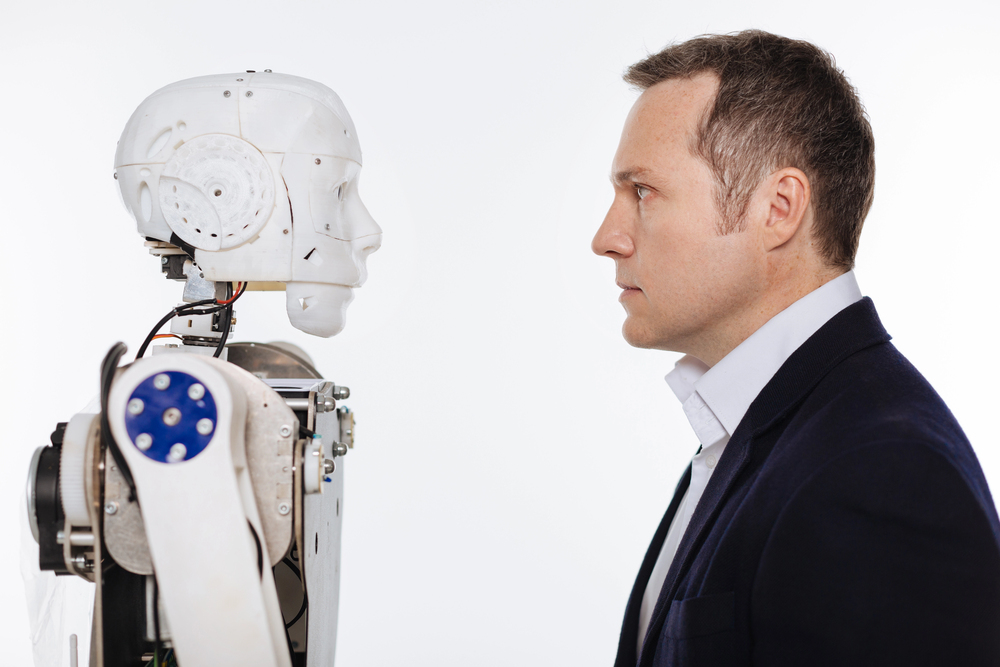 Under 35 U.S.C. Section 256, one can only correct an inventorship error when the underlying facts and the affected parties can actually be identified, and when the statutory correction procedure can be completed. AI-assisted invention is starting to produce cases where none of that is possible: the development record shows plenty of human activity, but nothing in it establishes which person actually conceived the claimed invention. After Fortress Iron, LP v. Digger Specialties, Inc., No. 2024-2313 (Fed. Cir. Apr. 2, 2026, that kind of gap can turn into a validity problem, not just a paperwork one.
In Fortress Iron, the Federal Circuit held that “a patent which incorrectly lists its inventor(s) and cannot be corrected according to law is invalid.” The opinion involved an omitted coinventor whose identity nobody disputed — the problem was that he couldn’t be found. AI-assisted development raises a harder version of the same issue: the record may not establish whether anyone beyond the named inventors conceived the invention at all, let alone who.
That distinction matters because Section 256 is a procedural mechanism as much as a substantive one. Section 256(a) allows administrative correction on application of all parties and assignees, with proof of the facts. Section 256(b) allows judicial correction only on notice and hearing of all parties concerned. Both routes assume the relevant people can be identified and the facts can be proven — neither works on a record that can’t do either.
Fortress Iron and the Limits of Section 256
A patent has to name the people who actually invented its claimed subject matter. 35 U.S.C. §§ 115(a), 116(a). Leaving one out invalidates the patent, as the Federal Circuit explained in Pannu v. Iolab Corp., 155 F.3d 1344, 1348–49 (Fed. Cir. 1998). Section 256 exists to fix that kind of mistake, and the America Invents Act made it more forgiving by dropping the old requirement that the omission be innocent. Fortress Iron is the case that shows the limits of that forgiveness.
Fortress’s owner and an employee had developed pre-assembled cable railing panels with help from two employees of a Chinese quality-control liaison, Alfonso Lin and Hua-Ping Huang, who suggested changes to the tensioning mechanism. The issued patents named only the Fortress personnel. Once litigation started, Fortress conceded that Lin and Huang were coinventors. It found Lin and added him under § 256(a). Huang had left his employer years earlier without leaving a forwarding address, and nobody could find him. The district court denied correction, held the patents invalid, and the Federal Circuit affirmed.
The court’s reasoning had four pieces. An omitted coinventor counts as a “party concerned” under § 256(b) no matter what economic stake he has, because being named an inventor “carries legal, financial, and ownership consequences that an inventor has a right to contest.” Section 256 saves a patent only when its own requirements are actually met — it isn’t a general-purpose escape hatch. Where an inventorship error can’t be corrected that way, the patent is invalid; the statute’s negative implication does that work on its own. And the AIA’s repeal of Section 102(f) never touched the requirement that real inventors be named — it just removed the old rule punishing non-inventors who tried to patent something. Reading Section 100(f)’s definition of “inventor” as “the individuals collectively” who invented the claimed subject matter, the court put the point bluntly: “’Whoever’ does not mean less than all.”
So, the boundary is narrow but firm. Section 256 saves a patent when correction can actually happen. It does nothing when correction is legally impossible — and Fortress Iron treats “impossible” broadly enough to include an inventor who simply can’t be located.
AI Makes the Evidentiary Problem Harder
Inventorship is a legal conclusion resting on a factual one: conception, “the formation in the mind of the inventor[] of a definite and permanent idea of the complete and operative invention.” Burroughs Wellcome Co. v. Barr Labs., Inc., 40 F.3d 1223, 1228 (Fed. Cir. 1994). For joint inventors, the contribution has to be significant, not trivial next to the invention as a whole, and more than restating what was already known. Pannu, 155 F.3d at 1351.
AI-assisted workflows generate a lot of material that fails that test. A prompt tells you what problem someone was trying to solve, not that they had already solved it — “propose a mechanism that resists rotation during installation” is a research goal, not a definite and permanent idea, however precisely it is timestamped and attributed to a named engineer. Model output has the same problem in reverse: it can corroborate that a system produced something and that a human interacted with it, but not that any particular person possessed the invention. More records, in other words, can mean more proof of activity and no more proof of conception.
It gets worse where the human’s actual contribution was choosing among machine-generated options. An engineer who can explain why one candidate works and the others do not has, in substance, described the invention with the particularity the law demands. One who cannot has done something closer to what the joint-inventorship cases refuse to credit. The trouble is that organizations keep the deliverable and throw away the alternatives, which is exactly where the evidence of that judgment lived.
Multi-person teams add a second layer. The U.S. Patent and Trademark Office’s (USPTO’s) current guidance drops Pannu as between a human and an AI system but keeps it for disputes among humans, so a team still has to show both individual conception and how the credit gets divided. Where ideas move back and forth between engineers and a model over weeks, the intermediate record that would normally show whose idea was whose was often generated by the machine.
That is a different failure than Fortress Iron. Fortress knew exactly who Huang was; the problem was finding him. In an AI-assisted dispute, the prior question — whether an uncredited contributor exists at all, or which of several people actually conceived the invention — may have no answer in the record. And that defeats correction earlier than Fortress Iron ever had to consider: Section 256(a) needs an application from all the parties, Section 256(b) needs notice to all parties concerned, and nobody can join or notice someone whose status as coinventor the record cannot establish.
None of this means every AI-assisted patent is one thin record away from invalidity. Fortress conceded that Lin and Huang were coinventors; a patentee facing a genuinely contested claim keeps the presumption of validity, and the challenger has to prove otherwise by clear and convincing evidence. A record too thin to show who conceived is, by the same token, too thin for a challenger to prove that a named inventor did not. But that comfort has limits. Contributors get identified and conceded once discovery starts — that is exactly how Lin and Huang surfaced. Even a losing inventorship challenge is expensive to defend. And the presumption does no work at all in licensing diligence or in a derivation proceeding, where it is the patentee who has to affirmatively show who invented what, not the other way around.
What Happens When Correction Fails
The immediate consequence is validity risk, resolved as readily on summary judgment as at trial, and it is generally not something claim amendment can fix, because the defect is in who conceived, not in how the claims are worded.
It does not stop at validity. Each coinventor presumptively owns an undivided interest in the whole patent. 35 U.S.C. § 262; Ethicon, Inc. v. U.S. Surgical Corp., 135 F.3d 1456, 1465 (Fed. Cir. 1998). An unnamed coinventor who never assigned his rights can exploit the invention without accounting to anyone, which turns inventorship uncertainty into a standing and chain-of-title problem that shows up in licensing and diligence long before it shows up in litigation.
Inequitable conduct is a smaller worry than it looks. Therasense, Inc. v. Becton, Dickinson & Co., 649 F.3d 1276 (Fed. Cir. 2011) (en banc), requires but-for materiality and specific intent to deceive, and a thin record is not evidence of intent. It does make the allegation cheap to plead and hard to dispose of early, which is its own kind of cost.
Derivation proceedings under 35 U.S.C. § 135 run on a clock measured from publication. A patentee who cannot reconstruct its own development history inside that window loses regardless of the merits — the purest version of “uncorrectable” there is.
The 2025 USPTO Guidance Doesn’t Solve This
The USPTO’s Revised Inventorship Guidance for AI-Assisted Inventions, 90 Fed. Reg. 54,636 (Nov. 28, 2025), treats AI as a tool like any other — laboratory equipment, software, a research database — and applies the ordinary conception standard uniformly, keeping Pannu only for disputes among humans. That is a clean rule for an examiner working from a fresh record. It has nothing to say about a court reconstructing the same question years later from a record built for product development, not litigation. And it is examination policy, not a construction of the statute; it can change with the next administration, and Fortress Iron cannot.
Building a Record That Survives
The fix is not more documentation. It is the right documentation, captured at the time rather than reconstructed for the file. A conception statement, written by the actual inventor rather than assembled later by counsel, should name a date and a person, describe the solution rather than the goal, and say plainly what the AI system did and did not contribute. Candor here helps; a claim of unassisted conception that the rest of the record contradicts is worse than no statement at all.
Where judgment took the form of choosing among generated options, keep the options that got rejected and the reason they did — that is where the evidence of understanding lives, not in the option that shipped. Treat prompts and model output as corroborating context, not proof of conception, so nobody mistakes volume for substance. In team settings, document contributions against the Pannu factors while the memory is fresh. And run an inventorship review before filing that asks specifically about AI use and about contractors, consultants, and third-party personnel — Fortress Iron‘s omitted coinventors worked for an outside supplier, which is the pattern to plan for rather than the exception. Keep contact information for everyone involved past the end of any engagement; on the facts of Fortress Iron, that alone would have saved both patents.
Plan Now for the AI-Assisted Future
Section 256 assumes conception happened and only needs to be found. Fortress Iron shows what happens when even a conceded conception cannot be traced to a person who can be reached. AI-assisted development pushes the same problem back a step: not that conception did not happen, but that nothing written down can prove who it happened to. The records that will settle that question are being created right now, by people who do not think of themselves as building evidence. The point of doing it deliberately is not to satisfy an examiner today. It is to have something left to correct if someone asks the question in five years.
![[Advertisement]](https://ipwatchdog.com/wp-content/uploads/2026/10/Questel-Oct-22-2026-sidebar-700x500-1.jpg)
![[Advertisement]](https://ipwatchdog.com/wp-content/uploads/2026/10/ClaimHit-Oct-28-2026-sidebar-700x500-1.jpg)
![[Advertisement]](https://ipwatchdog.com/wp-content/uploads/2026/10/Patsnap-Oct-29-2026-sidebar-700x500-1.jpg)
![[Advertisement]](https://ipwatchdog.com/wp-content/uploads/2026/09/Life-Sciences-2026-sidebar-early-bird-ends-Oct-25-700x500-1.jpg)
![[Advertisement]](https://ipwatchdog.com/wp-content/uploads/2026/09/WE-BUY-PATENTS-SIM-IP-Ad-1-revised-on-Sep-28-2026-700x500-1.jpg)
![[Advertisement]](https://ipwatchdog.com/wp-content/uploads/2024/09/Patent-Prosecution-Training-sidebar-700x500-2025-03-27.jpg)








![[Advertisement]](https://ipwatchdog.com/wp-content/uploads/2021/12/WEBINAR-336-x-280-px.png)
![[Advertisement]](https://ipwatchdog.com/wp-content/uploads/2021/12/Ad-4-The-Invent-Patent-System™.png)





Join the Discussion
3 comments so far. Add my comment.
Pro Say
September 10, 2026 03:12 pmWhat Anon said.
Pay close attention, my fellow indy inventors:
A patent utilizing AI isn’t worth the paper it’s printed on.
Something you don’t want to realize after an infringer has torched your patent.
Anon
September 10, 2026 07:55 amLack of candor is an ethical violation of the duties of both applicant and applicant’s registered practitioners.
Such will K I L L the result (if obtained) of a granted patent, and may come to light at the very worst time – the time of trying to enforce the patent.
Jonas McDavit
September 8, 2026 09:44 amPaul, interesting article. In your mind, does a first-to-file system (versus the pre-AIA first-to-invent system) exacerbate or ameliorate the difficulty of recording AI-assisted inventorship? I can see it both ways: a first-to-file system eliminates the need for much of the record-keeping you talk about because who conceived of an invention first is no longer a factor in awarding a patent. Alternatively, we now incentivize a rush to filing, so the financial incentives would to be less candor and more sloppiness in a patent application.
Add Comment