
![[IPWatchdog Logo]](https://ipwatchdog.com/wp-content/themes/IPWatchdog%20-%202023/assets/images/temp/logo-small@2x.png)

 0
0 “The district court concluded that the risk of harm to Gilead’s ‘good will and reputation among the patient and healthcare providing relevant community is stark and acute.’”
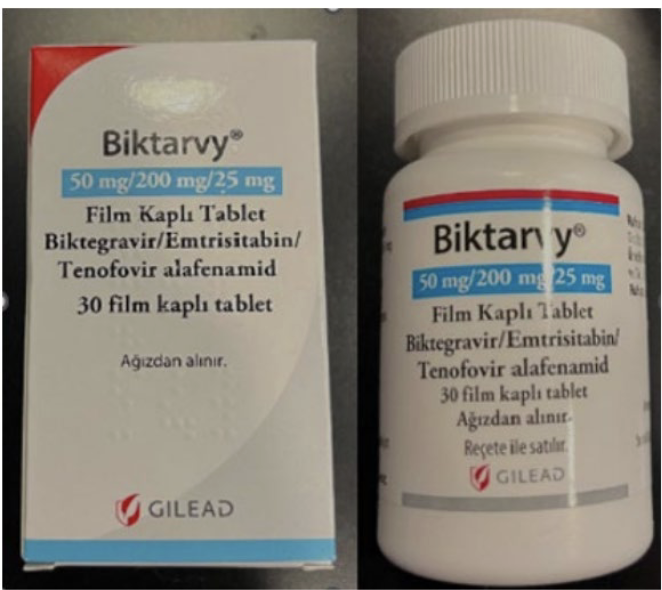 The U.S. Court of Appeals for the Fourth Circuit affirmed a preliminary injunction in a decision on August 13 barring Meritain Health, Inc., ProAct, Inc., Rx Valet, LLC, Advanced Pharmacy, LLC, Aqua Enterprise Inc., and Gregory Santulli from importing, advertising, or facilitating the importation of foreign-market Gilead Sciences, Inc. medications into the United States. Judge Agee wrote the opinion on appeal from the U.S. District Court for the District of Maryland, joined by Judge Harris and Senior Judge Keenan.
The dispute began after a Maryland patient identified in the record as John Doe received a Turkish version of Gilead’s HIV medication Biktarvy in the mail. Gilead’s investigation into that report uncovered a broader importation arrangement. Doe’s employer had separately retained Rx Valet as an alternative funding program, which sourced certain medications internationally rather than through the domestic pharmacy network administered by Meritain, Doe’s plan’s third-party administrator, and ProAct, its pharmacy benefit manager. When Doe attempted to refill his prescription, ProAct’s system directed him to Rx Valet, which routed the order through Advanced Pharmacy and Affordable Rx Meds to a Turkish pharmacy that shipped the medication directly to Doe.
Gilead filed a lawsuit in the District of Maryland in December 2024 against Rx Valet, Advanced Pharmacy, Affordable Rx Meds, Santulli, Meritain, and ProAct, by asserting trademark infringement and unfair competition claims under the Lanham Act. Gilead alleged the Quartet directly infringed its trademarks by importing and distributing foreign-market medications materially different from the domestic versions, and that Meritain and ProAct contributed to that infringement by continuing to supply services despite knowing or having reason to know of the scheme. Following a two-day evidentiary hearing, the district court converted a previously entered temporary restraining order into a preliminary injunction, and Meritain, ProAct, and the Quartet then pursued this interlocutory appeal.
The Fourth Circuit reviewed the district court’s decision for abuse of discretion under the four-factor standard from Winter v. Natural Resources Defense Council, Inc. and found no error. The court concluded that the Federal Food, Drug, and Cosmetic Act did not preclude Gilead’s claims, since Gilead’s infringement theory rested on material differences between the domestic and foreign products rather than on any FDA regulatory determination.
The central question was whether the imported medications were “genuine” within the meaning of the Lanham Act. The material-differences doctrine provides that goods are not genuine if the trademark owner has not authorized them for domestic sale and they differ materially from the goods authorized for sale domestically. The court explained that it applies “a low threshold of materiality, requiring no more than a slight difference which consumers would likely deem relevant when considering a purchase of the product,” quoting the Second Circuit’s decision in Zino Davidoff SA v. CVS Corp. The Turkish-labeled Biktarvy omitted an “Rx only” symbol, the drug’s National Drug Code number, storage instructions, and a black box warning regarding Hepatitis B risk that appears on domestic packaging. The court found these omissions material regardless of the medications’ identical chemical composition.
The quality-control doctrine led to the same result because Gilead’s internationally sourced medications bypassed its temperature-monitoring protocols, traceability systems, and recall procedures. According to the court, this placed the medications outside the manufacturer’s established safeguards. Either defect independently supported a likelihood of confusion, and the court noted that together they made Gilead’s showing “especially strong.”
Meritain and ProAct argued that Inwood Laboratories, Inc. v. Ives Laboratories, Inc. required prior notice of specific infringement before they could be held liable for contributory infringement. The Fourth Circuit rejected that reading, explaining that a defendant may be held liable for continuing to supply products or services to those it knows or has reason to know are infringing, without any requirement of formal notice from the trademark holder.
Internal Meritain records contradicted the company’s stated policy against supporting international sourcing. In one internal email cited in the opinion, a Meritain analyst flagged an invoice for internationally sourced Gilead medications and wrote that the situation reflected “exactly what we said we would not do.” A Meritain pharmacy director responded, “that’s exactly what this is – an invoice for internationally sourced meds,” and later testified the company continued paying such invoices as a client service. Similar evidence supported ProAct’s knowledge, including testimony from its president acknowledging chemical and labeling differences between the domestic and Turkish-market Biktarvy.
The Fourth Circuit also declined to adopt a separate degree-of-control requirement for contributory liability advanced by out-of-circuit authority, holding that its own precedent under Rosetta Stone Ltd. v. Google, Inc. extends Inwood’s inducement-or-knowledge standard to service providers without any additional control element.
The ten-month gap between Gilead’s learning of Doe’s experience and its filing of suit did not undermine the presumption of irreparable harm under the Trademark Modernization Act. The court held that the delay reflected good-faith investigation rather than neglect. The district court concluded that the risk of harm to Gilead’s “good will and reputation among the patient and healthcare providing relevant community is stark and acute.” Arguments that consumer cost savings from imported medications outweighed the equities failed for a similar reason, since that argument assumed the imported products were genuine, which was a premise the court had already rejected.
Ultimately, the Fourth Circuit affirmed the preliminary injunction in full, holding that the district court did not abuse its discretion in granting Gilead’s motion.
According to a press release published by Patterson Belknap, which represented Gilead, the decision marks several “firsts,” including the first time the Fourth Circuit has adopted the material-differences doctrine; the “first reported decisions to find imported prescription medicines to violate the Lanham Act”; and the first time the Fourth Circuit has rejected the view “that under the Lanham Act the plaintiff must show a contributory infringer to have sufficient control over the means of infringement,” although it also found that Gilead would have satisfied that requirement if it existed.
![[Advertisement]](https://ipwatchdog.com/wp-content/uploads/2026/08/LexisNexis-Aug-18-2026-sidebar-700x500-1.jpg)
![[Advertisement]](https://ipwatchdog.com/wp-content/uploads/2026/08/Junior-Aug-20-2026-sidebar-700x500-1.jpg)
![[Advertisement]](https://ipwatchdog.com/wp-content/uploads/2026/07/Womens-IP-Forum-2026-sidebar-register-early-bird-now-700x500-1.jpg)
![[Advertisement]](https://ipwatchdog.com/wp-content/uploads/2026/07/Juristat-Varsity-Ad-2026-IPW-ad-FreeTrial_2-UPDATED-on-Jul-15-2026.png)
![[Advertisement]](https://ipwatchdog.com/wp-content/uploads/2026/07/ClearstoneIP-Varsity-Ad-2026-Ad-2.jpg)
![[Advertisement]](https://ipwatchdog.com/wp-content/uploads/2024/09/Patent-Prosecution-Training-sidebar-700x500-2025-03-27.jpg)



![[Advertisement]](https://ipwatchdog.com/wp-content/uploads/2021/12/WEBINAR-336-x-280-px.png)
![[Advertisement]](https://ipwatchdog.com/wp-content/uploads/2021/12/Ad-4-The-Invent-Patent-System™.png)






Join the Discussion
No comments yet. Add my comment.
Add Comment