


 2
2 “The psychological aspect of creativity has no readily identifiable analogue in the current wave of generative AI models.”
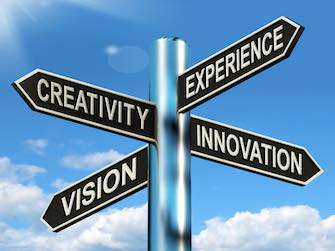 What is creativity? We all know that U.S. courts have ruled that authors and inventors have to be human under the copyright and patent laws. And many of us are familiar with the references to creativity in those rulings—as well as other cases involving authorship and inventorship. Similarly, we have an intuitive sense of what is (or is not) “creative.” But how many of us have taken a close look at what, exactly, makes something creative? And, if the requirement that authors and inventors be human is somehow tied to creativity, what aspects of creativity matter to IP law?
I recently had the opportunity to take a deep dive into these questions with a multidisciplinary group of scholars. On a recent sabbatical from my law firm, I went to Oxford University as an Academic Visitor and convened a working group to discuss and debate these questions. Here is some of what we learned.
Defining Creativity
We apply the term “creativity” to both artifacts – things or ideas – and to the mental process by which those artifacts are generated.
The creativity of artifacts can be referred to as external creativity. A standard definition of external creativity is that an artifact that is new and valuable is considered to be creative. (Sometimes, there is a third element to the definition—that the artifact is surprising). In other words, some things that are completely novel may be gibberish, and in that sense are not considered creative. The additional requirement that it be surprising is sometimes added because something that is new and valuable, in the sense that it didn’t exist before and there’s a market for it, may nonetheless not be considered creative because it’s completely predictable or derivative. External creativity could apply equally to human-produced artifacts as well as things occurring in nature. Consider some evolutionary adaptation that increases the ability of a species to thrive or survive. It’s new and (in a sense) valuable. If we focus solely on external creativity, the outputs of generative AI (GAI) might be considered to meet the definition of creative –they are often novel (in the sense that the precise image or combination of words did not exist before), they are sometimes valuable (whether measured in monetary—early AI-generated images sold for hundreds of thousands of dollars–or broader cultural terms), and they can be surprising.
Creativity in the psychological sense is what we have in mind when we talk about ideas or thought processes being creative. Sometimes psychological creativity occurs in a lightning-bolt of inspiration, and sometimes it comes in the form of insight earned after a lengthy period of laborious effort. Creativity occurs in many fields of endeavor, including the arts and the sciences. Based on recent scholarship in neuroscience as well as the philosophy of creativity, we understand psychological creativity to be an interaction between the task-focused parts of our brain (the Central Executive Network, or CEN) and the daydreaming, free-association parts of our brain (the Default Mode Network, or DMN), mediated by some capacity to flag connections or combinations that are meaningful or relevant (the Salience Network, or SN). All three components have important roles to play in creativity. For example, the geneticist whose research is focused on finding the cause for a particular disease doesn’t necessarily suddenly come up with a new symphony. Rather, the process is primed by domain knowledge (in this example, the knowledge of genetics) and the task-focus of the research. But key insights – perhaps combinations of ideas from other domains, or new ways of viewing the existing knowledge – may emerge from the mental wanderings of the DMN. The DMN throws off all kinds of random stuff; the good ideas are flagged by the SN, and the CEN can then refine them.
Looking closely at these external and psychological aspects of creativity, we realized there is a third important component embedded in them: the social context in which the creative process occurs. Considering the external aspect, to say that something is “valuable” requires that there be some social assessment, whether value is measured as monetary market value or some other way. Considering the psychological aspect, the salience function, where relevant ideas emerge from among other random, weird or nonsensical ones, also involves some framing around social rules or boundaries. To be sure, avant-garde creativity may push the envelope of these rules or boundaries, but even the avant-garde is defined in relation to those societal norms.
With this expanded understanding of creativity, we turned back to IP law. Is copyright really just focused on the external creativity of the artifact – the text, image, or music, for example? Similarly, is patent law focused on the creativity of the invention—the actual reduction to practice or constructive reduction to practice as expressed in the patent? Based on our examination of the case law – not just the cases imposing the requirement of a human author or inventor – we conclude that the psychological and social aspects also matter. And the psychological aspect of creativity has no readily identifiable analogue in the current wave of generative AI models.
GAI Doesn’t Make the Cut
For this reason, we concluded that it is not correct to argue that generative AI outputs are deserving of IP protection because they are sometimes “just as good as” human-generated artifacts that are IP-eligible. There is, of course, much more to be said on this subject, including future regulation of future AI. For more on that, you can read our White Paper, here.
Image Source: Deposit Photos
Author: stuartmiles
Image ID: 42108759
![[Advertisement]](https://ipwatchdog.com/wp-content/uploads/2026/10/IP-Copilot-Oct-13-2026-sidebar-700x500-1.jpg)
![[Advertisement]](https://ipwatchdog.com/wp-content/uploads/2026/10/Junior-Oct-15-2026-sidebar-700x500-1.jpg)
![[Advertisement]](https://ipwatchdog.com/wp-content/uploads/2026/10/BlackBox-IP-Oct-20-2026-sidebar-700x500-1.jpg)
![[Advertisement]](https://ipwatchdog.com/wp-content/uploads/2026/10/Questel-Oct-22-2026-sidebar-700x500-1.jpg)
![[Advertisement]](https://ipwatchdog.com/wp-content/uploads/2026/09/WE-BUY-PATENTS-SIM-IP-Ad-1-revised-on-Sep-28-2026-700x500-1.jpg)
![[Advertisement]](https://ipwatchdog.com/wp-content/uploads/2026/09/Life-Sciences-2026-sidebar-early-bird-date-corrected-700x500-1.jpg)
![[Advertisement]](https://ipwatchdog.com/wp-content/uploads/2024/09/Patent-Prosecution-Training-sidebar-700x500-2025-03-27.jpg)





![[Advertisement]](https://ipwatchdog.com/wp-content/uploads/2021/12/WEBINAR-336-x-280-px.png)
![[Advertisement]](https://ipwatchdog.com/wp-content/uploads/2021/12/Ad-4-The-Invent-Patent-System™.png)




Join the Discussion
2 comments so far.
Chris Mammen
August 6, 2024 03:08 pmThanks, Patrick! Responding to your question about whether the existing case law got it right, there just wasn’t time or space to address that in this project. But hopefully our analysis will provide a launching point for a reasoned discussion about where we go from here. More broadly, the interplay between IP law and the elements of the various components of creativity is interesting indeed — hard to paraphrase and worth reading the white paper.
Patrick Kilbride
August 6, 2024 08:29 amOutstanding! Thank you.
Your conclusions on the IP-eligibility of AI-generated artifacts point to existing case law. Do you also conclude that the law got it right (in terms of desirable outcomes for society)? In other words, have you considered whether we should or should not want AI generations to be IP-eligible? Maybe the white paper speaks to this.
I’m even more interested, though, in your broader exploration of creativity and its role as a basis for IP eligibility. I fear that the addition of “surprising” to “new and valuable” establishes a bar that little if any human activity could overcome. (Which is maybe the direction of travel of IP law today in the U.S.). Your genetics example makes the point. By its logic, was putting a man on the moon an unsurprising and “obvious” target, and does that make everything accomplished on the path to the moon “incremental and derivative?”
I would argue that newness is a technical matter for IP offices and the courts, utility and value are for the market to decide, and “surprising” or intrinsically creative – well, that’s what Nobel prizes are for.
Your thoughtful and insightful work meets my admittedly less rigorous definition of creativity and is very much appreciated. Congratulations and thank you!