


 0
0 “A petitioner must have a reasonable opportunity to respond to a claim construction first proposed after institution, but ‘a petitioner may not in reply rely on new prior art to teach a claim limitation.’” – Federal Circuit
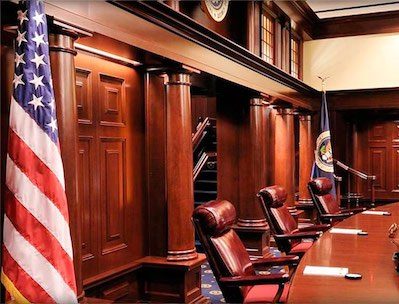 The U.S. Court of Appeals for the Federal Circuit (CAFC) on Monday handed SpaceTime3D, Inc. mixed results in two nonprecedential decisions involving graphical user interface patents challenged by Apple and Google.
In Apple Inc., Google LLC v. SpaceTime3D, Inc., the court affirmed a Patent Trial and Appeal Board (PTAB) decision upholding claims 1-13 of U.S. Patent No. 8,881,048 but finding claims 14-18 obvious. In a separate appeal, SpaceTime3D, Inc. v. Apple Inc., Google LLC, the CAFC affirmed the Board’s determination that all challenged claims of U.S. Patent Nos. 9,304,654 and 9,696,868 were obvious.
Judge Stark authored both opinions, which were joined by Judges Prost and Reyna.
Apple v. SpaceTime3D
The ’048 patent is directed to a graphical user interface (GUI) that lets users navigate webpages in both two-dimensional and simulated three-dimensional spaces. Images corresponding to webpages can be arranged at different depths in the 3D environment, and selecting an image causes the system to replace the 3D objects with a 2D window displaying the associated webpage.
Apple challenged claims 1-18 of the patent in inter partes review (IPR), principally relying on combinations of the Robertson, Gralla and Gettman references, as well as a second combination based on Sauve and Tsuda. The Board split the claims, finding Apple had failed to show claims 1-13 were unpatentable but had established that claims 14-18 were obvious.
The outcome turned on claim 1’s recitation of “the rendered first webpage.” The Board construed that phrase to mean “the rendered version from which the corresponding image was captured.” Thus, when the user moves from the 3D representation back to a 2D webpage, the claim requires the system to return to the version of the webpage that was rendered earlier, rather than render the page anew.
The Federal Circuit agreed with the Board’s reading. Claim 1 first requires “rendering the first and second webpages,” then capturing images from them, and later displaying a window containing “the rendered first webpage,” explained Stark. The use of the definite article “the” refers back to the earlier rendering step and identifies the particular version from which the image was captured, said the court.
The specification supported that construction by describing an embodiment in which the system reveals a 2D webpage that had been hidden or drawn off screen. In that scenario, the previously rendered, static version is redisplayed rather than a newly generated “live” version of the webpage.
That distinction saved claims 1-13. The Board found that Robertson and Gettman rendered a webpage in response to the user’s selection instead of restoring the previously rendered version from which the thumbnail had been captured, and the CAFC said substantial evidence supported that finding.
Apple argued in its IPR reply that conventional browser caching could supply the missing limitation by displaying webpages that had previously been rendered and stored in cache. But the Board declined to consider that theory, and the Federal Circuit found no abuse of discretion.
“A petitioner must have a reasonable opportunity to respond to a claim construction first proposed after institution,” said the CAFC, but “ ‘a petitioner may not in reply
rely on new prior art to teach a claim limitation.’” Apple had not relied on browser caching in its petition but added new references and expert testimony on the subject at the reply stage, and the Board therefore “reasonably concluded that Apple’s reply crossed that line,” concluded the CAFC.
Apple likewise failed to disturb the Board’s ruling on the Sauve-Tsuda combination. The Board did not improperly require an express disclosure of the previously rendered webpage, as Apple argued, but instead weighed Sauve and Apple’s expert testimony and reasonably found the expert had not adequately explained why a skilled artisan would understand Sauve to display the same version of the webpage used to create the thumbnail.
Claim 14 requires the 2D window to contain “the first webpage,” rather than “the rendered first webpage,” and the CAFC rejected SpaceTime3D’s bid to give the two phrases the same meaning. Claim 14 does not expressly require the earlier rendering step or state that the later window contains “the rendered” webpage and therefore encompasses a page rendered anew after the user interaction, said the court.
The Federal Circuit also upheld the Board’s findings that the prior art disclosed a “window within a two-dimensional (2D) space” and the claimed foreground and background relationship between objects in a 3D space, leaving claims 14-18 unpatentable as obvious.
SpaceTime3D v. Apple
The appeal over the ’654 and ’868 patents concerned GUIs for switching among applications by presenting images of the applications in 3D space and displaying a selected application in 2D. Their shared specification also describes using depth to represent time, creating a “visual history” of a user’s computing sessions.
Apple and Google challenged the claims as obvious over Anthony and Hanggie. Anthony disclosed visual representations of data objects arranged chronologically in a 3D timeline, while Hanggie disclosed application windows using 3D transformations. Apple proposed combining the references by substituting Hanggie’s application windows for the data objects in Anthony’s timeline. The Board found the combination taught the disputed limitations and held all challenged claims obvious.
SpaceTime3D first argued that a limitation ordering applications based on the last time a user “opened” an application “and interacted with” an object required separate timing determinations for both actions. The CAFC rejected that reading, finding the claim identifies three combined events, rather than six independently timed actions.
SpaceTime3D also tried to carry its successful construction of the ’048 patent into the ’654 and ’868 patents. According to the company, language requiring displayed images to be replaced with “said” objects meant the system had to return to the same previously generated object in its earlier application-specific state.
Pointing to its concurrently issued ’048 decision, the Federal Circuit said the construction of “the rendered first webpage” did not control different claim language that lacked the ’048 patent’s express rendering step and antecedent basis.
“Although ‘said’ refers back to previously identified objects, nothing in the claim language requires that those objects return in the same state in which they previously existed,” the court explained.
The CAFC also rejected SpaceTime3D’s argument that the Board had improperly blurred the distinction between “images” and “objects.” The claims treat them as distinct elements but do not require mutually exclusive functionality, said the court, and Hanggie’s disclosure of textured 3D counterparts for underlying 2D application windows amounted to substantial evidence supporting the Board.
Finally, the court found substantial evidence supported the Board’s determination that selecting and maximizing a window from the combined Anthony-Hanggie 3D timeline replaces the 3D display with the corresponding application in 2D. It therefore affirmed the Board’s invalidation of all challenged claims of both patents.
![[Advertisement]](https://ipwatchdog.com/wp-content/uploads/2026/10/Junior-Oct-15-2026-sidebar-700x500-1.jpg)
![[Advertisement]](https://ipwatchdog.com/wp-content/uploads/2026/10/BlackBox-IP-Oct-20-2026-sidebar-700x500-1.jpg)
![[Advertisement]](https://ipwatchdog.com/wp-content/uploads/2026/10/Questel-Oct-22-2026-sidebar-700x500-1.jpg)
![[Advertisement]](https://ipwatchdog.com/wp-content/uploads/2026/09/WE-BUY-PATENTS-SIM-IP-Ad-1-revised-on-Sep-28-2026-700x500-1.jpg)
![[Advertisement]](https://ipwatchdog.com/wp-content/uploads/2026/09/Life-Sciences-2026-sidebar-early-bird-date-corrected-700x500-1.jpg)
![[Advertisement]](https://ipwatchdog.com/wp-content/uploads/2024/09/Patent-Prosecution-Training-sidebar-700x500-2025-03-27.jpg)








![[Advertisement]](https://ipwatchdog.com/wp-content/uploads/2021/12/WEBINAR-336-x-280-px.png)
![[Advertisement]](https://ipwatchdog.com/wp-content/uploads/2021/12/Ad-4-The-Invent-Patent-System™.png)






Join the Discussion
No comments yet. Add my comment.
Add Comment