
![[IPWatchdog Logo]](https://ipwatchdog.com/wp-content/themes/IPWatchdog%20-%202023/assets/images/temp/logo-small@2x.png)

 0
0 “The Federal Circuit found no [APA] violation, noting the PTAB explained its construction of “utilized by” via reference to the patent’s claim language, detailed description, prosecution history, and separately explained why the prior art satisfied that limitation based on the record.”
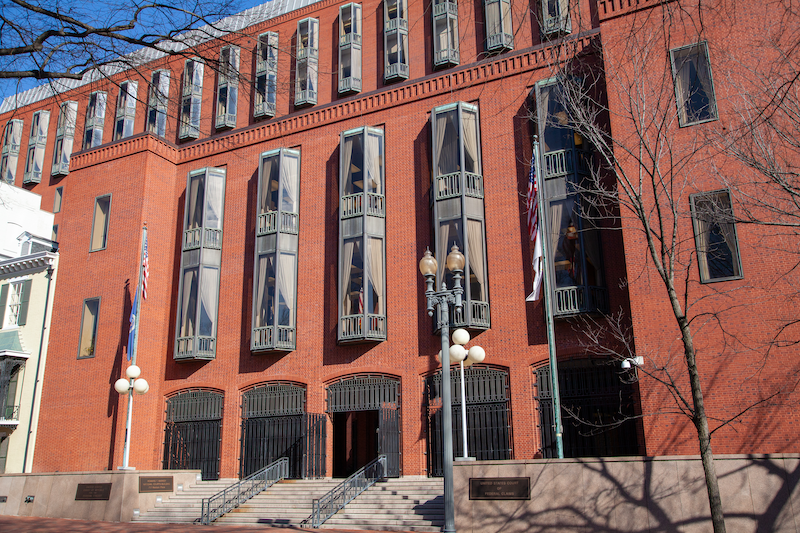 The U.S. Court of Appeals for the Federal Circuit (CAFC) issued a decision today in Zilkr Cloud Technologies, LLC v. Cisco Systems, Inc., vacating in part and affirming in part a Patent Trial and Appeal Board (PTAB) final written decision. The PTAB had held claims 1, 2, 6 through 8, and 12 through 14 of a patent owned by Zilkr Cloud Technologies, LLC unpatentable as obvious, and the CAFC remanded for further proceedings. The opinion was authored by Chief Judge Moore.
Cisco Systems, Inc. filed a petition for inter partes review (IPR) of the challenged claims of U.S. Patent No. 9,210,254, owned by Zilkr. The patent relates to a unified services platform that integrates communication services for a user and uses the user’s telephone number as a common subscriber identifier. Representative claim 1 recites a telephone system comprising a database and a server configured to receive a request to provision a second service for a user. The system maps the user’s telephone number to a second identifier, activates the second service using that identifier, and associates the second service with the original telephone number.
Cisco asserted two obviousness grounds, each combining U.S. Patent Application Publication No. 2007/0043687 (Bodart), U.S. Patent No. 6,621,892 (Banister), and U.S. Patent No. 7,089,585 (Dharmarajan). The PTAB instituted review and found all challenged claims unpatentable over the combination of Bodart, Banister, and Dharmarajan. Since the PTAB found all challenged claims unpatentable under that combination, it did not reach Cisco’s second asserted ground. Zilkr appealed, and the CAFC exercised jurisdiction under 28 U.S.C. Section 1295(a)(4)(A).
Zilkr argued that the PTAB erred in construing the terms “request to provision” and “activate.” It also challenged the PTAB’s finding that the prior art satisfied the limitation requiring a server “utilized by” a first provider, arguing that the finding was unsupported by substantial evidence. Zilkr further argued that the final written decision violated the Administrative Procedure Act (APA) because it was insufficiently reasoned.
On claim construction, the CAFC agreed with Zilkr. The PTAB had construed “request to provision” and “activate” to include requests to add new applications and services as well as requests to manage existing applications and services to which a user had already subscribed. Reviewing the constructions de novo, the CAFC found that the patent specification refers to “activating” a service only in the context of adding new services. Although the specification separately discloses managing existing services, it does not use the term “activating” to describe that function. The court also found the specification distinguishes activation from merely accessing an existing service. Based on this analysis, the court held that claim 1’s recitation of activating a service in response to a provisioning request is “limited to adding a new service.”
The CAFC vacated the PTAB’s contrary construction and remanded for further proceedings consistent with that reading. In a footnote, the court noted that Cisco had presented an alternative unpatentability theory applicable even under the narrower construction, an argument the PTAB has not yet considered and remains free to address on remand.
Regarding the substantial evidence challenge, the CAFC disagreed with Zilkr. Zilkr argued that Bodart’s disclosure of a virtual assistant did not satisfy the requirement that a first provider utilize a server to deliver telephone service, contending the virtual assistant “merely played a role” in providing that service rather than being used by the provider to deliver it. The court noted that Zilkr did not dispute the PTAB’s construction of “utilize” as meaning “use” or “to use,” without a requirement of “a knowing and intentional use.” The CAFC found substantial evidence supporting the PTAB’s finding that Bodart’s virtual assistant is a server utilized to provide telephone service to a user. This evidence included expert testimony relied upon by the PTAB, which supported the finding that a skilled artisan would have understood a telephone service provider to be the first provider using the virtual assistant. The CAFC declined to disturb this portion of the final written decision.
The CAFC also rejected Zilkr’s APA argument concerning the PTAB’s treatment of the “utilized by” limitation. Under the APA, the PTAB must make the necessary findings and have an adequate evidentiary basis for those findings, and must “examine the relevant data and articulate a satisfactory explanation for its action including a rational connection between the facts found and the choice made.” The CAFC found no violation, noting the PTAB explained its construction of “utilized by” via reference to the patent’s claim language, detailed description, prosecution history, and separately explained why the prior art satisfied that limitation based on the record. The court also pointed to the PTAB’s finding “that a [skilled artisan] would have had a reasoned basis for combining the teachings of Bodart, Banister, and Dharmarajan in the manner proffered” with “a reasonable expectation of success.”
Given its construction of “request to provision” and “activate,” the CAFC did not address the PTAB’s analysis of those two limitations under the APA. Having considered the remaining arguments raised on appeal and finding them unpersuasive, the CAFC vacated the portion of the final written decision addressing the “request to provision” and “activate” limitations, affirmed the portion addressing the “utilized by” limitation, and remanded the case for further proceedings.
![[Advertisement]](https://ipwatchdog.com/wp-content/uploads/2026/09/MarqVision-Oct-8-2026-sidebar-700x500-rev.jpg)
![[Advertisement]](https://ipwatchdog.com/wp-content/uploads/2026/10/IP-Copilot-Oct-13-2026-sidebar-700x500-1.jpg)
![[Advertisement]](https://ipwatchdog.com/wp-content/uploads/2026/10/Junior-Oct-15-2026-sidebar-700x500-1.jpg)
![[Advertisement]](https://ipwatchdog.com/wp-content/uploads/2026/09/WE-BUY-PATENTS-SIM-IP-Ad-1-revised-on-Sep-28-2026-700x500-1.jpg)
![[Advertisement]](https://ipwatchdog.com/wp-content/uploads/2026/09/Life-Sciences-2026-sidebar-early-bird-date-corrected-700x500-1.jpg)
![[Advertisement]](https://ipwatchdog.com/wp-content/uploads/2024/09/Patent-Prosecution-Training-sidebar-700x500-2025-03-27.jpg)








![[Advertisement]](https://ipwatchdog.com/wp-content/uploads/2021/12/WEBINAR-336-x-280-px.png)
![[Advertisement]](https://ipwatchdog.com/wp-content/uploads/2021/12/Ad-4-The-Invent-Patent-System™.png)





Join the Discussion
No comments yet. Add my comment.
Add Comment