
![[IPWatchdog Logo]](https://ipwatchdog.com/wp-content/themes/IPWatchdog%20-%202023/assets/images/temp/logo-small@2x.png)

 0
0 “[T]he Court ruled that Avanci is the essential party for determining FRAND obligations as it set the applicable fee itself independently from SEP owners.”
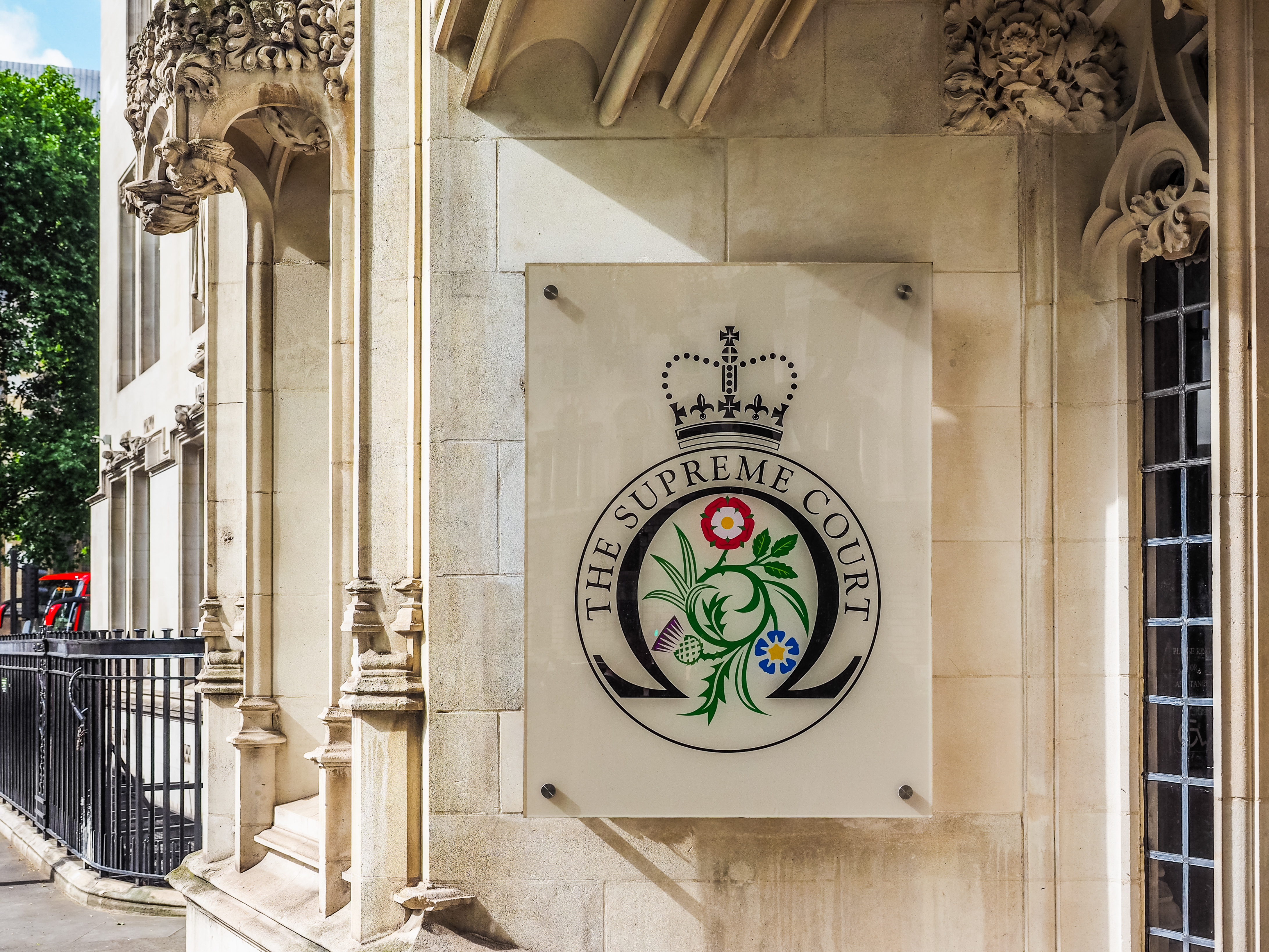 Yesterday, the UK Supreme Court issued a ruling in Tesla, Inc. v. InterDigital Patent Holdings, Inc. representing the latest development in UK jurisprudence surrounding fair, reasonable and non-discriminatory (FRAND) obligations on standard-essential patents (SEPs). Applying the reasoning of its landmark SEP decision in Unwired Planet, the UK Supreme Court revived Tesla’s claims that InterDigital’s SEPs to 5G vehicle communications technologies are not being offered on FRAND terms through Avanci’s patent pool and further upheld the jurisdiction of UK courts to decide global FRAND terms.
In December 2023, Tesla brought legal proceedings against InterDigital in the UK to challenge the licensing fee set for the 5G-enabled vehicle SEP portfolio managed by Avanci’s patent pool, which licenses a single portfolio of 170,000 SEPs owned by 65 different entities, including InterDigital. Unlike the SEP owners themselves, Avanci has not made declarations to ETSI, the relevant standards-setting organization (SSO), that it will license SEPs on FRAND terms. Avanci’s authority from SEP owners only allows collective licensing of all SEPs without creating subsets licensing patents from particular SEP owners like InterDigital.
Impracticability of Bilateral Licenses, FRAND Representations Support Tesla’s Claims
Tesla’s claims raised legal questions as to whether they could be maintained under the jurisdiction of England and Wales, within which neither InterDigital or Avanci are located, and whether a more appropriate forum existed for determining Tesla’s licensing claims. After the UK High Court ruled against Tesla, the UK Court of Appeals dismissed Tesla’s appeal, holding that no serious issue existed on the licensing claims and that declarations sought by Tesla would not be useful or legitimate. Dissenting from this ruling was Lord Justice Richard Arnold, who found a serious issue to be tried that should have allowed Tesla’s appeal, and that the Delaware Court of Chancery was not an available forum for litigating the licensing claims.
Lord Justice Arnold’s views were vindicated by the UK Supreme Court, which found a serious issue to be tried on the sub-issue of whether the FRAND obligations under the relevant standard apply to joint offers involving other SEP owners through a licensing platform. The Supreme Court found that, while SEP owners are not obliged to join patent pools, membership in such a pool does not release those owners from their FRAND obligations to their respective SSOs. The Court noted that, under Unwired Planet v. Huawei (2020), the current commercial practices of both SEP owners and implementers are highly relevant to analyzing FRAND obligations. In particular, the Court highlighted the growing use of licensing platforms across multiple technical fields and standards, as well as representations by both Avanci and SEP owners within the pool that the Avanci license satisfies FRAND obligations.
Assuming SEP owners contributing to the Avanci 5G-enabled vehicle licensing pool remain bound by their FRAND obligations, the UK Supreme Court further found that Tesla has a real prospect of successfully establishing that a global FRAND license to the entire Avanci 5G pool is the only license satisfying InterDigital’s FRAND obligations to ETSI. Although InterDigital itself does not rely on its inclusion in Avanci’s pool as satisfying those obligations, the Court acknowledged it supported Tesla’s case that many SEP owners within the pool do so. The impracticability of implementers negotiating bilateral licenses with all SEP owners covered by a patent pool was another powerful factor supporting the Court’s conclusion in this regard.
Emphasizing that the court’s power to make declarations is of great utility in cases on FRAND obligations, the UK Supreme Court also ruled that Tesla has a real prospect of showing that Avanci’s licensing offer does not comport with those obligations. Because Avanci is not itself bound by InterDigital’s FRAND obligations to ETSI, the vindication of Tesla’s claim would serve the useful purpose of enabling Tesla to raise an effective challenge to the 5G-enabled vehicle SEP portfolio managed by Avanci. While SEP owners could join future proceedings if they wished, the Court ruled that Avanci is the essential party for determining FRAND obligations as it set the applicable fee itself independently from SEP owners.
Service to Avanci Properly Conducted Under UK’s Civil Procedure Rules
Moving on to the jurisdictional issues involved, the UK Supreme Court held that Tesla’s licensing claims were properly served upon InterDigital as required by UK’s Civil Procedure Rules (CPR), which allow for service of a claim form “relating to a registered right” at the address recorded by the UK Patent Office. Rejecting the interpretation of “relating to” to narrowly mean “substantially or really about,” the Court found that Tesla’s claims related to InterDigital’s UK SEPs on the Avanci 5G platform such that they were properly served on InterDigital within the UK’s jurisdiction.
The UK Supreme Court further ruled that Tesla’s claims properly passed to Avanci through gateways under the UK’s CPR that enable service of claims on defendants outside of England and Wales. Proper service to InterDigital allows additional service to “a necessary or proper party to that claim,” which here includes Avanci. In relation to another gateway enabling service of claims “relat[ing] wholly or principally to property” within the UK, the Court dismissed InterDigital’s arguments that enabling SEP implementer claims through this gateway would lead to forum shopping, which the Court characterized as an inherent consequence of ETSI’s regime requiring national courts to decide global FRAND terms, which is sufficiently distinct from other commercial contexts such that any improper expansion of this gateway is unlikely.
Finally, the UK Supreme Court upheld Lord Justice Arnold’s reasoning on the absence of an appropriate forum outside of England and Wales to adjudicate Tesla’s licensing claims. The Court found that the trial judge had mischaracterized the nature of Tesla’s claims as global licensing claims rather than claims about the licensing of InterDigital’s UK SEPs. Noting that Lord Justice Arnold was correct to re-evaluate expert evidence under this approach to conclude that the Delaware Chancery Court would not determine a FRAND rate based upon a non-U.S. patent.
Image Source: Deposit Photos
Image ID: 166034586
Image Author: claudiodivizia
![[Advertisement]](https://ipwatchdog.com/wp-content/uploads/2026/09/MarqVision-Oct-8-2026-sidebar-700x500-1.jpg)
![[Advertisement]](https://ipwatchdog.com/wp-content/uploads/2026/10/IP-Copilot-Oct-13-2026-sidebar-700x500-1.jpg)
![[Advertisement]](https://ipwatchdog.com/wp-content/uploads/2026/10/Junior-Oct-15-2026-sidebar-700x500-1.jpg)
![[Advertisement]](https://ipwatchdog.com/wp-content/uploads/2026/09/WE-BUY-PATENTS-SIM-IP-Ad-1-revised-on-Sep-28-2026-700x500-1.jpg)
![[Advertisement]](https://ipwatchdog.com/wp-content/uploads/2026/09/Life-Sciences-2026-sidebar-early-bird-date-corrected-700x500-1.jpg)
![[Advertisement]](https://ipwatchdog.com/wp-content/uploads/2024/09/Patent-Prosecution-Training-sidebar-700x500-2025-03-27.jpg)




![[Advertisement]](https://ipwatchdog.com/wp-content/uploads/2021/12/WEBINAR-336-x-280-px.png)
![[Advertisement]](https://ipwatchdog.com/wp-content/uploads/2021/12/Ad-4-The-Invent-Patent-System™.png)






Join the Discussion
No comments yet. Add my comment.
Add Comment