


 0
0 “The district court’s erroneous characterization of the claim all but ensured the incorrect conclusion that the claim was not directed to a technological improvement but instead impermissibly claimed only a result.” – CAFC
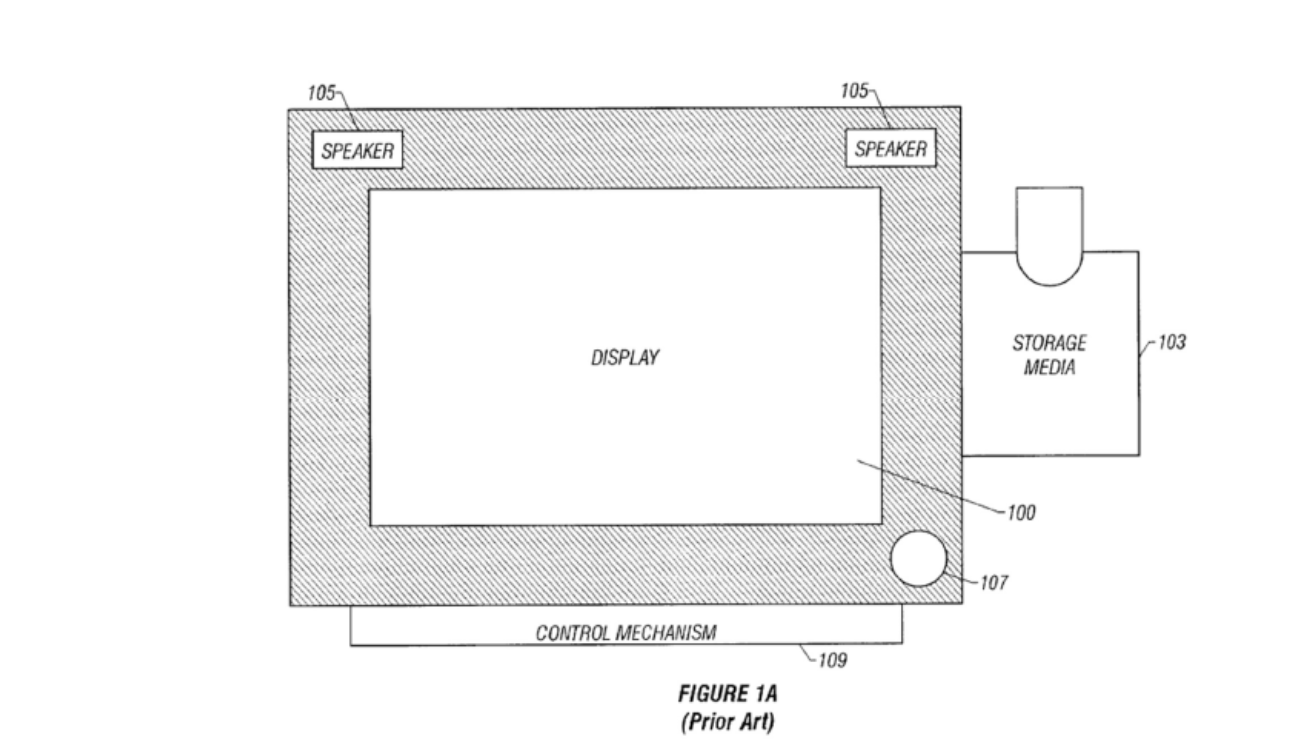 The U.S. Court of Appeals for the Federal Circuit (CAFC) issued a decision today affirming in part and reversing in part a district court ruling that had found four patents covering digital picture frame technology ineligible under 35 U.S.C. Section 101. The court remanded one patent claim to the U.S. District Court for the Central District of California for further proceedings and affirmed the ineligibility finding as to the remaining three patents at issue.
Ceiva Opco, LLC owns four related patents descending from a 1999 priority application, covering methods and apparatuses for distributing what the patents describe as picture mail to a frame device community. Ceiva Logic originally filed a lawsuit against Amazon.com, Inc., alleging infringement of three patents through products including the Kindle, Echo Show, and Fire Tablet. However, the district court dismissed the suit for lack of subject matter jurisdiction after Ceiva Logic admitted it did not own the patents and that Ceiva Opco was the actual owner. Ceiva Opco then refiled the suit, asserting a fourth patent and expanding its infringement allegations to include additional accused products, such as the Fire TV. Amazon subsequently moved for summary judgment, arguing that all asserted claims were ineligible under Section 101.
The district court held that claim 19 of the U.S. Patent Nos. 6,442,573, claim 16 of the 9,654,562, and claim 1 of the 9,203,930 and 9,124,656 patents were representative. At Alice step one, the district court found all four claims directed to the abstract idea of “automatically accessing a remote data repository to obtain updated content without the use of a computer and without any further user input,” within the context of a digital picture frame. The district court reasoned the claims were aspirational because they recited a desired result without claiming a specific way to achieve it, and at Alice step two found none of the claims recited an inventive concept.
On appeal, the CAFC addressed the picture frame claim separately from the remaining three representative claims, which it grouped as the digital display device claims. Applying regional circuit law and reviewing the summary judgment grant de novo under Ninth Circuit precedent, the court reversed as to claim 19 of ‘573 patent, holding that it was not directed to an abstract idea at Alice step one and therefore did not reach step two.
The court found that claim 19 required a digital picture frame with a user interface that is “physically separable” from the frame itself. The user interface is configured to allow a user to obtain image data and preferences and provide them to a server system, while the frame automatically requests updates. The specification described prior art frames, including the Sony CyberFrame, as isolated devices that required a user to be physically present with a storage medium to load images or to manually adjust settings. The court concluded that the claimed physically separable user interface addressed this proximity limitation by allowing remote access, including through a feature permitting the frame’s owner to grant a “parent” user permission to upload images remotely on the owner’s behalf.
The CAFC held that the district court’s construction of claim 19 omitted the physically separable limitation from its analysis. The CAFC quoted the claim language on which the district court had relied and noted that it omitted the critical limitation requiring the user interface to be “physically separable from said at least one digital picture frame.” According to the CAFC, “the district court’s erroneous characterization of the claim all but ensured the incorrect conclusion that the claim was not directed to a technological improvement but instead impermissibly claimed only a result.”
As to the digital display device claims, representative claim 1 of the ‘930 patent, along with related claims in the ‘656 and ‘562 patents, the CAFC affirmed the district court’s ineligibility finding. The court noted that these claims recited a “digital display apparatus” with components including memory, a processor, and onboard software. The software performs functions such as image display, remote connection, authentication, and software updates, but the claims do not require a physically separable user interface comparable to claim 19. The court observed that a claim reciting components “configured to” perform an action is not automatically abstract, but found that these claims, read as a whole and in light of the specification, did not explain how the claimed functions, particularly the remote connection function, were to be implemented. The court held the claims were “written to claim ‘only a result’ as opposed to ‘a way of achieving it.’”
At Alice step two, the CAFC agreed that none of the digital display device claims recited an inventive concept. Ceiva Opco had argued that secondary considerations, including industry praise for its commercial Ceiva Frame product described in the record as “pioneering” and “unbelievable,” created a question of fact under step two. The court held that questions of nonobviousness, including secondary considerations, “are irrelevant when considering eligibility,” and further found that Ceiva Opco had not connected the cited praise to any specific claim element or ordered combination of elements.
The CAFC affirmed the district court’s grant of summary judgment of ineligibility for the representative claims of the ‘930, ‘656, and ‘562 patents. However, it reversed the ruling as to claim 19 of the ‘573 patent and remanded that portion of the case for further proceedings. No costs were awarded.
![[Advertisement]](https://ipwatchdog.com/wp-content/uploads/2026/10/Junior-Oct-15-2026-sidebar-700x500-1.jpg)
![[Advertisement]](https://ipwatchdog.com/wp-content/uploads/2026/10/BlackBox-IP-Oct-20-2026-sidebar-700x500-1.jpg)
![[Advertisement]](https://ipwatchdog.com/wp-content/uploads/2026/10/Questel-Oct-22-2026-sidebar-700x500-1.jpg)
![[Advertisement]](https://ipwatchdog.com/wp-content/uploads/2026/09/WE-BUY-PATENTS-SIM-IP-Ad-1-revised-on-Sep-28-2026-700x500-1.jpg)
![[Advertisement]](https://ipwatchdog.com/wp-content/uploads/2026/09/Life-Sciences-2026-sidebar-early-bird-date-corrected-700x500-1.jpg)
![[Advertisement]](https://ipwatchdog.com/wp-content/uploads/2024/09/Patent-Prosecution-Training-sidebar-700x500-2025-03-27.jpg)







![[Advertisement]](https://ipwatchdog.com/wp-content/uploads/2021/12/WEBINAR-336-x-280-px.png)
![[Advertisement]](https://ipwatchdog.com/wp-content/uploads/2021/12/Ad-4-The-Invent-Patent-System™.png)






Join the Discussion
No comments yet. Add my comment.
Add Comment