
![[IPWatchdog Logo]](https://ipwatchdog.com/wp-content/themes/IPWatchdog%20-%202023/assets/images/temp/logo-small@2x.png)

 1
1 “The ‘claim’s calling for collecting and combining information for presentation to the rendering device does not provide a focus on an advance in non-abstract ideas.’” – CAFC
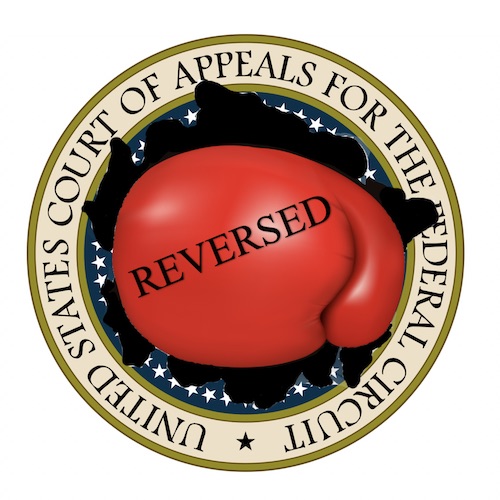 The U.S. Court of Appeals for the Federal Circuit (CAFC) on Monday in part reversed a district court’s decision upholding GoTV Streaming, LLC’s patents as eligible, finding instead that they were invalid under Section 101. While the opinion, authored by Judge Taranto, also reversed the district court’s finding that the claims were invalid for indefiniteness, the panel found they were directed to an abstract idea and therefore vacated the district court’s summary judgment of no inducement and its denial of GoTV’s motion for a new trial on damages, ordering the district court to enter judgment for Netflix, Inc., ending the case.
The U.S. District Court for the Central District of California dismissed GoTV’s claims that Netflix directly infringed and induced infringement of claims of its U.S. Patent Nos. 8,478,245, 8,989,715, and 8,103,865. The patents share a written description and are each titled “Server Method and System for Rendering Content on a Wireless Device.”
GoTV sued Netflix in 2022 and Netflix moved for judgment on the pleadings that the claims of all three patents claim patent-ineligible subject matter. GoTV opposed and also suggested the court convert the motion to one for summary judgment. The district court ultimately denied Netflix’s motion, finding that the claims were not directed to ineligible subject matter at Alice step one. However, in its claim constructions, the district court agreed with Netflix that “a phrase common to all claims of the ’865 patent—’discrete low level rendering command’—is indefinite” and therefore held all of the claims invalid as indefinite under 35 U.S.C. § 112(b).
GoTV made a number of arguments on appeal and Netflix cross-appealed the district court’s Section 101 ruling. Since the cross-appeal issue was dispositive if determined in Netflix’s favor, the CAFC began with that. First, however, the CAFC addressed the district court’s claim constructions because they were relevant to the ineligibility analysis.
With respect to claim construction, the district court’s conclusion that “discrete low level rendering command” is indefinite was in dispute, and the CAFC adopted GoTV’s construction of that phrase as meaning “[a] discrete rendering command that is tailored based on wireless device capability.” The district court had rejected GoTV’s proposed construction because it said that construction would make “superfluous” “significant portions of the specification and claims.” Specifically, the sentence: “As such, precompiled basic commands are discrete rendering commands that are tailored based on wireless device capability tailored based on the rendering capability of the client 210” would be redundant when substituting GoTV’s construction.
The CAFC explained: “If the court found redundancy based simply on the repeated ‘tailored’ word, such a repetition in a substitution exercise is not a substantial basis for deeming a relevant artisan to be confused about claim scope.” It ultimately concluded that a relevant artisan, “reading the claims in the context of the specification,” would understand “discrete low level rendering command” to comport with GoTV’s construction. The CAFC therefore reversed the district court’s indefiniteness ruling.
With the claim construction issue addressed, the CAFC then went on to the eligibility analysis, first recounting its extensive caselaw and approach to assessing whether claims are directed to an abstract idea under Section 101. In light of those precedents, the CAFC found that here “the representative claim is directed to the abstract idea of a template set of specifications—generic in at least some respects (claim 1 requires only two such respects)—that can be tailored (in at least one respect) for final production of the specified product (here an image) to fit the user’s constraints.”
While GoTV argued that the claims represent improvements to computers/ networks, the CAFC said the “claim’s calling for collecting and combining information for presentation to the rendering device does not provide a focus on an advance in non-abstract ideas.” It rejected GoTV’s arguments about the claim requiring “specific data structures” and said “[t]here is no improvement of computer/network operations in their ordinary functions, just the use of ordinary functions as a tool for executing the abstract idea.” The opinion distinguished the claim at issue here from those at issue in Visual Memory LLC v. Nvidia Corp., 867 F.3d 1253 (Fed. Cir. 2017), noting that the claims there were “assertedly creating an improvement in this basic component of a computer, the improvement focusing on its interaction with the computer’s processor(s)—which is a far cry from claiming mere use of ordinary computer components for a particular subject matter.”
Having determined the claim fails Alice step one, the CAFC went on to step two, but found no inventive concept present, and rejected GoTV’s attempt to point to its expert testimony’s conclusions about how it satisfies step two. The opinion explained:
“It does not, and could not, identify claimed concrete implementations that go beyond the result-focused and functionally described computer processes apparent from the above-recited claim constructions. And conclusory assertions about the speed and efficiency benefits of using ordinary computer and network functionality do not suffice at Alice step two.”
Having determined the claims to be ineligible on Netflix’s cross-appeal, the CAFC did not need to address GoTV’s appeal, but acknowledged its “substantial arguments that the district court committed error” on two contentions. First, while it did not weigh in on whether GoTV was correct, it said that its argument that “a patentee may plead and press an inducement charge in an amended complaint and rely, for the knowledge element of inducement, on the knowledge the defendant gained from the original complaint” was sufficiently substantial that it was worth vacating the district court’s grant of summary judgment of no induced infringement. And second, GoTV argued that the district court abused its discretion in allowing Netflix to make certain presentations regarding its hypothetical damages determination. While the CAFC similarly did not decide the issue, it said it deemed “some of [GoTV’s] arguments on the point just noted to be sufficiently substantial that it is worth specifically vacating the district court’s denial of GoTV’s post-trial motion for a new trial because of such damages-evidence rulings.”
The district court’s indefiniteness ruling was thus reversed, as was the ruling for GoTV considering the ineligibility finding, and judgment was entered in favor of Netflix, and the summary judgment of no inducement and the denial of GoTV’s motion for a new trial on damages were both vacated.
Image Search: Deposit Photos
Image ID: 10042948
Author: almoond
![[Advertisement]](https://ipwatchdog.com/wp-content/uploads/2026/09/Ankar-AI-Sep-10-2026-sidebar-700x500-1.jpg)
![[Advertisement]](https://ipwatchdog.com/wp-content/uploads/2026/09/Lighthouse-IP-Sep-15-2026-sidebar-700x500-1.jpg)
![[Advertisement]](https://ipwatchdog.com/wp-content/uploads/2026/06/Womens-IP-Forum-2026-sidebar-regular-price-700x500-rev1.jpg)
![[Advertisement]](https://ipwatchdog.com/wp-content/uploads/2026/08/OneTransform_700x500_v1-REVISED.jpg)
![[Advertisement]](https://ipwatchdog.com/wp-content/uploads/2024/09/Patent-Prosecution-Training-sidebar-700x500-2025-03-27.jpg)







![[Advertisement]](https://ipwatchdog.com/wp-content/uploads/2021/12/WEBINAR-336-x-280-px.png)
![[Advertisement]](https://ipwatchdog.com/wp-content/uploads/2021/12/Ad-4-The-Invent-Patent-System™.png)






Join the Discussion
One comment so far.
Model 101
February 10, 2026 10:00 amMore crook stuff!