
![[IPWatchdog Logo]](https://ipwatchdog.com/wp-content/themes/IPWatchdog%20-%202023/assets/images/temp/logo-small@2x.png)

 1
1 “While outright IP theft remains a concern, the greater challenge today is more subtle and systemic.” – Andrei Iancu, Former USPTO Director
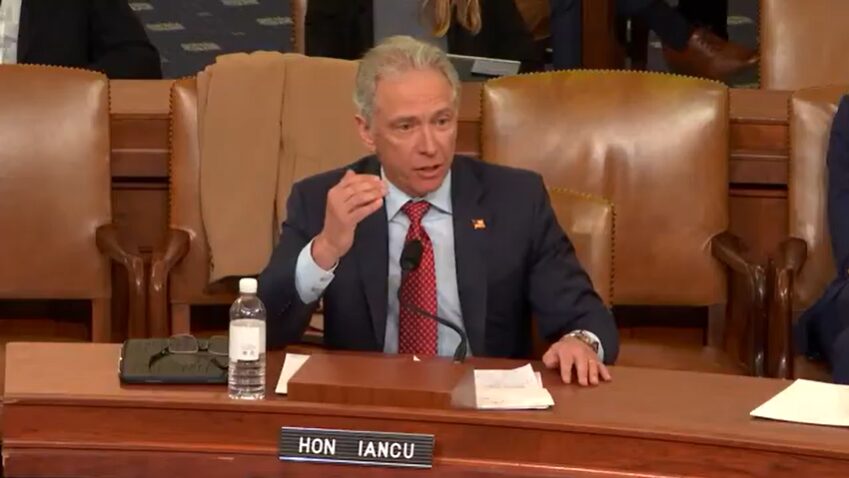 On Tuesday afternoon, the U.S. House of Representatives Ways and Means Committee’s Subcommittee on Trade convened a hearing titled Maintaining American Innovation and Technology Leadership, which explored a host of regulatory and other legal burdens being placed on tech industry trade by foreign governments to the detriment of American innovators and consumers. Among the panel witnesses at the subcommittee hearing was former U.S. Patent and Trademark Office (USPTO) Director Andrei Iancu, who spoke to several ways that our nation’s adversaries and trading partners alike are weakening American IP rights and how those issues should be addressed by U.S. policymakers.
EU’s Pharmaceutical Law, Global SEP Rate-Setting Create Major IP Trade Concerns
Prov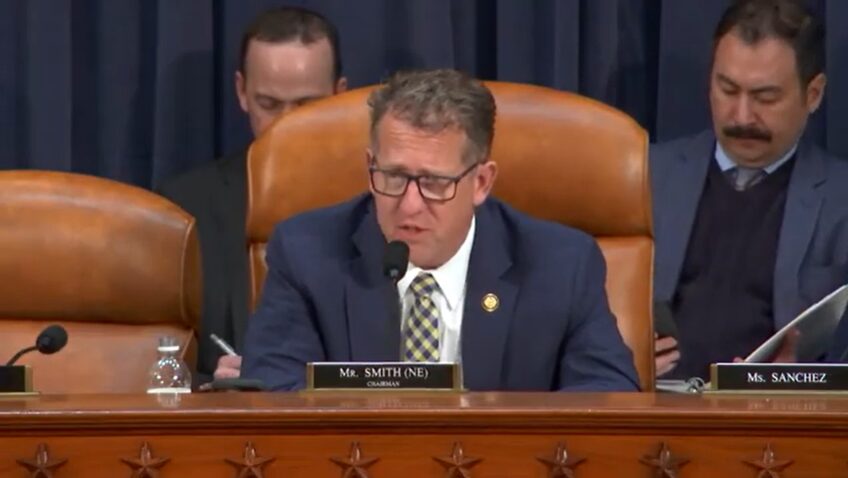 iding the hearing’s opening remarks was Rep. Adrian Smith (R-NE), Chair of the House Trade Subcommittee, who noted that 41% of U.S. gross domestic product contributed by IP-intensive industries is put in peril when foreign governments take action to weaken American IP. Smith castigated the Biden Administration for enabling bad behaviors even among America’s close trading partners by pursuing misguided policies like the waiver of TRIPS Agreement obligations for vaccines during the COVID-19 pandemic. Smith also blamed the U.S. approach on digital trade under Biden for leading to the proliferation of digital services taxes (DSTs), which target revenues of large American digital companies, that have been implemented by foreign governments.
Ranking Member Rep. Linda Sanchez (D-CA) expressed great skepticism about the timing of the hearing on American technology leadership, highlighting the recent loss of nearly 70,000 U.S. manufacturing jobs since the beginning of Trump’s second term as well as the Trump Administration’s military operations involving Venezuela. Sanchez underscored bipartisan efforts to oppose foreign DSTs from being implemented by countries like Canada through its passage of the Online Streaming Act, but she questioned 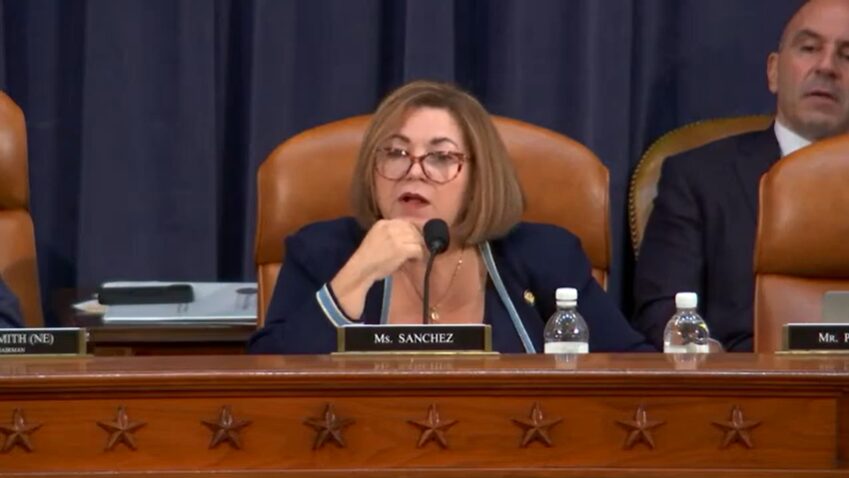 Republican efforts to promote digital trade in light of actions by the Trump Administration to suppress free speech and members of the media.
“Reliable, predictible, and meaningfully enforceable IP rights are the foundation of American prosperity and global leadership,” said Iancu at the top of his witness statement during the hearing. While the United States enjoys a substantial $74 billion trade surplus in intellectual property as of 2022, far outpacing China which had a trade deficit of $33 billion that same year, reduced engagement on global IP policy by American lawmakers has disadvantaged the U.S. over time. “While outright IP theft remains a concern, the greater challenge today is more subtle and systemic,” added Iancu, pointing to ostensibly neutral regulations that weaken foreign IP in favor of domestic players.
Former Director Iancu’s written statement describes several examples of foreign practices on IP that merit closer scrutiny, including the European Union’s recently adopted General Pharmaceutical Legislation (GPL). As implemented, the EU’s GPL reduces periods of regulatory exclusivity for new drugs and expands research exemptions to commercial activities like pricing and reimbursement filings. Iancu also noted that several jurisdictions, including rivals and trading partners alike, have at least proposed policies on standard-essential patents (SEPs) that would dramatically increase administrative regulatory frameworks. Further, courts in the UK, China and elsewhere have issued decisions setting royalty rates that seek to dictate global licensing terms, which tends to depress patent value and weaken incentives for tech developers to contribute to standards development.
Must Hold American Trading Partners to Commitments in Upcoming USMCA Renegotiations
Agreeing with Chairman Smith’s observations of the proposed TRIPS obligations waiver, Iancu noted during the hearing that the policy did not deliver a single additional vaccine but rather created a negative climate discouraging IP owners from collaborating on vaccine development. Iancu said that one of the biggest issues with the effort was the lack of reputable studies or any scientific evidence cited by policymakers to show that IP rights were creating any barrier to vaccine access during pandemics, adding that existing studies tend to show that robust IP rights respected internationally create more opportunities for trade and the exchange of technologies across the world.
Iancu also discussed the global freeriding issue created by foreign IP policies at several points throughout the hearing. Responding to Rep. Jason Smith (R-MO) on what commitments the Trump Administration should be seeking from foreign governments, Iancu reiterated that American consumers tend to pay the costs created by foreign regulation of IP. Along with urging the EU to abandon the GPL, Iancu indicated that the upcoming round of renegotiations for the U.S.-Mexico-Canada (USMCA) free trade agreement was a great opportunity for the Trump Administration to push our closest trading partners to increase their IP commitments on regulatory data protection for biologics, as one example of an area where Mexico and Canada lag behind the U.S., and for better adherence to those commitments that are actually made by our trading partners. Iancu also stated that a model IP chapter with robust minimum protection standards would be of great use for U.S. policymakers when negotiating trade agreements like USMCA.
In his written statement, Iancu urged the passage of several bills before Congress, including bills like the RESTORE Act aimed at improving modes of relief against patent infringement and the NO FAKES Act, which would enhance enforcement against counterfeit goods. Iancu also pushed the House Trade Subcommittee, which has jurisdiction over the U.S. International Trade Commission (USITC), to work against efforts to reconsider the public interest analysis at the USITC to find market rationales that work to shield infringers against the enforcement of patent rights. These efforts would do much to reassert U.S. leadership in SEPs and establish American dominance in artificial intelligence and other critical sectors of emerging tech, Iancu said.
![[Advertisement]](https://ipwatchdog.com/wp-content/uploads/2026/05/Protege-in-PatentSight-product-350x250-Ad-A.png)
![[Advertisement]](https://ipwatchdog.com/wp-content/uploads/2026/04/ClearstoneIP-May-14-2026-sidebar-700x500-1.jpg)
![[Advertisement]](https://ipwatchdog.com/wp-content/uploads/2026/04/Virtual-AI-2026-May-18-19-2026-sidebar-CLE-700x500-1.jpg)
![[Advertisement]](https://ipwatchdog.com/wp-content/uploads/2026/05/Anaqua-May-21-2026-sidebar-700x500-1.jpg)
![[Advertisement]](https://ipwatchdog.com/wp-content/uploads/2026/05/Patent-Masters-2026-sidebar-early-bird-price-700x500-1.jpg)




![[Advertisement]](https://ipwatchdog.com/wp-content/uploads/2021/12/WEBINAR-336-x-280-px.png)
![[Advertisement]](https://ipwatchdog.com/wp-content/uploads/2021/12/Ad-4-The-Invent-Patent-System™.png)





Join the Discussion
One comment so far.
Model 101
January 16, 2026 05:14 pmFormer Director Iancu:
https://www.congress.gov/bill/119th-congress/senate-bill/1546
iS WHAT WE NEED!!!