


 4
4 “My 2026 IP dream? A patent system that stops feeling like an obstacle course designed by Kafka.” – John Rogitz, Rogitz & Associates
 While being realistic and practical in IP law is usually prudent, it’s a helpful exercise to now and then articulate one’s wildest dreams for a perfect world in order to gauge what topics come up most often. This year, as in years past, clarity on patent eligibility law remains high, while protections for an improvement of AI tools takes second. Some of the wishes below have little chance of coming true in 2026, but others may be granted—here is what our participants would like to see happen for IP in the new year.
Rod Berman and Joseph Mellema, Jeffer Mangels Butler & Mitchell

Rod Berman
“In a perfect IP world for 2026, several longstanding pain points would finally be addressed. For companies managing global portfolios, a truly centralized system for worldwide patent and trademark filings, paired with unified and streamlined financing, would dramatically reduce administrative burden, cost, and inefficiency across jurisdictions.

Joseph Mellema
Another major wish is a slowdown in the commoditization of patent prosecution. Restoring greater emphasis on strategy, technical depth, and claim quality would benefit both innovators and the integrity of the patent system as a whole.
At the doctrinal level, a definitive Supreme Court ruling clarifying patent eligibility under 35 U.S.C. §101 would be transformative. Clear, consistent standards would reduce uncertainty and allow innovators to better assess risk and value at earlier stages of development.
Relatedly, subject matter eligibility determinations, particularly at the examination level, would rely far less on examiner subjectivity. A more objective framework would limit the use of complex Alice/Mayo Step 1 and 2 rejections as a procedural shortcut, reducing unnecessary prosecution cycles and escalating costs for applicants.
Finally, continued refinement of the USPTO’s modernized trademark application and TTAB filing systems would smooth practitioner workflows, improve reliability, and deliver on the promise of a more efficient, user-friendly trademark process.”

Charley F. Brown, Ballard Spahr
“My wildest IP dream for 2026 is that we finally resolve the subject matter eligibility puzzle for software-related inventions, including AI patent applications. In the dream version, we get a clear, technology neutral framework that stops treating eligibility as a metaphysical exercise and starts treating it as a predictable, draftable standard.
That framework would do three things. First, it would define abstract idea and inventive concept in a way that gives real guidance, so outcomes do not depend on how a judge or patent examiner chooses to summarize a claim. Second, it would treat software as eligible when it is claimed as a concrete technical solution, for example a specific improvement in model training, inference, robustness, privacy, or efficiency. Third, it would push most overbreadth fights to sections 102, 103, and 112, where questions about scope, enablement, and written description belong.
For AI related patents in particular, that would let everyone focus on what should matter. What did you actually build, what data and architecture choices make it work, and can you enable the full scope you want to claim. A stable eligibility rule would benefit both innovators and challengers. It would trade uncertainty and gamesmanship for clearer incentives to disclose and invest.”
Tom Chen , Haynes Boone
“I wish for much more clarity on 101 that is more objective than subjective (not so wild). I would be happy with getting rid of 101 (much wilder) and determining patentability solely on 112, 102, and 103. To moderate that a bit, maybe some guardrails that address main reasons that 101 was enacted, such as not being able to obtain patents (i.e., monopolies) on core or fundamental ideas that would prevent others from innovating based on the core or fundamental ideas. Even then, if innovations are based on a fundamental idea, they should be patentable if new and not obvious in view of the fundamental idea and prior art. Without 101 issues to deal with, there would be more innovation (which is a primary purpose of our patent system) because 1) applicants would file and prosecute more application if the uncertain stigma of 101 is gone, 2) more applications would be allowed (applications abandoned solely for 101 issues, where the claims have overcome 102/103), and 3) more money and resources could be shifted to developing and patenting innovations that are now allocated to arguing 101 issues, both in front of the USPTO and the courts.”
 Richard D. Coller III, Director, Sterne, Kessler, Goldstein & Fox
“If I had three wishes from a patent law genie, they would be:
(1) That AI tools keep getting better at handling the boring parts of patent practice, freeing patent attorneys to do what we most enjoy and are best at: strategy, storytelling, and protecting real innovation.
(2) That the time from issue fee payment to patent issuance at the USPTO shrinks substantially and is less of a black box.
(3) That the USPTO liberalizes its duty of disclosure practice under 37 CFR § 1.56, joining most of the rest of the world in foregoing burdensome and inefficient IDS practices.”
Randy Landreneau, Molly Metz and Dirk Tomsin, US Inventor

Molly Metz
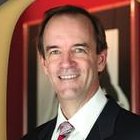
Randy Landreneau
“Our wildest dream for 2026 is that Congress enacts bipartisan legislation that locks in and harmonizes with the protections the USPTO has only recently begun to restore: the Restoring America’s Leadership in Innovation Act (RALIA), led by Rep. Thomas Massie (R-KY) and co-led by Rep. Marcy Kaptur (D-OH), and the Balancing Incentives Act (BIA), led by Rep. Kaptur and co-led by Rep. Massie. Together, these bills restore enforceability, return disputes to Article III courts, and ensure that PTAB review is truly optional for patent owners, protections that are especially critical for independent inventors and startups.
Much of the current policy discussion focuses on limiting serial or duplicative PTAB challenges. Those reforms are welcome, but for small inventors and emerging companies, they are not the core problem. The most damaging feature of the PTAB has been the ability to reopen patent validity after issuance often without regard to the patent’s age, licensing status, or commercial use without the patent owner’s consent, undermining reliance from the moment a patent is granted.

Dirk Tomsin
The USPTO has begun addressing this through discretionary denials grounded in settled expectations and quiet title. That shift is meaningful, but it is also fragile. Policy can change with leadership. Law cannot.
Other proposals are receiving attention, but they focus on narrow procedural refinements and would not codify the full set of reforms the USPTO is now advancing. Without comprehensive statutory alignment, today’s progress risks being temporary.
Our wildest dream is simple: patents that innovators can actually rely on – today and tomorrow.”
Randy McCarthy , Hall Estill
“My wildest dream would be for Congress to enact a DMCA-type comprehensive copyright law amendment dealing with issues relating to AI. These would include safe harbor provisions for generative AI companies, mechanical-style licenses for the use of publicly available copyrighted material for training purposes, and clear delineation of whether it is enforceable for a copyright owner to provide a EULA-type notice that restricts use of published copyrighted work as training data for an AI model.”
Tim Powell , Morgan Lewis
“My wildest IP dreams for 2026 are that the Unified Patent Court (UPC) in Europe continues its remarkable success as a key global jurisdiction for resolving patent disputes. Covering a similar market size to the US and with the ability to resolve disputes for a fraction of the cost of US litigation, it is deservedly attracting the attention of multi-nationals in all industries. I’d like to see more interest in the UPC from pharma companies, who were initially reticent about exposing patents to a new, untested court system. Now that the court is proving its ability to deliver high quality decisions in a fast timeframe, this reticence is dissipating.
I would also like to see cases brought in a wider range of local divisions. Currently, most cases are brought in German local divisions, due to greater experience among German national patent judges. However, a greater diversity of approach will enable the UPC to develop true pan-European jurisprudence, making best use of the flexibilities allowed by the court rules.
I’d also like to see a common approach among national courts in Europe on resolving SEP disputes. That certainty would be beneficial for SEP holders and implementers alike.”
John Rogitz , Rogitz & Associates
“My 2026 IP dream? A patent system that stops feeling like an obstacle course designed by Kafka. Patent eligibility is no longer a riddle wrapped in an enigma, the PTAB transforms from a ‘death squad’ into a ‘protection squad,’ courts uphold innovation rather than invent new barriers, and AI is embraced as a tool rather than a trap. And maybe – just maybe – Congress finally fulfills its constitutional role as chief policy-maker. In short: a system defined by clarity, speed, fairness, and predictability – so inventors can focus on creating rather than simply surviving the system.”
Wendy Verlander , Verlander LLP
“My wish for the patent system in 2026 is the same as it has been: that Congress will enact the PERA, PREVAIL and RESTORE Acts and there will be a truly level playing field where the merits of inventions can be fairly adjudicated. Outside of IP? Don’t get me started…”
Roy Wepner , Kaplan, Breyer Schwarz
“In my wildest dreams, I would like to see patent litigants and patent litigators who win cases recognize that not all cases are ‘exceptional,’ and that their victory, while impressive, may not meet that standard.
It is now 11 years since the Supreme Court held in Octane Fitness that the standard is whether a case ‘stand[s] out from others.] To be sure, every case is unique and every victory is unique. So perhaps they stand out as different, but they are not necessarily exceptional. We all think our children and grandchildren are exceptional, but no one believes that all children and grandchildren on the planet are exceptional.
It seems to me that these days nearly every district court patent decision leads to an attorney fees motion. In my wildest dreams, some judge will find that a baseless motion for fees is itself ‘exceptional’ conduct, or maybe a violation of 28 U.S.C. Sec. 1927.”
![[Advertisement]](https://ipwatchdog.com/wp-content/uploads/2026/10/Questel-Oct-22-2026-sidebar-700x500-1.jpg)
![[Advertisement]](https://ipwatchdog.com/wp-content/uploads/2026/10/ClaimHit-Oct-28-2026-sidebar-700x500-1.jpg)
![[Advertisement]](https://ipwatchdog.com/wp-content/uploads/2026/10/Patsnap-Oct-29-2026-sidebar-700x500-1.jpg)
![[Advertisement]](https://ipwatchdog.com/wp-content/uploads/2026/09/Life-Sciences-2026-sidebar-early-bird-ends-Oct-25-700x500-1.jpg)
![[Advertisement]](https://ipwatchdog.com/wp-content/uploads/2026/09/WE-BUY-PATENTS-SIM-IP-Ad-1-revised-on-Sep-28-2026-700x500-1.jpg)
![[Advertisement]](https://ipwatchdog.com/wp-content/uploads/2024/09/Patent-Prosecution-Training-sidebar-700x500-2025-03-27.jpg)




![[Advertisement]](https://ipwatchdog.com/wp-content/uploads/2021/12/WEBINAR-336-x-280-px.png)
![[Advertisement]](https://ipwatchdog.com/wp-content/uploads/2021/12/Ad-4-The-Invent-Patent-System™.png)




Join the Discussion
4 comments so far.
jacek
January 19, 2026 10:49 pmEverybody is talking about : Wildest Dreams and Patent Eligibility in one breath. What about the Supreme Court? The leading executioner of IP future in this country. Realistically, do you expect any change? While This Congress and President Are in Charge? They support each other. In addition to eBay, Mayo etc, the Supreme Court created D. Trump, the president, and with the latest revelations, where Trump says he’s pursuing Greenland after perceived Nobel Peace Prize snub. Your wild dreams will remain WILD for quite a long time.
Anon
January 5, 2026 02:20 pmHere’s a wild one:
Pure registration system (eliminates easily 85% of the practically FIVE BILLION dollar USPTO fiscal budget – paid for substantially by innovators) in exchange for revoking the presence and level of presumption of validity.
Since the real problem is patent examination quality (as opposed to patent quality) and we already have an effective – and as applied legislative taking in the post grant review mechanism of the AIA of that (still on the books) stick in the bundle of patent rights of both presence and level (Clear and Convincing), but it has apparently lost any meaningful enforcement value, why not offer this trade?
Thoughts?
Doreen Trujillo
January 2, 2026 11:49 amI agree with many of the wildest dreams, particularly the slowing down of the commoditization of patent prosecution and the liberalization of the duty of disclosure practice. The former has resulted in weaker patents. The elimination of the latter should have been considered once reexamination was implemented. It definitely should have been eliminated once Post Grant Review was implemented.
Pro Say
December 31, 2025 12:52 pmThough they’re certainly in reasonable reach and therefore not wild, what Randy, Molly, and Dirk say.
Unquestionably wild:
1. The removal of the anti-patent, innovation-crippling Section 101.
2. The removal of the anti-patent innovation-crippling PTAB (because; as others point out above; a change in administrations could also mean a return of the PTAB Death Squad).
3. The replacement of the anti-patent, innovation-crippling members of the CAFC (you — and wee — know who you are).