
![[IPWatchdog Logo]](https://ipwatchdog.com/wp-content/themes/IPWatchdog%20-%202023/assets/images/temp/logo-small@2x.png)
 3
3 This week on IPWatchdog Unleashed we dive into patent eligibility waters, with a discussion on how patent attorneys and litigators alike can cope with Alice. Our conversation will triangulate patent eligibility from the political perspective, from the perspective of a patent litigator who represents patent owners in federal court, and from the perspective of a patent attorney who represents clients as they attempt to obtain software patents.
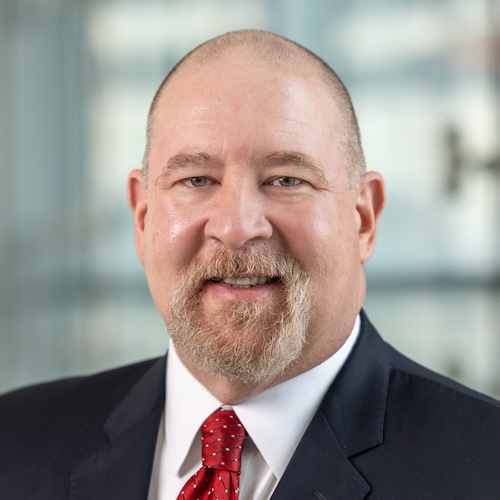
Joining us this week is the Honorable Andrei Iancu, former Under Secretary of Commerce for Intellectual Property and Director of the United States Patent and Trademark Office (USPTO). And as many of you no doubt know, Iancu was responsible for the 2019 Patent Eligibility Guidance from the USPTO, which has made it easier to obtain software patents from the Office, but which the Federal Circuit continues to ignore in favor of their own disjointed, unpredictable, non-repeatable test. From the patent litigator perspective, we have Vince Rubino, who is a partner with Fabricant in the firm’s New York City office, and from the patent prosecution perspective we have John Rogitz, who is Managing Attorney at Rogitz & Associates.
I started our conversation giving an open mic opportunity for Iancu, Rubino and Rogitz to jumpstart our conversation by giving me their big picture thoughts on Section 101. Iancu, who was unfortunately suffering from a bit of laryngitis, led off the discussion.
 “I do think that at the PTO the situation is much improved over the last few years,” Iancu explained. “We put out the 2019 Patent Eligibility Guidelines, so they’ve been around for six years now, and obviously a lot of patents… have been decided with these guidelines, and it works fairly well. You know, the courts have not adopted the guidelines though, neither have they said that they’re wrong, and I don’t think they are, I think they’re fully consistent with Federal Circuit law. So, there’s a lot of experience with the guidelines, and I think overall on balance there is a certain level of predictability when it comes to 101 during prosecution at the PTO, or in administrative proceedings, whether it is re-exam or PGR that takes into account Section 101 – mostly PGR actually.”
Rubino, who practices with a litigation firm that has developed a reputation for winning in district court on patent eligibility on behalf of patent owners, explained during his preliminary remarks that you really need to win on Alice step one and you can’t know what you will argue until you see how the defendant is attempting to frame the claim. Rubino explained:
“No matter how hard you prepare and how great of a complaint you put together, or preparation you put together, or expert testimony you put together before filing a case, you really have no idea what your defense to 101 is going to be until you see a motion come at you — a motion to dismiss, a motion for judgment on the pleadings, something in an invalidity contention. Because the secret to beating 101 from a litigation side is trying to diffuse step one primarily. And you don’t know what your argument is going to be for step one until you see how the defendant has tried to frame the abstract concept. So trying to look at it in a vacuum without knowing how the defendant is going to frame it is impossible. You only really know what your arguments are going to be when you see the abstract concept. And that’s how we’ve had some success; you get a very narrow abstract concept that doesn’t capture the whole claim and then all of a sudden there are limitations that come in and haven’t been captured by the abstract concept and you’ve beaten step one.”
For his preliminary remarks, Rogitz explained patent prosecution strategy in a nutshell and then also shared his frustration with the courts for not providing a clear test for patent eligibility. Rogitz said:
“There’s no other way around it, you have to get creative and think of every backstop you can, every embodiment and implementation you can to put into the spec[ification]. You have claim strategy where you even if you’re going to go broad with the independent claims, which is fine, you need to have some implementation details to get past 101 in the dependent claims so that when you get into litigation claim one isn’t just treated as representative of all claims. I would also like to add to what Andrei said about the policy. First of all, I appreciate the 2019 guidance. I agree with you that I think it is consistent with the case law, but… I think it illustrates the sort of sickness and the chaos in the system right now… There’s no reason why an administrative agency should be adding the practical application step on top of what the federal circuit has given, but for all the uncertainty. And again, I’m grateful for you doing it. You saved my clients a lot of money, you saved me a lot of headache, but it demonstrates how the rest of the system is not doing their job when it’s on the Director of the Patent Office to provide clarity on what’s otherwise a common law test.”
And we were off to the races from there.
More IPWatchdog Unleashed
You can listen to the entire podcast episode by downloading it wherever you normally access podcasts or by visiting IPWatchdog Unleashed on Buzzsprout. You can also watch the video on the IPWatchdog YouTube channel. For more IPWatchdog Unleashed, see below for our growing archive of previous episodes.
![[Advertisement]](https://ipwatchdog.com/wp-content/uploads/2026/06/IP-Copilot-Jun-30-2026-sidebar-700x500-1.jpg)
![[Advertisement]](https://ipwatchdog.com/wp-content/uploads/2026/06/Womens-IP-Forum-2026-sidebar-new-700x500-1.jpg)




![[Advertisement]](https://ipwatchdog.com/wp-content/uploads/2021/12/WEBINAR-336-x-280-px.png)
![[Advertisement]](https://ipwatchdog.com/wp-content/uploads/2021/12/Ad-4-The-Invent-Patent-System™.png)





Join the Discussion
3 comments so far.
Anon
July 9, 2025 02:57 pmAnonymous,
Plager’s dissent (thank you for the citation) is now practically seven years old.
And his dissent references two other cases:
873 F.3d 1364, 1376 (Fed. Cir. 2017)
890 F.3d 1369, 1374 (Fed. Cir. 2018)
Funny thing – his references of Judge Rich’s writings have long been provided by yours truly – for over a decade now.
If nothing else comes from the ‘resetting’ due to AI, it is my fervent wish that Congress would (finally) recognize how the Supreme Court has wrecked what they did in 1952.
Anonymous
July 8, 2025 04:24 pmThe Emperor has no clothes.
Read Judge Plager’s dissent in Interval Licensing, LLC v. AOL, Inc., (Fed. Cir. July 20, 2018). Then, read it again.
Model 101
July 7, 2025 09:23 pmNo advice can help.
The judges are all crooks.
Lies rule!
Forget it.
You will lose.
Expert testimony and claim construction don’t matter.
They will break every law to get rid of you.