


 3
3 “The question is no longer whether AI will be used in patent practice… The question is whether it will be used casually or professionally.”
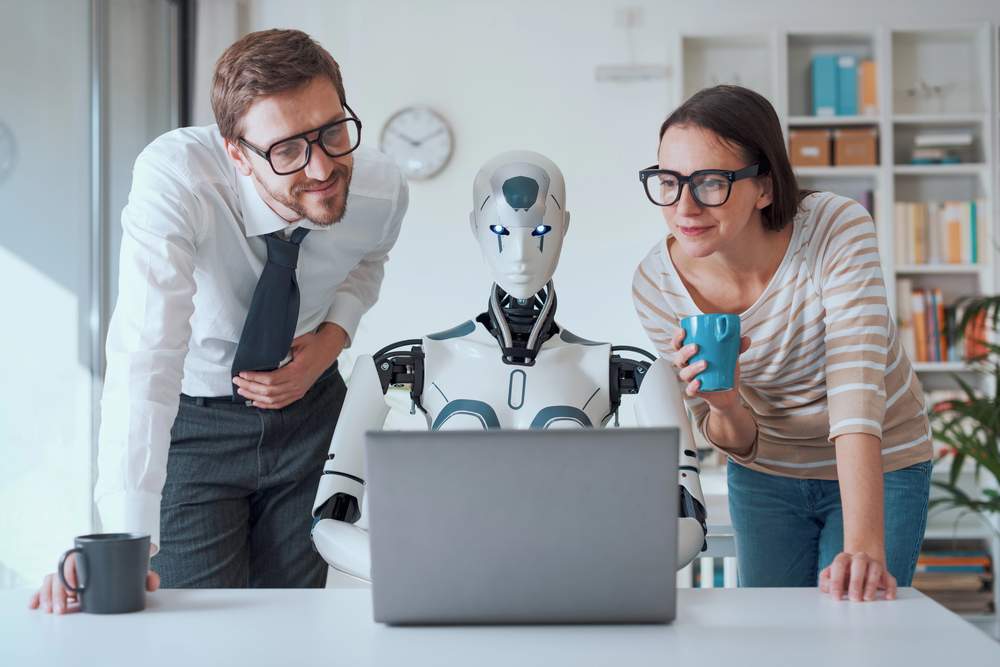 Artificial intelligence is no longer a futuristic talking point in patent practice. It is already being deployed by patent practitioners who understand a simple truth: AI is not a substitute for legal judgment, technical understanding, claim strategy, or client counseling. When implemented properly, AI is a force multiplier. It can compress timelines, improve consistency, reduce low-value friction, provide meaningful portfolio intelligence, and allow practitioners to spend more time on the work that actually requires professional expertise.
The dividing line is becoming increasingly clear. Practitioners who treat AI as a black box—drop in a vague prompt, accept the output, and move on—will get inconsistent and sometimes dangerous results. Practitioners who treat AI as workflow infrastructure—fed with the right context, constrained by attorney judgment, validated against source materials, and integrated into disciplined processes—are already seeing meaningful gains.
The U.S. Patent and Trademark Office (USPTO) has recognized this reality. In its April 2024 guidance, the Office acknowledged that AI may be used in preparing and prosecuting patent and trademark applications, as well as in Patent Trial and Appeal Board (PTAB) and Trademark Trial and Appeal Board (TTAB) filings, while emphasizing that existing duties of candor, signature obligations, confidentiality, and professional responsibility still apply. The guidance did not prohibit AI use; it put practitioners on notice that AI-assisted work remains the practitioner’s responsibility.
In other words, AI is a tool that practitioners can use, but it must not supplant professional judgment and common sense. AI does not, nor should it, eliminate accountability. It raises the execution bar and enables a better work product when it is used and managed by professionals who understand what it does well and how to steer the available tools to provide reliable results.
From One-Off Prompting to Managed Patent Workflows
The most successful deployments of AI in patent practice are not built around isolated prompts. They are built around structured workflows.
Patent work is inherently modular. A practitioner does not simply “draft a patent application.” The practitioner interviews inventors, identifies inventive concepts, reviews disclosures, studies the prior art, determines the commercial embodiment, evaluates claim scope, drafts claims, builds specification support, anticipates design-arounds, assesses Section 101 and Section 112 risk, prepares figures, and ultimately prosecutes the case through examination in front of a patent examiner.
That complexity is precisely why AI can be useful. Not because the machine can replace the patent attorney, but because the work can be decomposed into discrete tasks where AI can assist at defined stages and with clear guardrails established that maximize reliability.
A strong AI workflow for invention intake, for example, may begin by asking the system to summarize the invention disclosure, identify missing technical details, generate inventor interview questions, distinguish embodiments from core inventive concepts, and map advantages to technical problems solved. None of that requires surrendering legal judgment. It gives the practitioner a stronger starting point.
Likewise, in claim drafting, AI can be used to generate alternative claim frameworks, identify potential dependent claim categories, suggest fallback positions, and test whether each claim limitation has adequate support in the specification. The practitioner still decides what to claim and how to revise claim language based on their experience and professional judgment, much as you would if you asked a junior associate for a first draft. The practitioner still owns the claim strategy, but the AI can help expand the option set and expose gaps in what can and probably should be best considered to be the facilitation of brainstorming rather than the relinquishment of professional judgment.
This is where successful users are separating themselves from casual users. They are not asking AI to “draft a patent application.” They are asking AI to perform tightly defined sub-tasks inside a broader attorney-controlled system. And more importantly, asking the AI to do what it is capable of doing, and no more.
For example, if you ask an AI tool to search far and wide all available patent databases and find the closest reference to a certain disclosure you are likely to be very unhappy with the results. AI is programmed to deliver a result, and in this open-ended context there is a good chance it will either miss what is most relevant or simply make something up that doesn’t exist that—if it were real—would be extremely relevant. Leaving AI to its own devices and expecting it to return a correct answer is a recipe for disappointment and disaster. But AI is extremely good at comparing, so if you give it a closed universe and say which of the patents in this closed universe are the closest, the results it will deliver will be surprisingly good.
AI is all about the context.
Invention Disclosure Review and Inventor Interviews
One of the highest-value use cases is invention disclosure review. Patent practitioners routinely receive invention disclosures that are incomplete, overbroad, too implementation-specific, or written from an engineering or marketing perspective, which lack clear attention to patentable distinction.
AI can rapidly convert a raw disclosure into a structured issue list. It can identify what appears to be the inventive concept, what appears to be conventional context, what technical advantages are asserted, what data is missing, and what questions should be asked during an inventor interview. For busy in-house teams managing large disclosure volume, this can be a major operational advantage.
The key is not to rely on AI’s first-pass characterization as legally definitive. Rather, the tool should be used to accelerate preparation and as a vehicle to enhance greater participation from human actors. A practitioner walking into an inventor interview with a machine-generated issue map, technical clarification list, and preliminary claim hypothesis is better positioned to ask the right questions. And even if you disagree in your professional judgment, your reasons for disagreeing will become crystallized.
This is particularly valuable where inventions span multiple disciplines. AI tools can help identify terminology inconsistencies, flag unexplained acronyms, propose alternative technical formulations, and compare how similar concepts are described in patent literature. That does not make the AI the legal strategist. It makes the attorney better prepared.
Prior Art Search and Competitive Intelligence
Prior art searching is another area where AI is already delivering practical value. Traditional keyword searching remains useful, but it is incomplete. Inventive concepts are often described using different terminology across industries, geographies, and technology stacks. AI-enabled semantic search can help practitioners locate references that might be missed by conventional Boolean searching.
This has strategic implications. A better early view of the prior art allows practitioners to draft claims with more precision, avoid overclaiming, identify fallback positions, and make better filing decisions. It can also reduce prosecution churn by improving the quality of the application before it reaches the examiner.
AI tools can also assist with competitive intelligence. For in-house teams, the question is not merely whether a single invention is patentable. The question is how that invention fits into a broader product roadmap, competitor landscape, standards environment, licensing posture, or enforcement strategy. AI can help cluster patent assets, identify dense filing areas, summarize competitor activity, and surface white space.
That said, prior art search is not a “set it and forget it” activity. AI search results must be validated. Search tools can miss critical art. Generative tools can misstate what references disclose. Practitioners should treat AI search as an accelerator, not a certification engine.
Claim Drafting and Claim Strategy
Claim drafting remains one of the most sophisticated and judgment-intensive tasks in patent practice. It is also one of the areas where AI can help—when used properly.
AI is particularly useful for generating claim variations. A practitioner can use AI to explore different statutory classes, alternative independent claim structures, dependent claim trees, method-system-medium alignment, means-plus-function risk, and varying levels of abstraction. AI can also help test whether a claim reads too narrowly on a preferred embodiment or too broadly in view of known art.
But claim drafting with AI requires discipline. The system may generate claim language that sounds plausible but lacks written description support. It may introduce terminology not used in the specification. It may collapse distinct embodiments. It may create antecedent basis problems. It may import unnecessary limitations. It may produce claims that are elegant in form but strategically weak.
The best practitioners use AI to pressure-test claim architecture. They do not outsource claim architecture.
A particularly productive use case is asking AI to play the role of an examiner, accused infringer, PTAB petitioner, or district court defendant. With the right context, AI can identify possible Section 101 vulnerabilities, Section 112 indefiniteness issues, prior art attack vectors, divided infringement problems, or claim construction disputes. The output will not be perfect, but it can reveal issues that should be addressed before filing. That kind of adversarial simulation is powerful. It moves AI from drafting assistant to strategy simulator.
Specification Drafting and Support
Patent specifications are often where long-term value is either created or lost. A narrow, thin, or poorly supported specification can cripple enforcement and continuation practice years later. AI can help improve the drafting process by identifying gaps between the claims and the disclosure, suggesting additional embodiments, generating alternative implementations, and checking whether terminology is used consistently. AI can also help craft prophetic examples and illustrations, which will expand the disclosure and satisfy reviewing courts years later.
For example, after a practitioner drafts an initial claim set, AI can be asked to map every claim limitation to specification support. If a limitation lacks clear support, the system can flag the issue. If a term appears in the claims but not in the detailed description, the system can identify the inconsistency. If the specification discloses only one implementation of a potentially broader concept, AI can suggest other implementation categories for attorney review.
This is an important workflow because it addresses a real pain point in patent practice: applications are often drafted under budget pressure and time constraints. AI can provide a second layer of internal quality control before filing.
The practitioner, however, must remain vigilant. AI-generated embodiments must be technically accurate. They must be enabled. They must be tied to what the inventors actually invented. They cannot become speculative filler disconnected from the invention. Used properly, AI can help build a richer disclosure. Used carelessly, it can create new problems—some that won’t become evident for many years and only after it is too late to do anything.
Office Action Responses
Office action response drafting is one of the most obvious AI use cases because prosecution is document-intensive, repetitive in structure, and highly dependent on comparing claim language to cited references.
AI can summarize an Office action, identify the rejection grounds, extract the examiner’s position, compare cited passages to claim limitations, and draft preliminary argument frameworks. It can also help generate amendment options and assess tradeoffs between argument and amendment.
For example, in a Section 103 rejection, AI can be asked to create a limitation-by-limitation chart comparing the claims to the cited references. It can identify where the examiner appears to rely on conclusory reasoning, where a reference may not disclose a limitation, where the combination rationale may be weak, or where an amendment could distinguish the art while preserving commercial value.
This does not mean the response should be machine-written and filed. The USPTO’s AI guidance specifically reminds practitioners that filings remain subject to signature and certification obligations, including the duty to make reasonable inquiry before submitting papers to the Office.
The better model is human-led prosecution with AI-assisted analysis. AI creates the first issue map. The practitioner determines the response strategy and verifies everything.
Portfolio Management and Patent Analytics
Some of the most successful AI deployments are occurring not at the individual application level, but at the portfolio level.
Large patent portfolios are often messy. They contain legacy assets, uneven claim scope, inconsistent tagging, unclear product alignment, varying maintenance value, and patents that no longer map cleanly to the company’s business. AI can help impose structure.
AI tools can classify assets by technology area, product relevance, claim coverage, expiration date, family status, prosecution history, standards relevance, competitor overlap, and potential licensing or enforcement significance. They can help identify patents that support active business lines, patents that may be candidates for pruning, and patents that warrant continuation strategy.
For in-house counsel, this is a major value proposition. Patent departments are under pressure to justify spend. AI-enabled analytics can help move the conversation from “how many patents do we have?” to “which patents matter, why do they matter, and what strategic objective do they support?”
That shift is overdue. A patent portfolio should not be treated as a static archive. It should be managed as an operating asset.
Confidentiality, Validation and Governance
The primary risk is not that AI will be useless. The primary risk is that it will be used without governance.
Patent practice involves confidential technical information, unpublished applications, trade secrets, export-controlled subject matter, litigation-sensitive analysis, and privileged communications. Any AI deployment must begin with the threshold question: what data is being entered, where is it going, who can access it, and can it be used to train the model?
The USPTO and commentators have repeatedly identified confidentiality, hallucination, and accuracy as core concerns in AI-assisted practice. Those concerns are not theoretical. Generative AI systems can fabricate citations, mischaracterize documents, and produce confident but incorrect analysis.
Law firms and corporate legal departments therefore need AI governance policies. Those policies should address approved tools, permitted data categories, client consent where appropriate, privilege preservation, human review requirements, source verification, audit trails, and filing safeguards.
The firms that succeed will not be the ones that merely buy AI subscriptions. They will be the ones that build repeatable operating procedures.
The Human-in-the-Loop Is Not a Slogan
“Human-in-the-loop” has become a familiar phrase, but in patent practice it needs substance. The human in the loop must be a competent patent professional exercising actual judgment. That means reviewing source documents, validating technical accuracy, confirming legal support, assessing claim strategy, and taking responsibility for the final work product. A lawyer who rubber-stamps AI output is not meaningfully in the loop.
AI can help draft. It can help analyze. It can help organize. It can help challenge assumptions. It can help improve throughput. But it cannot understand the client’s risk tolerance, business objectives, litigation posture, product roadmap, competitor dynamics, or long-term patent strategy the way a skilled practitioner can.
That is why the best deployments are not lawyer-replacement models. They are lawyer-amplification models.
What Comes Next
AI adoption in patent practice will continue to accelerate because the economics are unavoidable. Clients want faster work, better insight, more predictable budgets, and stronger alignment between patent spend and business value. Firms want leverage, consistency, and margin protection. In-house teams want visibility across portfolios and better tools for decision-making.
The question is no longer whether AI will be used in patent practice. It already is. The question is whether it will be used casually or professionally. Casual use creates risk. Professional use creates leverage.
The practitioners who win in this environment will be those who understand both the technology and the law. They will know how to structure prompts, build workflows, verify outputs, protect confidential information, and integrate AI into the full patent lifecycle—from invention intake through prosecution, portfolio management, and enforcement readiness.
Image Source: Deposit Photos
Author: stockasso
Image ID: 666790410
![[Advertisement]](https://ipwatchdog.com/wp-content/uploads/2026/10/BlackBox-IP-Oct-20-2026-sidebar-700x500-1.jpg)
![[Advertisement]](https://ipwatchdog.com/wp-content/uploads/2026/10/Questel-Oct-22-2026-sidebar-700x500-1.jpg)
![[Advertisement]](https://ipwatchdog.com/wp-content/uploads/2026/09/Life-Sciences-2026-sidebar-early-bird-ends-Oct-25-700x500-1.jpg)
![[Advertisement]](https://ipwatchdog.com/wp-content/uploads/2026/09/WE-BUY-PATENTS-SIM-IP-Ad-1-revised-on-Sep-28-2026-700x500-1.jpg)
![[Advertisement]](https://ipwatchdog.com/wp-content/uploads/2024/09/Patent-Prosecution-Training-sidebar-700x500-2025-03-27.jpg)





![[Advertisement]](https://ipwatchdog.com/wp-content/uploads/2021/12/WEBINAR-336-x-280-px.png)
![[Advertisement]](https://ipwatchdog.com/wp-content/uploads/2021/12/Ad-4-The-Invent-Patent-System™.png)




Join the Discussion
3 comments so far.
Anon
May 18, 2026 08:51 amJMB Davis Ben-David,
I think that it remains to be seen whether or not the full effects of use of AI tools in patent prosecution (and related efforts) will provide benefits or instead hollow-put and accelerate commodification of the legal industry in this sector.
Of course, ALL legal sectors are exposed, so the effects are not going to be limited.
JMB Davis Ben-David
May 8, 2026 07:09 amVery informative article. AI is clearly becoming an important tool for patent prosecution and research, especially in handling large volumes of technical data while helping practitioners focus more on strategic legal analysis.
JMB Davis Ben-David
May 8, 2026 06:57 amGreat perspective on the role of AI in intellectual property practice. The balance between automation and professional expertise mentioned in the article is especially important for maintaining quality and reliability in patent work.